You searched for: adhd/feed/www.coh-fit.com
Search results
-
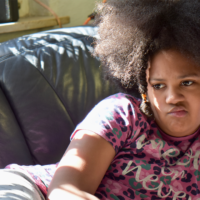
Depressed mood, inattention and worry might influence the risk for other symptoms in youth
Youth psychopathology has traditionally been conceptualized and measured at the level of disorders, which are highly heterogeneous and comorbid. However, there is growing evidence that focusing on the causes of individual symptoms might be useful.
Read more -
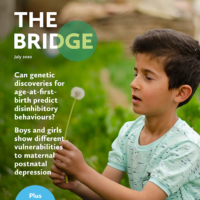
July 2020
In this issue, we summarise recent studies on a wide range of topics – including sleep, sensory symptoms, emotional symptoms, disinhibition, alcohol misuse, complex PTSD symptoms, and self-harm – which reveal new insights helping us to better understand and address psychopathology in young people.
Read more -

Harnessing the potential of digital technology for remote interventions with young people
Charlotte Sanderson and colleagues explain that there is good empirical evidence supporting that digital interventions can be clinically effective.
Read more -

Early deprivation is linked to long-term social communication difficulties
Maltreatment affects a staggering 1 billion children worldwide. Most of these maltreated children, but particularly those raised in institutions that are characterized by deprivation, experience some form of neglect. These children seem to be at risk of developing social, cognitive and psychiatric difficulties later in life.
Read more -
July 2020 – The Bridge
In this issue, we summarise recent studies on a wide range of topics – including sleep, sensory symptoms, emotional symptoms, disinhibition, alcohol misuse, complex PTSD symptoms, and self-harm – which reveal new insights helping us to better understand and address psychopathology in young people.
Read more -

Anorexia nervosa and autism: a prospective twin cohort study
Video abstract from Lisa Dinkler on ‘Anorexia nervosa and autism: a prospective twin cohort study’. First published: 04 June 2020
Read more -

Would delaying the school day prevent anxiety in adolescents?
A new study published in the Journal of Child Psychology and Psychiatry has investigated whether sleep duration and regularity might link stressful life events to anxiety and depression symptoms.
Read more -
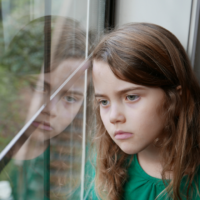
Who can best support young people who self-harm?
A new study published in Child and Adolescent Mental Health has investigated what forms of support young people who self-harm find helpful.
Read more -

Variable sleep schedules might put preschoolers at risk of academic difficulties
New data suggest that internalizing problems are associated with sleep variability and that cognitive ability is associated with sleep timing.
Read more -

Persistent peer victimization is associated with differential effects on cortisol production between boys and girls
Peer victimization increases the risk of developing long-lasting mental health problems, but the underlying mechanisms are unclear.
Read more