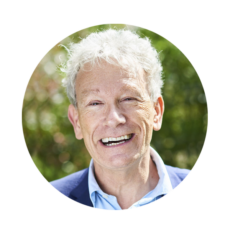
Robert Goodman, who died from complex dementia on 18 December 2025 aged 72, was one of the world’s leading child and adolescent psychiatrists. He carried out work that has transformed child mental health across the globe, developing a simple questionnaire on child mental health and well-being, called the Strength and Difficulties Questionnaire, commonly known as the SDQ. As the name indicates, this went beyond characterising children’s difficulties to include their strengths and social relations. It also measured the impact of their difficulties on their daily life at home and at school.
Alongside this he developed a novel interview to make accurate diagnoses of mental health disorders which at the same time respected the parents’ own words. This instrument is called the Development and Well-Being Assessment, commonly called the DAWBA. Both measures became the cornerstone of a series of authoritative sequential epidemiological studies repeated over the years in the United Kingdom and have been widely used across the world. He went far beyond just looking at prevalence rates to use the data to explore questions such as the impact of social class on mental health, ethnic differences and time trends, examining for example the putative increase in anxiety and depression disorders at the present time. Both instruments have been widely translated, with the SDQ available in 89 languages worldwide, including British, American and Norwegian sign language. Many others have written questionnaires, but the SDQ dwarfs them all. The resulting accurate assessments have supported clinical practice, policy change and research, doing untold good to hundreds of thousands of children and their families worldwide.
Robert was born into a Jewish family. His father, Jack came from a large East End family of poor Jewish migrants and grew up speaking a different language from his Yiddish-speaking parents. He established a successful firm, designing and selling clothes. Robert had one younger sister, Alison. After attending Haberdashers Aske’s School, Elstree, he won a major scholarship to Gonville and Caius College, Cambridge, where he got a starred first class degree and came top in medicine. On graduation, he was awarded a bye-Fellowship to the College. Recalling their time together there, his friend, Peter (now Sir Peter) Ratcliffe, winner of the Nobel prize for Medicine in 2019, writes “he was by far the brighter. I learned so much from him”.
Following house jobs, he undertook psychiatric training at the Maudsley Hospital and the Institute of Psychiatry, which combined to be the leading centre in the field in Europe. He then won a Wellcome Research Training Fellowship which he undertook at the Institute of Child Health and Great Ormond Street Children’s Hospital in London. Here, he completed an MD thesis on hemiplegia in children before returning to the Institute of Psychiatry for the rest of his career.
The textbook he wrote with Professor Stephen Scott, Child Psychiatry, was lauded by the most eminent children’s doctors in the country. Professor Sir Michael Rutter FRS wrote “there is nothing quite like this gem of a book, which provides much the best introduction to child psychiatry that has been written”. And its influence went wider than people working in the mental health field, thus Sir David Hull, President of the Royal College of Paediatrics and Child Health called it “outstanding” and Professor Otto Wollf, Dean of the Institute of Child health at Great Ormond Street Hospital urged all paediatricians to use it. It has been translated into many languages, from Brazilian Portuguese to Japanese. Most remarkably, Robert single-handedly persuaded the publishers to let it be downloaded for free all over the world. Its success was due to Robert’s command of the latest science and his pithy clarity of expression, making children’s mental issues understandable to all.
One might think that somebody who has achieved all this would become grandiose and pompous. Not at all, Robert was modest and retiring: to use a biblical metaphor, no one hid his extraordinary light under so great a bushel. And he was keen that he should always be questioned, for example in his inaugural lecture this man, who was not greatly concerned by external appearances, dyed his hair blue on one side and red on the other, saying that for all his eminence, people should always challenge what he was saying. During the lecture he showed a photograph of a sign on a rented house in France, which said “look after your sceptic tank”!
Robert challenged the prevailing norms that research was better if it was expensive, undertaking many of his studies in low -income settings at minimal costs. He never sought honours or public recognition, but in 2022 the Association for Child and Adolescent Mental Health awarded him the prestigious President’s Medal for lifetime contribution to the field.
In his private life he was passionate about the environment – while still at school he began reading The Ecologist magazine, and contacted the founder and proprietor, Teddy Goldsmith (brother of Sir James Goldsmith), who had a farm in Cornwall, while the editor, Peter Bunyard, had a neighbouring farm. This led to Robert spending his summers working on their farms and imbibing their forward-looking principles, as well as meeting their many distinguished visitors, like Professor James Lovelock; he was also a life-long member of the Green Party. He was a Buddhist who meditated every day and attended many Buddhist retreats.
He was, with no exaggeration, a truly exceptional man. No one was more gentle and unthreatening, he had no side to him and had a warm smile with a wry, self-deprecating sense of humour and a ready laugh. He was greatly appreciated by colleagues, was a supportive role model to trainees and was loved by his patients. He will be greatly missed.
He is survived by his wife, Susan, a psychotherapist, his son, James, a businessman, his two daughters, Anna, an epidemiologist and Rosa, an art historian, together with four grandchildren.
by Stephen Scott, with contributions from many others