In depth
-

Brain differences in children who show symptoms of avoidant/restrictive food intake disorder (ARFID)
Magnetic resonance imaging (MRI) scans of children showing symptoms of avoidant/restrictive food intake disorder (ARFID) show differences in certain brain regions relative to children without ARFID symptoms. Findings from this work serve to improve our general understanding of ARFID and may help inform on ARFID-related services or our understanding of ARFID.
Read more -
 06
06
Words Matter: Understanding, Impact, and Prevention of Childhood Verbal Abuse
Set of three webinars on Childhood Verbal Abuse (CVA). This is characterised by adults shouting, yelling, denigrating, and verbally threatening the child. These types of adult actions can be as damaging to a child’s development as other currently recognized and forensically established subtypes of maltreatment such as childhood physical and sexual abuse.
-
25
Responding to sibling sexual abuse – putting research into action
This workshop will outline current knowledge and evidence in the sibling sexual abuse field and look at how that knowledge can be used to inform how we positively support a family’s journey, from identification of harm, safety planning and assessment, through to therapeutic intervention, case closure and aftercare support
-
11
Story Stems – a window into a child’s internal world
This webinar will cover the Story Stem Assessment Profile (SSAP) and its use as an assessment of a child’s attachment and internal representations. The SSAP consists of 13 narrative stems, to which the child provides their own story completions; information is thus gained directly from the child in a non-threatening context.
-
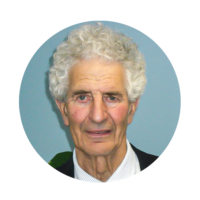
Sixty-Five Years Working With Children
Emeritus Professor Philip Graham delivered this Keynote lecture ‘Sixty-Five Years Working With Children’, on Thursday 7 November at the 2024 ACAMH Awards. Professor Graham was the recipient of ACAMH’s Michael Rutter Medal for Lifetime Contribution to Child and Adolescent Mental Health.
Read more -
06
Assessing and understanding trauma: bridging the gap between research and practice
The session will provide a bridge between research and clinical contexts of measuring trauma and adverse life experiences in looked-after children populations. Dr Saul Hillman, Richard Cross, and Katharine Anderson present
-
28
Trauma Aware Education
Dr. Judith Howard, Associate Professor of Education at Queensland University of Technology (QUT), and Dr. Lyra L’Estrange, Senior Lecturer in Education at Queensland University of Technology (QUT), will lead this session on Trauma Aware Education on ‘An education system solution to the complex systemic problem of child abuse and neglect: One Australian university’s approach’.
-
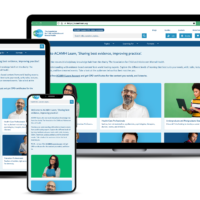
ACAMH Learn – a new, free online CPD resource for those working in child and adolescent mental health
The Association for Child and Adolescent Mental Health (ACAMH) has launched ACAMH Learn acamhlearn.org, a new, free online learning platform offering video and podcast content from more than 200 world-leading mental health experts.
Read more -

Chronotype and Depression in Adolescence
We know that there is a bidirectional association between sleep duration/quality and depressive symptoms in youth. In adult populations depressive symptoms and circadian rhythms (sleep chronotype) have also been linked. In this paper, we established an association between chronotype and depressive symptoms in middle adolescence, independently of poor sleep and prior mental health difficulties.
Read more