You searched for: autism+series+guide/feed/www.clinical-partners.co.uk
Search results
-

What mechanisms underlie reduced social attention in people with ASD?
A key predictor of an autism spectrum disorder (ASD) diagnosis is attenuated attention to social stimuli.1 Thus far, the reasons underlying this abnormality are unknown: some have hypothesized reduced social motivation2 while others have suggested aberrant oculomotor function in affected individuals.3
Read more -

-

Anorexia nervosa and autism: a prospective twin cohort study
Video abstract from Lisa Dinkler on ‘Anorexia nervosa and autism: a prospective twin cohort study’. First published: 04 June 2020
Read more -

Do the same mechanisms drive social anxiety in autistic and neurotypical adolescents?
Researchers at King’s College London have recently published data on how cognitive, emotional and sensory factors are associated with social anxiety in adolescents with autism.
Read more -

Intolerance of uncertainty underlies demand avoidance behaviours in children
Researchers in Newcastle have conducted one of the first studies to conceptualise and understand the behavioural features of the pathological demand avoidance (PDA) profile — a proposed subtype of autism spectrum disorder (ASD) — in children and young people.
Read more -

Most Cited JCPP Articles #42 of 60
Most cited JCPP papers #42 of 60: Sensory Experiences Questionnaire: discriminating sensory features in young children with autism, developmental delays, and typical development
Read more -

Most Cited JCPP Articles #50 of 60
Most cited JCPP papers #50 of 60: Cognitive behavioral therapy for anxiety in children with autism spectrum disorders: a randomized, controlled trial
Read more -

Most Cited JCPP Articles #60 of 60
Most cited JCPP papers #60 of 60: Outcome at 7 years of children diagnosed with autism at age 2: predictive validity of assessments conducted at 2 and 3 years of age and pattern of symptom change over time.
Read more -
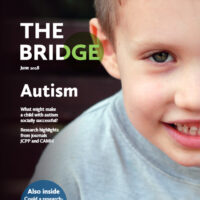
Autism & Intellectual Disability
Blogs about autism and intellectual disability from the June 2018 edition of The Bridge, ACAMH’s journal of secondary publication.
Read more -

Early social communication intervention reduces autism severity in young infants
The first, very early social communication intervention for infants at high risk of autism shows promise to reduce the overall severity of early symptoms and a capacity to positively enhance parent–child social interactions.
Read more