social anxiety
-

Practical techniques for managing social anxiety in everyday clinical work
Associate Professor Eleanor Leigh will focus on social anxiety in adolescents, with a strong emphasis on developing practical clinical skills. This advanced session will be ideal for professionals in child and family mental health who have therapeutic experience with children and families.
- Event type
- Introductory to Advanced
- Location
- LIVE STREAM
-

Social Fears in Children: The Roles of Parental Communication and Child Temperament
A recent longitudinal study by Zeytinoglu and colleagues (2025) provides insights into how parental verbal communication and child characteristics contribute to the transmission of social fears. The study shows the impact of both positive and negative maternal statements about ambiguous social situations, finding that positive comments were linked to reductions in children’s social fear beliefs, while negative comments predicted increases, especially among children who were behaviourally inhibited or had high anxiety.
Read more -
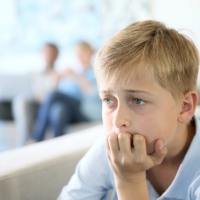
EEG data might help identify children at risk for social anxiety
Electroencephalography (EEG) is a non-invasive method to monitor the electrical activity of the brain. There are five main broad frequency bands in the EEG power spectrum: alpha, beta, gamma, delta and theta. Data suggest that EEG-derived delta–beta coupling — indicating related activity in the delta and beta frequency bands — might serve as a marker of emotion regulation.
Read more -
June 2020 – The Bridge
Includes ‘Are social networking sites contributing to depression and anxiety symptoms in young people?’
Read more -

Do the same mechanisms drive social anxiety in autistic and neurotypical adolescents?
Researchers at King’s College London have recently published data on how cognitive, emotional and sensory factors are associated with social anxiety in adolescents with autism.
Read more -
Coupled delta-beta wave activity might predict social anxiety in children
Researchers from McMaster University, Canada, have examined whether individual differences in salivary cortisol levels at baseline and parent-reported social anxiety levels are associated with resting, coupled delta–beta frontal wave activity.
Read more