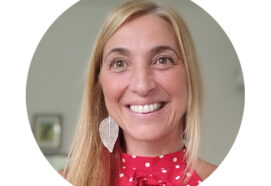
Paul McArdle is a CAMHS Consultant in Northumberland and an Honorary Senior Lecturer at Newcastle University. An ADHD specialist, he trained in paediatrics in Dublin before switching to child and adolescent psychiatry in Newcastle upon Tyne. He spoke to The Bridge about the societal context of ADHD and a pilot programme he ran to try and reach children leaving care, many of whom suffered from the disorder.
“My understanding of ADHD is this: you’ve got an endoskeleton and an exoskeleton. The intact, functioning frontal cortex and all its connections in the brain are like an endoskeleton, they enable us to organise our lives,” said Paul.
“If you’ve got ADHD, as Barkley says, you’re governed by the contingencies of the minute, you don’t have the endoskeleton, you need external structure,” he said, referring to Dr Russell A Barkley, an influential psychologist and a prolific author on ADHD.
Working with children with ADHD has led Paul to suspect changes in society are making life harder for those with the disorder.
“The nature of work has changed and we’re keeping these kids, who often have cognitive difficulties, in extended education,” he said.
“A lot of these kids can work with their hands, but abstraction is not their forte.”
He believes the rise in special educational needs is the direct result of an educational curriculum that is becoming more narrow and academic.
“We don’t have the sporting pathway that has been so successful in Iceland and we don’t have the vocational pathway that has been so successful in Germany,” he said.
“I would love to see something like that in the UK.”
Paul developed a small pilot CAMHS programme in Newcastle to target hard-to-reach young people, many of whom suffered from ADHD.
“I thought, wouldn’t it be interesting if we could locate a service and customise it for that population and see if they would come and see us?”
The small team, including two psychiatrists and an educational psychologist, was based in a GP surgery to minimise stigma, and saw about twenty patients over the course of six months.
Many were in care or about to leave it, and were referred to the service after Paul contacted social workers and colleagues in primary care.
Unfortunately, the pilot was never extended – “You think progress is going to continue, but in fact it goes in reverse,” said Paul.
He said retention is particularly difficult for longitudinal studies into CAMH interventions and applauds the information-sharing that has allowed Scandinavian countries to produce nationwide datasets that span decades.
“It’s got huge potential. They’ve revolutionised our understanding of Ritalin in ADHD, for instance. You were never going to get that from a randomised controlled trial because it’s just too expensive.”
I ask him what the most important steps are that non-clinical CAMH professionals can take to help children and young people with ADHD – he is a strong advocate for Education, Health and Care Plans (EHCP).
“To have an EHCP signals to the high school ‘this is not just a naughty child, this child has needs that have to be considered’” he said.
He said the need for documentation to protect vulnerable children from being written off by teachers is more important than ever.
“If you read some of the so-called success stories of the academies programme, it’s by instilling even tighter discipline, and these kids will really run up against that,” he said.
“As a result they get angry, resentful and start disbelieving in adults.”
“It is a tremendous service to vulnerable kids to get a wraparound EHCP.”
Discover more articles from The Bridge.