Anxiety disorders
-
Negative interpretation bias in adolescents with subclinical social anxiety disorder
Social Anxiety Disorder (SAD) is a marked fear or anxiety of social situations where an individual may be exposed to possible scrutiny by others. Now, Yura Loscalzo and colleagues have examined the contribution of different components of interpretation bias — a model proposed to explain SAD whereby affected individuals systematically assign a threatening meaning to an objectively ambiguous stimulus with several possible interpretations.
Read more -

Raising Awareness for Body Dysmorphic Disorder
BDD is not something that clinicians always think of, so what are the symptoms that we should be looking out for and what evidence-based treatments can help relieve the symptoms that people experience?
Read more -
Children with Anxiety: Which CBT format is best?
McKinnon et al (2018) is the first comparison of the impact of individual CBT, group CBT and guided parent-led CBT, on the severity of symptoms and remission rate for children presenting with an anxiety disorder.
Read more -
The overlap between low self-esteem and anxiety/depression in CAMHS
Our systematic review aimed to establish what is known about low self-esteem and anxiety/depression in young people (<18s). We wanted to find out whether young people with clinically significant anxiety disorders and/or depression also have low self-esteem as measured on validated questionnaires. We also wanted to know whether young people with low self-esteem as measured on a validated questionnaire develop depression and anxiety symptomology later in adolescence and young adulthood.
Read more -

Does mental health awareness do more harm than good? A response from Prof Tamsin Ford to The Spectator
The Spectator recently published an article on mental health awareness. Professor Tamsin Ford responds, “The dismissive tone of the article is unfortunate and undermines the important point that the author could have made, which is that policy should be evidence-based and evaluated for unexpected consequences.”
Read more -
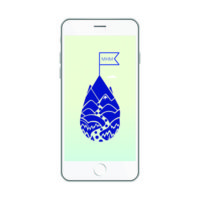
Addressing a need: Could a research-based app called Molehill Mountain ease anxiety in Autism?
One of the top ten priorities for autism research, according to Autistica’s research with autistic people, is reducing anxiety. In order to meet this need, Autistica have partnered with Professor Emily Simonoff to develop Molehill Mountain, a new smartphone app.
Read more -

Anxiety Disorders
Anxiety disorders in children and young people are common and can have a significant impact on mental health and well-being. Anxiety disorders can affect family, school and social life, leisure activities and educational achievement and they often occur alongside other mental health problems.
Read more -

Cognitive training
An introduction to cognitive training approaches, including working memory training, Cognitive Bias Modification (CBM) and Attentional Bias Modification Treatment (ABMT).
Read more -

OCD – Obsessive Compulsive Disorder
People with Obsessive Compulsive Disorder (OCD) experience unpleasant and intrusive thoughts, images, doubts or urges (called obsessions) and repetitive behaviours (called compulsions). Compulsions are usually carried out as a way of reducing the distress caused by obsessions. OCD takes many different forms and causes distress and interference to day-to-day life.
Read more -

Psychotherapies
Psychotherapies are commonly used therapies for children and young people. They can help children and families understand and resolve problems, change their behaviour and change the way they think and feel about their experiences.
Read more