Intervention
-

Dr. Cornelius Ani – Deputy Editor in Chief
Dr. Cornelius Ani is an Honorary Clinical Senior Lecturer at the Division of Psychiatry, Imperial College London, and a Consultant Child and Adolescent Psychiatrist at Surrey and Borders Partnership NHS Foundation Trust. He is a member of the Executive Committee of the African Association for Child and Adolescent Mental Health. Dr Ani is responsible for the Letters to the Editor section and he contributes editorial expertise in the area of Low and Middle Income Countries, inequalities, and physical health.
Read more -
 28
28
Trauma Aware Education
Dr. Judith Howard, Associate Professor of Education at Queensland University of Technology (QUT), and Dr. Lyra L’Estrange, Senior Lecturer in Education at Queensland University of Technology (QUT), will lead this session on Trauma Aware Education on ‘An education system solution to the complex systemic problem of child abuse and neglect: One Australian university’s approach’.
-

Dr. Katie McLaughlin
Dr. Katie McLaughlin is a clinical psychologist with expertise in child and adolescent mental health and the Executive Director of the Ballmer Institute for Children’s Behavioral Health and Knight Chair and Professor of Psychology at the University of Oregon. She has a joint Ph.D. in Clinical Psychology and Epidemiology from Yale University.
Read more -
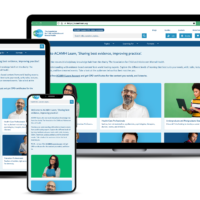
ACAMH Learn – a new, free online CPD resource for those working in child and adolescent mental health
The Association for Child and Adolescent Mental Health (ACAMH) has launched ACAMH Learn acamhlearn.org, a new, free online learning platform offering video and podcast content from more than 200 world-leading mental health experts.
Read more -

Dr. Isabel Morales-Munoz
Dr Isabel Morales-Munoz, Ph.D., is Assistant Professor in Psychology, based at the Institute for Mental Health, School of Psychology, at the University of Birmingham. Isabel has a BSc (Hons) in Psychology, from the University of Deusto, Bilbao (Spain). She completed her MSc in Cognitive Neuropsychology at the Complutense University of Madrid (Spain), and her MSc in Psychopathology and Health at the National University of Distance Education (Spain).
Read more -

Psychotherapies seem to be especially effective in low- and middle-income countries
Youth psychotherapies appear to be about twice as effective in low- and middle-income countries (LMICs) compared to high-income countries. However, disproportionately little research on youth psychotherapies has been conducted in LMICs; 90% of the world’s youth live in LMICs, but only 5% of randomized controlled trials of youth psychotherapies have been conducted in LMICs to date. Therefore, there is great need for more research on psychotherapies for youth in LMICs and for funding directed to LMIC-based investigators, clinicians, and organizations. We do not know why psychotherapies appear more effective in LMICs, but discovering why could help to identify ways of improving youth psychotherapies worldwide.
Read more -

The Sustainability of the Incredible Years Teacher Classroom Management Programme: Insights from UK Primary School Teachers
The current youth mental health crisis highlights the need for preventive and early intervention strategies like the Incredible Years programmes. The Incredible Years Teacher Classroom Management programme has shown positive effects on teachers’ classroom management strategies and pupil mental health. In this blog, we discuss teachers’ views on the sustainability of the programme, necessary to maintain its desired benefits in the longer term.
Read more -
JCPP Advances goes from Strength to Strength with Scopus
ACAMH are delighted to announce that our publication JCPP Advances has been accepted by Scopus, a comprehensive abstract and citation database launched by Elsevier. Scopus offers various analytics tools that allow journal editors and publishers to track their journal’s performance, analyse trends, and make data-driven decisions to improve the journal’s quality and impact.
Read more -

Professor Michael Kaess
Michael Kaess is Professor of Child and Adolescent Psychiatry and Psychotherapy at the University of Bern as well as the Director of the University Hospital of Child and Adolescent Psychiatry and Psychotherapy Bern in Switzerland. Professor Kaess is a Joint Editor of CAMH.
Read more -

ACEs – Adverse Childhood Experiences
Adverse Childhood Experiences (ACEs) are defined as situations that lead to an elevated risk of children and young people experiencing damaging impacts on their health and other social outcomes across the life course.
Read more