
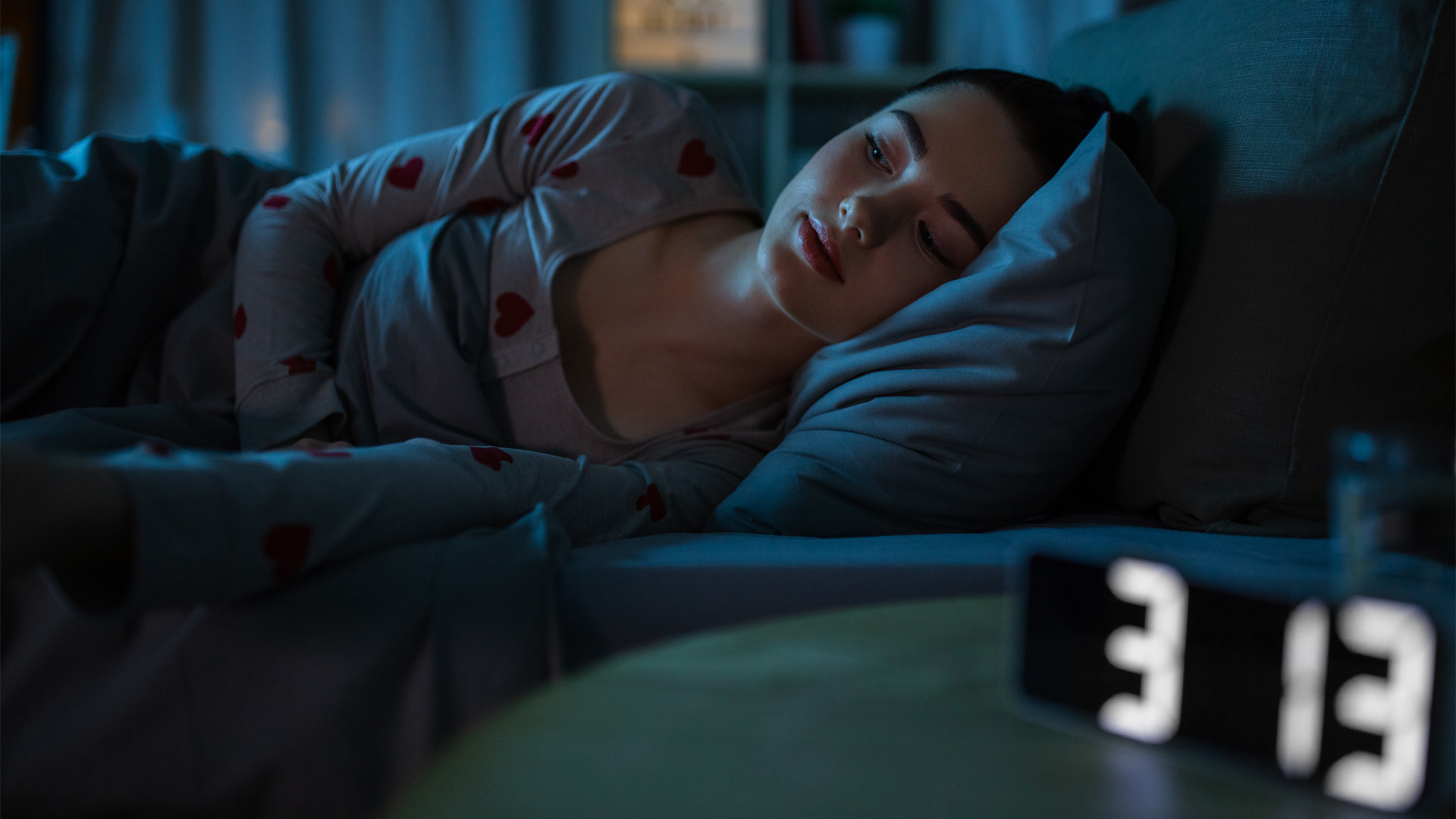
Sleep problems are common in adolescence, but the label “insomnia” can sometimes obscure what is actually happening. Puberty is associated with a biological shift toward later sleep and wake timing. And when that shift collides with early school mornings and other social demands, adolescents may report difficulty falling asleep, morning sleepiness, and daytime impairment, symptoms that may look like insomnia. Arnesen et al. (2025) examined this overlap in 3,867 Norwegian high-school students. Using the Bergen Insomnia Scale, 34.5% met operationalised criteria for insomnia, yet among these adolescents, 88.4% also reported at least one feature consistent with circadian delay, such as difficulty waking on school days, sleeping late when allowed, waking at 10:00 or later on free days, or oversleeping for school. Therefore, difficulty falling asleep in an adolescent should not automatically be conceptualised as insomnia disorder. For many young people, the more relevant problem may be a delayed circadian system interacting with schedules that require sleep and waking at biologically difficult times.
Why adolescent sleep shifts later
Developmental changes in sleep regulation contribute to a genuine shift toward later timing. Carskadon (2011) described adolescence as a period in life in which biological, psychological and social influences converge to produce short and mistimed sleep. Circadian timing shifts later across puberty, while changes in homeostatic sleep regulation may allow adolescents to stay awake for longer before feeling sufficiently sleepy (Jenni et al., 2005). Crowley et al. (2018) similarly emphasised that this developmental delay interacts with evening light exposure, greater autonomy, social activity and fixed early-morning obligations. The difficulty is that school schedules usually do not delay in parallel with biology. Early school start times have therefore been identified as a modifiable contributor to adolescent sleep restriction and circadian disruption (Adolescent Sleep Working Group et al., 2014).
Insomnia or circadian delay?
Insomnia disorder involves persistent difficulty initiating or maintaining sleep, accompanied by daytime impairment, despite adequate opportunity for sleep. CBT-I is the established first-line treatment for insomnia (Riemann et al., 2023). Delayed sleep-wake phase disorder (DSWPD), by contrast, is fundamentally a disorder of timing. Sleep is shifted later relative to the schedule required by school, family or work. When individuals are allowed to sleep according to their preferred timing, sleep may be substantially easier. That distinction can become blurred in adolescence. A teenager who lies awake for hours when asked to sleep at 22:30 but sleeps well from 02:00 to 10:30 on weekends presents a different clinical picture from someone who remains unable to sleep even when allowed to follow their preferred schedule. Arnesen et al. (2025) designed their study around this distinction.
What did the study find?
Of the 3,867 adolescents who completed the Bergen Insomnia Scale, 34.5% met the study’s operationalised criteria for insomnia and insomnia was more common among girls than boys. The authors then examined four indicators of circadian delay: difficulty waking on school days, being able to sleep far into the day, waking at 10:00 or later on free days, and oversleeping for school. Among adolescents classified as having insomnia, 88.4% reported at least one of these circadian-delay indicators, while only 11.6% reported none. Around 15.5% reported all four. The circadian-delay group also showed a distinctly delayed pattern: greater eveningness, later sleep timing, only about 6 hours of sleep on school days but around 8½ hours on free days, and nearly 3 hours of social jetlag. This suggests that many adolescents who screen positive for “insomnia” may instead, or also, be experiencing a delayed biological clock colliding with early schedules.
Why questionnaires can mislead
The Bergen Insomnia Scale is a validated measure (Pallesen et al., 2008). The problem is not that the questionnaire is poor; it is that difficulty falling asleep and daytime tiredness are not specific to one disorder. Epidemiological questionnaires are useful for identifying people with clinically relevant sleep difficulties, but they cannot always establish the mechanism producing those difficulties. In adolescents, circadian delay can reproduce several features of insomnia. A high insomnia score should therefore be treated as evidence of a sleep problem requiring further assessment, not as proof of insomnia disorder. Clinicians need to ask about actual sleep timing across school days and free days, wake-up difficulties, weekday-weekend differences, daytime sleepiness, napping and whether sleep becomes easier when schedules are unrestricted.
Social jetlag as a clue
One useful concept is social jetlag: the discrepancy between an individual’s biological or preferred sleep timing and the timing imposed by social obligations. In Arnesen et al. (2025), adolescents with insomnia symptoms plus circadian-delay indicators showed almost three hours of social jetlag and a large school-day/free-day difference in sleep duration. This pattern can be clinically informative, since large weekend “catch-up” sleep does not diagnose DSWPD, but it may indicate that the adolescent can obtain more normal sleep when external constraints are removed. Eveningness and insomnia are also independently associated with poorer emotional and behavioural functioning in adolescents (Li et al., 2018). Clinicians should therefore consider whether low mood, irritability, poor concentration or school disengagement are interacting with sleep timing rather than treating them as entirely separate problems.
Why diagnosis changes treatment
The distinction between insomnia and circadian delay is not semantic; it changes the therapeutic target. For chronic insomnia, CBT-I addresses conditioned arousal, maladaptive sleep behaviours and unhelpful beliefs about sleep (Riemann et al., 2023). For DSWPD, treatment aims to shift circadian timing. Approaches commonly include carefully timed morning light, stabilising and gradually advancing wake time, behavioural scheduling and chronobiotic strategies. Gradisar et al. (2011) found that CBT combined with bright light improved sleep timing and daytime functioning in adolescents with delayed sleep phase disorder. Trials by Saxvig et al. (2014) and Wilhelmsen-Langeland et al. (2013) have also examined bright light and melatonin-based approaches. Timing is crucial. Advising a circadian-delayed teenager simply to “go to bed earlier” may place them in bed during a biological phase of high alertness, increasing frustration without addressing the underlying timing problem.
A practical assessment framework
The paper supports a simple principle, before calling an adolescent’s sleep problem insomnia, examine what happens when they are allowed to sleep on their own schedule. Useful questions include whether sleep onset is easier when bedtime is delayed, whether the adolescent sleeps substantially later on non-school days, whether they can sleep for an adequate duration when unrestricted, and whether their main impairment is concentrated in the morning. A sleep diary that includes both school days and free days can be particularly useful because averages may hide the weekday-weekend discrepancy that helps identify circadian delay. Clinicians should also remember that circadian delay and insomnia can coexist. A young person may begin with a delayed schedule and later develop anxiety, frustration and conditioned wakefulness around sleep. The formulation may therefore need to include both mechanisms.
Implications for CAMHS and everyday practice
For clinicians in CAMHS, paediatrics and primary care, sleep complaints often arrive embedded within anxiety, depression, ADHD, school avoidance or family conflict. It can be tempting to treat “insomnia” as a generic symptom and offer standard sleep-hygiene advice. The findings argue for greater precision, mapping sleep timing across the week, asking what happens when the adolescent is free to sleep later, considering morning impairment as carefully as difficulty falling asleep and distinguishing insufficient sleep imposed by schedules from an inability to sleep despite adequate opportunity.
Conclusion
Arnesen et al. (2025) challenge a common assumption in adolescent sleep care: that difficulty falling asleep plus daytime impairment necessarily equals insomnia. More than one-third of adolescents in their sample met questionnaire criteria for insomnia, yet nearly nine in ten of those young people also showed at least one sign consistent with circadian delay. Their late sleep timing pronounced weekday-weekend differences and substantial social jetlag strengthened the case for a circadian explanation. The clinical question should therefore shift from “Does this teenager have insomnia symptoms?” to “What mechanism is producing these symptoms?” For some young people, CBT-I may be exactly the right intervention, but for others, the priority may be shifting circadian timing and reducing the conflict between biological sleep propensity and social schedules.
Where next?
Join us on 25 November 2026 for a fantastic event on ‘Understanding and Managing Adolescent Sleep Problems’, with Professor Michael Gradisar.
Sleep difficulties are common during adolescence and frequently arise in clinical practice, yet their causes and treatment are often misunderstood. In this evidence-based session, Professor Michael Gradisar will explore adolescent sleep problems from a circadian perspective, while also considering the “insomnia-like” experiences many young people report.
References
- Adolescent Sleep Working Group, Committee on Adolescence, & Council on School Health. (2014). School start times for adolescents. Pediatrics, 134(3), 642–649. https://doi.org/10.1542/peds.2014-1697
- Arnesen, I. B., Bjorvatn, B., Pallesen, S., Waage, S., Gradisar, M., Wilhelmsen-Langeland, A., & Saxvig, I. W. (2025). Insomnia in adolescent epidemiological studies: To what extent can the symptoms be explained by circadian factors? Chronobiology International, 42(1), 58–69. https://doi.org/10.1080/07420528.2024.2444677
- Carskadon, M. A. (2011). Sleep in adolescents: The perfect storm. Pediatric Clinics of North America, 58(3), 637–647. https://doi.org/10.1016/j.pcl.2011.03.003
- Crowley, S. J., Wolfson, A. R., Tarokh, L., & Carskadon, M. A. (2018). An update on adolescent sleep: New evidence informing the perfect storm model. Journal of Adolescence, 67, 55–65. https://doi.org/10.1016/j.adolescence.2018.06.001
- Gradisar, M., Dohnt, H., Gardner, G., Paine, S., Starkey, K., Menne, A., Slater, A., Wright, H., Hudson, J. L., Weaver, E., & Trenowden, S. (2011). A randomized controlled trial of cognitive-behavior therapy plus bright light therapy for adolescent delayed sleep phase disorder. Sleep, 34(12), 1671–1680. https://doi.org/10.5665/sleep.1432
- Jenni, O. G., Achermann, P., & Carskadon, M. A. (2005). Homeostatic sleep regulation in adolescents. Sleep, 28(11), 1446–1454. https://doi.org/10.1093/sleep/28.11.1446
- Li, S. X., Chan, N. Y., Yu, M. W. M., Lam, S. P., Zhang, J., Chan, J. W. Y., Li, A. M., & Wing, Y. K. (2018). Eveningness chronotype, insomnia symptoms, and emotional and behavioural problems in adolescents. Sleep Medicine, 47, 93–99. https://doi.org/10.1016/j.sleep.2018.03.025
- Pallesen, S., Bjorvatn, B., Nordhus, I. H., Sivertsen, B., Hjørnevik, M., & Morin, C. M. (2008). A new scale for measuring insomnia: The Bergen Insomnia Scale. Perceptual and Motor Skills, 107(3), 691–706. https://doi.org/10.2466/pms.107.3.691-706
- Riemann, D., Espie, C. A., Altena, E., et al. (2023). The European insomnia guideline: An update on the diagnosis and treatment of insomnia 2023. Journal of Sleep Research, 32(6), e14035. https://doi.org/10.1111/jsr.14035
- Saxvig, I. W., Wilhelmsen-Langeland, A., Pallesen, S., Vedaa, Ø., Nordhus, I. H., & Bjorvatn, B. (2014). A randomized controlled trial with bright light and melatonin for delayed sleep phase disorder: Effects on subjective and objective sleep. Chronobiology International, 31(1), 72–86. https://doi.org/10.3109/07420528.2013.823200
- Wilhelmsen-Langeland, A., Saxvig, I. W., Pallesen, S., Nordhus, I. H., Vedaa, Ø., Lundervold, A. J., & Bjorvatn, B. (2013). A randomized controlled trial with bright light and melatonin for the treatment of delayed sleep phase disorder: Effects on subjective and objective sleepiness and cognitive function. Journal of Biological Rhythms, 28(5), 306–321. https://doi.org/10.1177/0748730413500126