Educators / Teachers
Educators / Teachers
-

Sixty-Five Years Working With Children
Emeritus Professor Philip Graham delivered this Keynote lecture ‘Sixty-Five Years Working With Children’, on Thursday 7 November at the 2024 ACAMH Awards. Professor Graham was the recipient of ACAMH’s Michael Rutter Medal for Lifetime Contribution to Child and Adolescent Mental Health.
Read more -
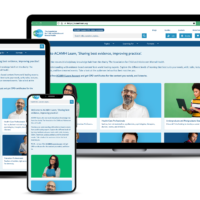
ACAMH Learn – a new, free online CPD resource for those working in child and adolescent mental health
The Association for Child and Adolescent Mental Health (ACAMH) has launched ACAMH Learn acamhlearn.org, a new, free online learning platform offering video and podcast content from more than 200 world-leading mental health experts.
Read more -
 03
03
Advancing ADHD Care: Evidence-Based Approaches in Child and Adolescent Mental Health – 2024 Judy Dunn International Conference
Gain valuable insights into the latest research on ADHD causes, with a special focus on genetic factors. Clinicians will learn how to apply this knowledge to improve patient care and treatment planning.
- Event type
- Judy Dunn International Conference
-

University Students and Imposterism: Its Relationship with Happiness, Self-Efficacy, and Perfectionism
Imposter syndrome is a pertinent issue in academia. A recent article from May 2023 titled “The imposter phenomenon and its relationship with self-efficacy, perfectionism and happiness in university students” (Pákozdy et al., 2023) sheds light on this pressing issue. This blog aims to summarise the key findings of the article, discuss its strengths and limitations, evaluate its evidence, and provide a personal perspective on how this evidence can inform practice and future research.
Read more -

The Sustainability of the Incredible Years Teacher Classroom Management Programme: Insights from UK Primary School Teachers
The current youth mental health crisis highlights the need for preventive and early intervention strategies like the Incredible Years programmes. The Incredible Years Teacher Classroom Management programme has shown positive effects on teachers’ classroom management strategies and pupil mental health. In this blog, we discuss teachers’ views on the sustainability of the programme, necessary to maintain its desired benefits in the longer term.
Read more -

Tourette Syndrome: Improve Quality of Life and Reduce Misconceptions
This Tourettes Awareness Day (7 June) we encourage you to explore the FREE learning opportunities available on our website, and to share with your networks. Together we can work towards ‘sharing best evidence, improving practice’ to highlight the impact Tourettes can have on those with the condition and those around them.
Read more -

Breaking Down Barriers and Improving Understanding – Autism Acceptance Week 2024
This World Autism Acceptance Week (2 April to 8 April 2024), we encourage you to explore the FREE learning opportunities available on our website, and to share with your networks.
Together we can work towards ‘sharing best evidence, improving practice’ to help create a society that works for autistic children and young people.
Read more -

Catching some zzz’s – Sleep, Sleep Hygiene, and Wellbeing
This World Sleep Day (15 March) we encourage you to explore the learning opportunities available on our website and learn more about the importance of sleep health in children and young people. Help us to raise awareness of sleep health through sharing with your networks and colleagues.
Read more -

Inclusion and Advocacy for Women with ADHD: Addressing Inequities and Challenging Diagnostic Bias on International Women’s Day
March 8th, 2024 is International Women’s Day and this year’s theme is “Inspire Inclusion.” Unfortunately, women who hold multiple intersecting identities that are systemically oppressed world-wide are often excluded from discussions. One example includes women who are neurodiverse, and more specifically for this post, women with attention-deficit/hyperactivity disorder (ADHD). Women and non-binary folks are often excluded from appropriate diagnosis of ADHD due to bias in providers, boy/men-dominated symptoms in the DSM-5 (Barkley, 2023; Hinshaw et al., 2021), socialization to mask and internalize symptoms, and sexism and other forms of discrimination. As with most discrimination, this is even worse for women with ADHD who also hold other systemically oppressed identities. This blog will focus on how to increase equity for women with ADHD with concrete solutions for multiples systems that affect them.
Read more -

An Increasing Concern: Improving Self-Harm and Self-Injury Awareness
If you or a person you know is struggling with their mental health, please seek support by accessing the helplines and resources provided by the NHS website. For those outside the UK please use an internet search to find an organisation that can offer direct support.
1 March is globally recognised as Self-Harm and Self-Injury Awareness Day and serves as an opportunity to raise awareness, encourage an understanding, and promote more conversations around the topic of self-harm and self-injury. We encourage you to explore the learning opportunities available on our website and do please share with your networks and colleagues.
Read more