Parenting & Family
-
 17
17
Siblings and the Family
Speakers will present new research, intervention adaptation, and service perspectives, highlighting risk and protective factors, effective supports, and the vital role siblings play in both family wellbeing and shaping mental health services.
-

Families and Children in Wartime Ukraine: Prelude to an Online Course on Families in Context of War and Social Conflict Through the Lens of Attachment
For practitioners and policymakers, it is important to realise that the extraordinarily high levels of parental burnout signal serious mental health challenges ahead, even well beyond the end of the war.
Read more -

Understanding How Parenting Programs Work: Key Behaviour Changes and Individual Differences in Outcomes
A 2025 study by Sigurðardóttir and colleagues brings together findings from 14 European randomized controlled trials with 3,252 families, all evaluating social learning-based parenting programmes. The study examined in detail how these programmes can support the reduction of disruptive behaviours in children.
Read more -
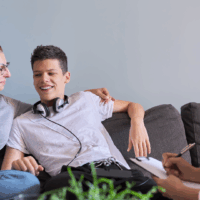
Parent-Child Interaction Therapy: What Makes Coaching Work?
A new study by Scherpbier et al. (2025) explores how therapists support parents in learning and using positive interaction strategies during Parent-Child Interaction Therapy (PCIT). Using 125 video-recorded sessions from 17 Dutch families, the authors applied lag sequential analysis to identify which therapist coaching techniques were most likely to encourage parents to use key interaction […]
Read more -

Mental Health and Parenthood – Maternal Mental Health Matters
This Maternal Mental Health Awareness Week, we encourage you to explore the FREE learning opportunities available on our website and ACAMH Learn, and to share with your networks.
Read more -
05
Stronger Together: The Role of Families and Systemic Connection in Mental Health Recovery – ACAMH Malta’s 10th Anniversary
We are thrilled to invite you to celebrate ACAMH Malta’s 10th Anniversary with us at our Annual Conference, ‘Stronger Together: The Role of Families and Systemic Connection in Mental Health Recovery’
-

Interventions for Sibling Mental Health Conditions: New Systematic Review Shows Lack of Evidence
This blog offers a summary of the findings and implications of a recent systematic review of studies looking at the effectiveness of interventions for young people with sibling mental health conditions. Only four papers were included in this review, highlighting the lack of evaluations for interventions supporting these young people.
Read more -

Unlocking the Potential of Parenting Programs: How Financial Incentives Can Drive Engagement
Parenting programs are vital tools for addressing disruptive behaviours in children, yet low participation rates undermine their potential. Our recent research highlights that financial incentives can boost engagement, particularly among underserved families, and suggests new directions for increasing the accessibility and effectiveness of these programs.
Read more -

From Valencia to Understanding the Mental Health Impacts of Floods on Children and Young People
Floods are the most common type of natural disaster, with 1.81 billion people facing significant flood risk worldwide, particularly in low- and middle-income countries. Among those affected, children and young people are especially vulnerable due to limited coping strategies compared to adults and high dependence on caregivers. Despite this, research on the impacts of floods on their mental health remains scarce.
Read more -
25
Responding to sibling sexual abuse – putting research into action
This workshop will outline current knowledge and evidence in the sibling sexual abuse field and look at how that knowledge can be used to inform how we positively support a family’s journey, from identification of harm, safety planning and assessment, through to therapeutic intervention, case closure and aftercare support