

Single-Session Interventions for Children and Young People: Evidence, Clinical Skills, and Best Practice

21


Event type Workshop

Can't make it on the day? Book now and receive the recording 5 working days after the event. Tickets close once the event has begun.

  • 1pm - 5pm UK time
  • Online half-day workshop
  • £99 for ACAMH members, £139 for non-members
  • CPD certificate included

For clinical psychologists, psychiatrists, psychological therapists, counsellors, mental health nurses, social workers and service leads working with children, young people and families.

EARLY BIRD PRICING ENDS 1ST DEC 2026

Book now and save up to £30

BOOK NOW

Jessica Schleider web

This half-day webinar explores the latest evidence, implementation, and clinical application of Single-Session Interventions (SSIs) and Single Session Consultations (SSCs) for children and young people’s mental health. Bringing together leading international experts, this online training event will examine the theory, research evidence, and practical strategies underpinning single-session approaches.

Participants will gain insights into how SSIs can be implemented within services, alongside the core clinical skills needed to deliver effective, evidence-based brief interventions. Combining research, real-world examples, clinical demonstrations, and case-based learning, this event offers a valuable opportunity for mental health professionals to expand their therapeutic toolkit and improve outcomes for children, young people, and families.

Pricing and booking: early-bird ends 1 December 2026
Book by 1 December 2026 to secure the early-bird price. Prices rise after this date.
Ticket Type Price
ACAMH paying Members (Online, Concession) EARLY BIRD £99 (Join now and save)
£129 after 1 December 2026
ACAMH Learn Account Holders EARLY BIRD £139 (Join now and save)
£169 after 1 December 2026
Non Members EARLY BIRD £139 (Join now and save)
£169 after 1 December 2026
ACAMH Undergraduate/ Postgraduate Members £20
LMIC Members Free

Your ticket includes: a personalised CPD/CME certificate by email, 90 days’ access to all recordings and the presentation slides. Recordings will be available to delegates from 5 working days after the event.

How to book: select Book Now and complete the form that follows. You’ll then receive an email confirmation and a link to the webinar, plus a calendar reminder nearer the time.

  • ACAMH Members MUST login to book onto the webinar in order to access this webinar and get a CPD/CME certificate.
  • Non-members: this is a great time to join ACAMH, take a look at what we have to offer, and make the saving on these sessions.

Book Now

Don’t forget as a charity any surplus made is reinvested back as we work to our vision of ‘Sharing best evidence, improving practice’, and our mission to ‘Improve the mental health and wellbeing of young people aged 0-25’.
Programme
13:00 Welcome and Introduction
13:05 Assoc. Prof. Jessica Schleider – Single-Session Interventions (SSI): Understanding the rationale, mechanisms, evidence and clinical potential
13:50 Q&A with Assoc. Prof. Jessica Schleider
14:00 Break
14:10 Prof. Maria Loades – Self-guided SSIs in the UK: what works, where it fits and what next?
14:55 Q&A with Prof. Maria Loades
15:05 Break
15:15 Dr Erica Szkody – Single Session Consultations (SSC): principles and core skills
15:55 Break
16:00 Dr Erica Szkody – Practical applications of SSC: clinical demonstrations and case-based examples
16:40 Q&A with Dr Erica Szkody
16:55 Closing Remarks
17:00 Close

Book Now

Meet the speakers

Jessica Schleider

Dr. Jessica Schleider is Founding Director of the Lab for Scalable Mental Health and Associate Professor of Medical Social Sciences, Pediatrics, and Psychology at Northwestern University. Her professional mission is to build, test, and disseminate scalable mental health solutions that bridge gaps in mental health ecosystems, with a focus on single-session interventions (SSIs) for underserved youth. She has secured >$13 million in research funding as PI or Project Lead and has been recognized via numerous awards, including the NIH Director’s Early Independence Award. Dr. Schleider has published >160 peer-reviewed articles and chapters, along with three books. She has also created over a dozen open-access, single-session mental health programs, which have reached >150,000 people to date. Dr. Schleider completed her PhD in Clinical Psychology at Harvard University in 2018, along with her Doctoral Internship in Clinical and Community Psychology at Yale School of Medicine.

Maria Loades

Dr. Maria Loades is a Professor of Clinical Psychology at the University of Bath and an NIHR Advanced Fellow, leading research to improve early access to mental health support for young people. She is a clinical psychologist with extensive NHS CAMHS experience and has published over 100 peer-reviewed papers on child and adolescent mental health. Maria leads UK-based research evaluating innovative, scalable approaches, including digital single-session interventions, and works closely with young people, clinicians, and policymakers to ensure research translates into meaningful improvements in practice. See unlockwellbeing.org.uk, a co-designed website aimed at young people, parents and professionals that describes what SSIs are and how they can be accessed.
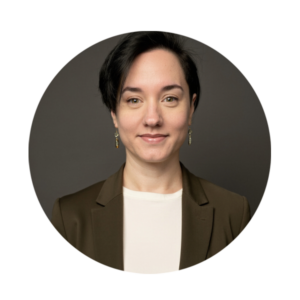
Erica Szkody

Erica Szkody, PhD, is a Research Assistant Professor in the Department of Medical Social Sciences at Northwestern University Feinberg School of Medicine and a clinical psychologist specializing in scalable youth mental health interventions. Her research focuses on developing, evaluating, and implementing brief psychological interventions, including Single-Session Interventions (SSIs) and Single-Session Consultations (SSC), across schools, health systems, and community settings. Dr. Szkody has led multiple implementation studies and trained more than 500 providers across 8 U.S. states and 3 countries in SSC delivery. She currently holds an NIH K23 award to develop a provider-delivered single-session intervention for rural schools.

Book Now

Who should attend

This event is primarily aimed at mental health practitioners working with children, young people and families, including:

  • Clinical psychologists
  • Child and adolescent psychiatrists (CAMHS)
  • Psychological therapists and counsellors
  • Mental health nurses
  • Social workers
  • Other clinicians delivering psychological interventions

It will also be relevant for service leads, trainees, and researchers interested in brief, evidence-based interventions and innovative models of care. The content is suitable for professionals with a foundational understanding of child and adolescent mental health who are looking to develop practical skills and integrate single-session approaches into routine clinical practice.

Book Now

Talk 1 by Assoc. Prof. Jessica Schleider – Single-Session Interventions (SSI): Understanding the rationale, mechanisms, evidence and clinical potential

Persistent gaps between mental health needs and available support demand approaches that can reach people when and where they seek help. Single-session interventions (SSIs), structured programs designed to offer meaningful benefit within one encounter, offer opportunities to expand access within and beyond formal health care systems. SSIs can be self-guided or delivered by trained providers; offered online or in-person; and embedded in online platforms, schools, health systems, and community settings, where people most often seek help. The science supporting the utility of SSIs has expanded substantially over the past decade. Our 2025 umbrella review in the Annual Review of Clinical Psychology synthesized 24 systematic reviews encompassing 415 unique clinical trials, identifying benefits for a range of mental health outcomes and treatment engagement across youth and adults, alongside important variation and high-priority domains for future research.

In this webinar, I will share updates in SSI science, with particular attention to recent trials and meta-analyses, emerging evidence on how and for whom SSIs work, and questions about the durability of their effects. Drawing on research from the Lab for Scalable Mental Health and the broader field, I will discuss digital and human-delivered approaches, lessons on sustainable implementation from community partnerships, and strategies for integrating SSIs into youth mental health ecosystems. Participants will leave with access to free, evidence-based resources and practical guidance for making effective support available to more young people and families.

Learning outcomes

  • To define single-session interventions (SSIs) and describe their role within and beyond formal mental health services.
  • To summarize recent scientific advances in whether, how, and for whom SSIs improve mental health outcomes.
  • To identify evidence-based SSI tools and strategies for implementation in real-world settings.

Book Now

Talk 2 by Prof. Maria Loades – Self-guided SSIs in the UK: what works, where it fits and what next?

Persistent gaps between mental health needs and available support demand approaches that can reach people when and where they seek help. Single-session interventions (SSIs), structured programs designed to offer meaningful benefit within one encounter, offer opportunities to expand access within and beyond formal health care systems. SSIs can be self-guided or delivered by trained providers; offered online or in-person; and embedded in online platforms, schools, health systems, and community settings, where people most often seek help. The science supporting the utility of SSIs has expanded substantially over the past decade. Our 2025 umbrella review in the Annual Review of Clinical Psychology synthesized 24 systematic reviews encompassing 415 unique clinical trials, identifying benefits for a range of mental health outcomes and treatment engagement across youth and adults, alongside important variation and high-priority domains for future research.

In this webinar, I will share updates in SSI science, with particular attention to recent trials and meta-analyses, emerging evidence on how and for whom SSIs work, and questions about the durability of their effects. Drawing on research from the Lab for Scalable Mental Health and the broader field, I will discuss digital and human-delivered approaches, lessons on sustainable implementation from community partnerships, and strategies for integrating SSIs into youth mental health ecosystems. Participants will leave with access to free, evidence-based resources and practical guidance for making effective support available to more young people and families.

Learning objectives

  • To define single-session interventions (SSIs) and describe their role within and beyond formal mental health services.
  • To summarize recent scientific advances in whether, how, and for whom SSIs improve mental health outcomes.
  • To identify evidence-based SSI tools and strategies for implementation in real-world settings.

Book Now

Talks 3 and 4 by Dr Erica Szkody – Single Session Consultations (SSC): principles and core skills and Practical applications of SSC: clinical demonstrations and case-based examples

Single-Session Consultation (SSC) is a brief, evidence-informed clinical approach that helps practitioners deliver meaningful therapeutic impact within a single encounter while remaining flexible enough to integrate into routine mental health care. SSC can be delivered as a standalone intervention or embedded within ongoing treatment and has been successfully implemented across outpatient clinics, schools, integrated care, and community mental health settings.

In this interactive workshop, attendees will receive a practical introduction to the SSC model and its implementation. In the first half, participants will learn the evidence supporting single-session care and receive a step-by-step framework for conducting an SSC, including agenda setting, identifying client strengths and goals, facilitating solution-focused conversations, and collaboratively developing actionable next steps.

The second half will focus on translating SSC into everyday practice through clinical demonstrations, case-based examples, and discussion of implementation strategies. Participants will explore documentation templates, workflow integration, common challenges, and practical adaptations for different service settings while maintaining fidelity to the core model.

Designed for anyone interested in providing evidence-based, equity-focused mental health care. Attendees will leave with a working knowledge of SSC delivery and practical strategies for integrating SSC into their own clinical practice.

Session 1 learning objectives

  • Describe the evidence base and guiding principles underlying Single-Session Consultation (SSC).
  • Learn the step-by-step structure for conducting an SSC from beginning to end.
  • Apply core clinical skills for collaboratively identifying goals, eliciting strengths, and developing actionable next steps within a single session.
  • Identify opportunities to integrate SSC principles into routine child and adolescent mental health practice.

Session 2 learning objectives

  • Identify practical strategies for implementing SSC across different clinical settings and service pathways.
  • Apply implementation tools, documentation templates, and workflow adaptations that support successful SSC delivery.
  • Recognize common challenges encountered during SSC implementation and identify evidence-informed solutions.
  • Adapt SSC while maintaining fidelity to its core clinical components.

Book Now

FAQs on the topic

1. What are single-session interventions (SSIs)?

Single-session interventions, sometimes called single-session therapy, are structured programmes designed to offer meaningful benefit within one encounter, without assuming a person will return. They can be self-guided or delivered by a trained practitioner, online or in person, and offered through schools, health services, community settings and digital platforms. They aim to complement, not replace, longer-term therapy by widening access to support.

2. Do single-session interventions work for children and young people?

Evidence has grown substantially over the past decade. A large review of hundreds of clinical trials found benefits across a range of mental health outcomes and for treatment engagement, in both young people and adults. Effects on youth anxiety and depression are generally small and vary between studies, and questions remain about how long benefits last and for whom they work best.

3. Can single-session interventions help young people on mental health
waiting lists?

Long waits for CAMHS and other services remain a major barrier to support. Self-guided digital single-session interventions, usually completed in 15 to 30 minutes, are being tested as a way to offer early, low-intensity support while young people wait. Early studies, including with young people on waiting lists, suggest they are feasible and acceptable, with promising short-term effects. Larger trials are under way.

4. What is single-session consultation (SSC)?

Single-session consultation is a brief, solution-focused clinical approach in which a practitioner and a young person or family use one session to set an agenda, identify strengths and goals, and agree practical next steps. It can be offered as a standalone session, to people on waiting lists, or within ongoing treatment, and has been used in outpatient clinics, schools, integrated care and community mental health settings.

5. What are the challenges of implementing single-session interventions?

Key challenges include maintaining fidelity at scale, ensuring equitable access, monitoring safety and potential harms, and fitting single sessions into existing workflows. Uptake can be lower than expected, and some young people miss booked sessions. Community partnerships, practical documentation templates and workflow adaptations can support sustainable implementation across health services, schools and the voluntary sector.

Book Now

Infographic

Download a pdf of this infographic