Journal article
-

JCPP Annual Research Review 2024 – “Time may change me”: Developmental change across multiple time scales
We are delighted to announce the release of the 2024 Journal of Child Psychology & Psychiatry (JCPP) Annual Research Review, edited by Sara R. Jaffee.
Read more -
JCPP Advances 2023 Special Issue – ‘Evidence-based Synthesis Studies for Child and Adolescent Mental Health Conditions’
September sees the release of the JCPP Advances 2023 Special Issue on ‘Evidence-based Synthesis Studies for Child and Adolescent Mental Health Conditions’, edited by Professor Henrik Larsson, Dr. Marco Solmi, Professor Guilherme Polanczyk, Professor Seena Fazel, Dr. Cinzia Del Giovane and Dr. Ioana Cristea.
Read more -

Creating Hope Through Action – Suicide Prevention, A Priority For All
World Suicide Prevention Day (10 September) is a fantastic opportunity to encourage an understanding and increase awareness of suicide prevention and make suicide prevention a priority. We encourage you to explore the learning opportunities available on our website and do please share with your networks and colleagues.
Read more -

Being and Becoming Mentally Healthy: A framework for understanding the mental health of babies and young children
Although there is increasing interest and investment in infant mental health, the term itself is not well understood. To support professionals to work together to protect and promote babies’ and young children’s mental health, we have worked with UNICEF-UK to create a new framework describing what it means to be mentally healthy in this life stage. The framework has two parts, “Being” and “Becoming” capturing both babies’ and young children’s current mental health as well as the capacities they are developing that will enable them to be mentally healthy in the future.
Read more -

Covid-19’s impact on Loneliness and Mental Health: A Study of Schizotypal Traits and Paranoia
The Covid pandemic lockdown has affected us differently, with some people being impacted more than others. Extensive research has indicated that lockdowns – which broadly include isolation measures, such as, in the UK, being required to stay at home unless for essential reasons – have disproportionately impacted individuals with higher levels of paranoia.
Read more -

Nature based interventions in CAMHS wards can benefit patients and staff: helpful ideas from a qualitative practice-based paper
There is evidence that our surroundings matter, both psychologically and physically. Where we spend our time has an impact on how we feel. Much of what we have learnt about this comes from research in hospital settings.
Read more -
Let’s Connect – Creating Meaningful Connections to Support Mental Health
Now in its ninth year, Place2Be’s Children’s Mental Health Week 2023 focuses on the theme of ‘Let’s Connect’; encouraging the need for meaningful connections to support our mental health and wellbeing. With this in mind, do explore the learning opportunities available on our website, and do share with your networks and colleagues.
Read more -

CAMH Special Issue – ‘Technology and Mental Health for Children and Adolescents: Pros and Cons’
We are delighted to announce the release of the CAMH 2023 Special Issue on ‘Technology and Mental Health for Children and Adolescents: Pros and Cons’, edited by Lina Gega, Jennifer Martin, Kapil Sayal, and Hiran Thabrew.
Read more -

Antidepressants for children and teenagers: what works?
Prescriptions for teenagers are rising. Research has found that the number of 12 to 17 year olds prescribed antidepressants more than doubled between 2005 and 2017. More recent information suggests that prescriptions have continued to increase, especially during the pandemic.
Read more -
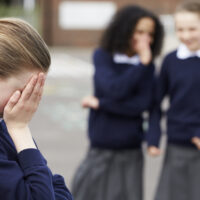
Anti-Bullying Week 2022: A Priority for All
This Anti-Bullying Week (14 – 18 November), we have gathered a range of FREE learning resources from leading academics, clinicians, and researchers to raise awareness of the impact of bullying on child and adolescent mental health. We encourage you to share with your networks.
Read more