Expert guide
-

Anxiety – Increasing Understanding and Improving Awareness
Celebrating its twelfth year, Mental Health Awareness Week has chosen to focus on ‘Anxiety’ – to increase public understanding of anxiety and improve awareness of the impact it can have on lives. Everyone, in some shape or form, experiences anxiety. However, anxiety can become overwhelming and, in some cases, can evolve into an anxiety disorder.
This Mental Health Awareness Week (15 to 21 May 2023), we encourage you to explore the FREE learning opportunities available on our website, and to share with your networks, to increase people’s awareness and understanding of the impact of anxiety on children and young people.
Read more -

Autism Resources Update
This World Autism Acceptance Week (27 March to 2 April 2023), we have collated a number of FREE learning resources from leading academics, clinicians, and researchers to build upon our previous catalogue of resources for World Autism Acceptance Week 2022.
We encourage you to explore the learning opportunities available on our website, sign up for our fantastic upcoming events below, and do share with your networks.
Read more -
Let’s Connect – Creating Meaningful Connections to Support Mental Health
Now in its ninth year, Place2Be’s Children’s Mental Health Week 2023 focuses on the theme of ‘Let’s Connect’; encouraging the need for meaningful connections to support our mental health and wellbeing. With this in mind, do explore the learning opportunities available on our website, and do share with your networks and colleagues.
Read more -

Antidepressants for children and teenagers: what works?
Prescriptions for teenagers are rising. Research has found that the number of 12 to 17 year olds prescribed antidepressants more than doubled between 2005 and 2017. More recent information suggests that prescriptions have continued to increase, especially during the pandemic.
Read more -

How to spot and support students who have experienced trauma
Blog from Amy Sayer. “The need to spot and support students who have experienced trauma has become increasingly urgent and necessary within educational settings.”
Read more -
Mood Disorders and ASD: What not to miss
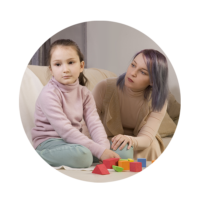
The autism community identified mental health as their top research priority in 2016.¹ Autistic children and adolescents are more likely than their general population counterparts to have psychiatric disorders.² For bipolar disorder, rates of 7% are seen in autistic children and adolescents versus 1% in their general population peers.
Read more -

Reflections on working psychotherapeutically in schools
One of the greatest challenges in my experience of working psychotherapeutically in schools has been in trying to balance the increasing complexity of children’s mental health needs with the reduction in funding and therefore time frame in which to work.
Read more -
How can we model the brain when it goes awry? How Reinforcement Learning Models can shed light on Psychiatric Disorders that emerge during Development.
It is well-established that many psychiatric disorders initially emerge during the formative time periods of childhood and adolescence (Kessler et al., 2005; Paus, Keshavan, & Giedd, 2008), when the brain is consistently subject to growth and experience-related changes. This applies not only to classic neurodevelopmental disorders like attention deficit hyperactivity disorder (ADHD) but also to psychiatric disorders like depression or obsessive-compulsive disorder (OCD), which are often attributed to adulthood (Hauser, Will, Dubois, & Dolan, 2019).
Read more -
COVID19 Resources on Child & Adolescent Mental Health
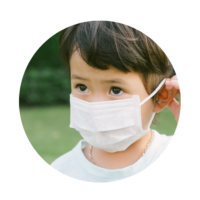
Take a look at this growing page of evidence-based resources, research and advice in relation to COVID19’s affect on child and adolescent mental health.
Read more -
CAMHS services in our physically distanced world
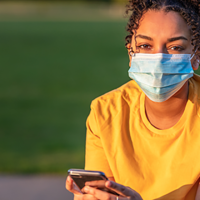
On March 23rd 2020, the way healthcare was provided in England had to change overnight. With the COVID-19 pandemic sweeping across the country, CAMHS staff had to adapt to the news that they must provide routine services from home where possible and all non-urgent face-to-face contact must cease to prevent the spread of the virus.
Read more