Children and young people spend a great deal of time at school, so it has an important role to play in their development. Time spent in school impacts not just on academic and cognitive progress, but also on social interactions, peer relationships, emotional regulation and behaviour.
School-based interventions
-

Digital Interventions for Children and Young People
There are many different digital technologies that can be used at different points in a person’s life, from mental health promotion and prevention through to treatment and subsequent self-management.
Read more -
Mental Health in Schools Editorial
Welcome to “The Bridge”. In this edition we are focussing on young people’s mental health in school settings.
Read more -

Mental Health in Schools
Research Digests about Mental Health in Schools, including screening for ASD, schools support, school-based interventions, tics and barriers to information sharing.
Read more -
Teacher assessments could replace high-stake testing to improve student well-being
Many students experience anxiety and distress during exams, and these emotions can have a negative effect on achievement. Notably, one of the top-reported concerns voiced by children in the UK is the stress and anxiety associated with school work and exam performance.
Read more -
 23
23
Creating Therapeutic Physical Environments
The physical space that a child interacts with can play a significant role in their mental health, increasing connectedness and relationships. Creating positive therapeutic physical environments can be achieved with any existing space, even on the smallest of budgets, right through to those who are designing a new space.
-
09
The Challenge Model – anxious and vulnerable children
Royal Free Hospital Children’s School (RFHCS) has been running a specific programme to address the needs of a cohort of anxious and vulnerable children for the last 4 years – many of whom exhibit signs of emotionally based school refusal.
-
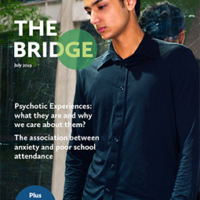
Psychological resilience in young people
Having spent a lot of time on a camp bed in a paediatric ward with young people and their families, some of whom were inpatients for weeks on end and facing huge physical challenges, it has made me wonder a great deal about the elements of psychological resilience in young people.
Read more -

Congratulations to Professor Tamsin Ford CBE
We are delighted for ACAMH Board member, Professor Tamsin Ford who has been awarded a CBE for services to psychiatry.
Read more -

Leading lights celebrated in the ACAMH Awards
We are delighted to announce the inaugural winners of the ACAMH Awards, recognising the work of individuals whose work advances our understanding of mental health in children and young people.
Read more -
The association between anxiety and poor school attendance
School plays a key role in children’s development, and frequent absence from school increases the likelihood of a range of adverse outcomes in childhood and later life. This includes poor academic performance, social isolation, economic deprivation and unemployment in adulthood. There are many risk factors for frequent school absence, including factors related to the child and their family, school and community.
Read more