Self-harm is an increasingly recognised phenomenon and one of the strongest predictors of suicide, which continues to be one of the leading causes of death in young people world-wide. Self-harm can take many forms and may present with or without suicidal intent and both in the context of mental disorder, and without.
Self-harm & Suicide
-

Biological explanations of links between childhood adversity and later self-harm: a focus on inflammation – Dr. Abigail Russell
Dr. Abigail Russell at the launch of the JCPP Special issue 2019 – Suicide and self-harm. Abby looks at ‘Biological explanations of links between childhood adversity and later self-harm: a focus on inflammation’
Read more -

In Conversation… Suicide and Self-harm with Professor David Cottrell
David discusses school-based interventions, recent studies on prevention/intervention and (SHIFT), a large multi-centre randomised controlled trial, investigating systemic family therapy following teenage self-harm.
Read more -

How to reduce self-harm in young people – Professor David Cottrell
Professor David Cottrell at the launch of the JCPP Special issue 2019 – Suicide and self-harm. David looks at ‘How to reduce self-harm in young people – Challenges for future research’
Read more -

In Conversation… Suicide and Self-harm with Professor Lars Mehlum
Lars discusses dialectical behaviour therapy for adolescents (DBT-A) as an intervention, his most recent paper in The JCPP, national strategies for suicide prevention and the latest clinical research.
Read more -

-
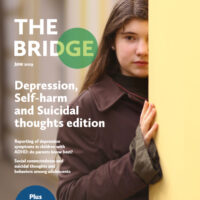
Depression, Self-harm and Suicidal Thoughts
There are good treatments available for depression, (pharmacological and non-pharmacological) though more options are required to meet the needs of those that do not respond well to treatment. The costs to society, not just the treatment cost but also cost to individuals and wider society including education and employment, are huge.
Read more -

Self-Harm & Suicide Issue
As a clinician, it certainly does feel that more and more young people are being referred, following self harm or with suicidal ideas, to the CAMHS service I work in. This nationwide increase in numbers is acknowledged in recent government reports, which are summarised in this edition.
Read more -

Machine learning approach predicts suicide risk
A study has evaluated the performance of machine learning on routinely collected electronic health records, as a possible approach to accurately screen and detect adolescents at risk of making suicide attempts.
Read more -

The family environment mediates risk of self-harming
Non-suicidal self-injury (NSSI) constitutes any deliberate physical injury to oneself that is not life-threatening. It is a behaviour that commonly starts during adolescence. Childhood family adversity (CFA) is associated with NSSI, but the risk pathways between CFA and NSSI are unclear.
Read more -

Self-harm & Suicide
Self-harm is an increasingly recognised phenomenon and one of the strongest predictors of suicide, which continues to be one of the leading causes of death in young people worldwide. Self-harm can take many forms and may present with or without suicidal intent and both in the context of mental disorder, and without.
Read more