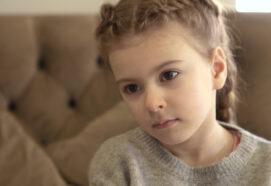
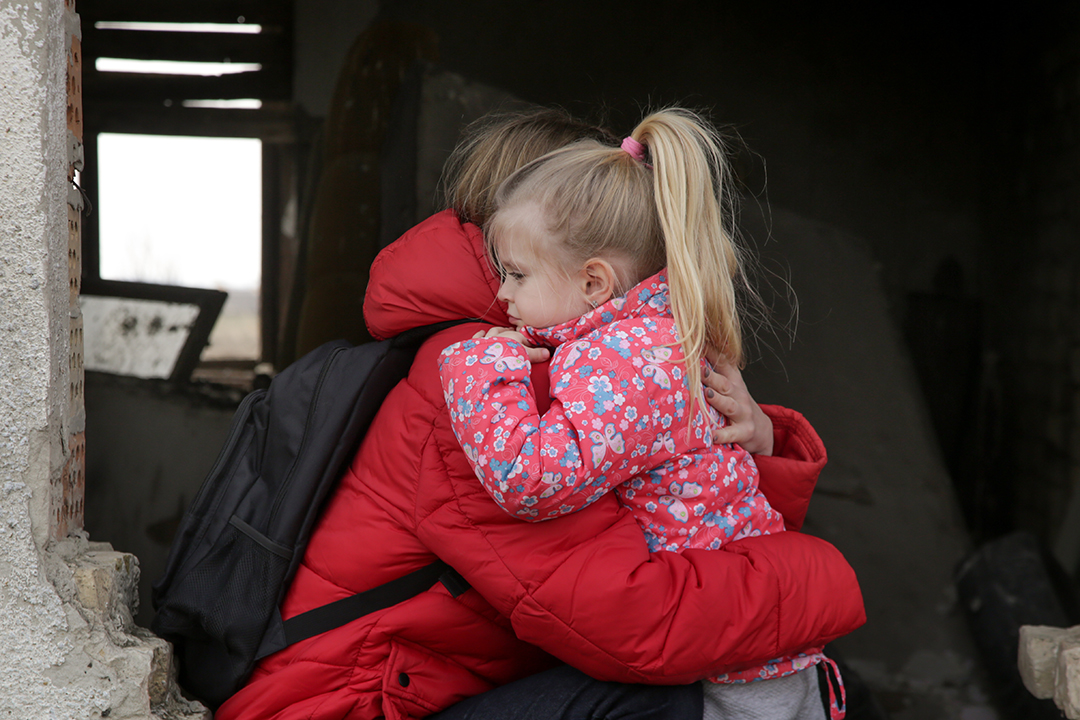
Wars and armed conflicts rage in Eastern Europe, the Eastern Mediterranean, Africa and South-East Asia. A terrible toll in human lives is paid not only by combatants, but also by civilians who are not directly involved in combat, including children and their parents or grandparents. They suffer from nightly alarms, bombardments and the continuous anxiety about their relatives or friends at the frontline. In this blog, we report on our study of parental burnout in Ukraine, conducted together with our colleagues Liliya Tsyhanyk, Tetyana Nehrych and Natalia Chemerys from Lviv National Medical University. We also introduce the upcoming online course ‘Families in Context of War and Social Conflict through the Lens of Attachment’.
Background: The Case of Ukraine
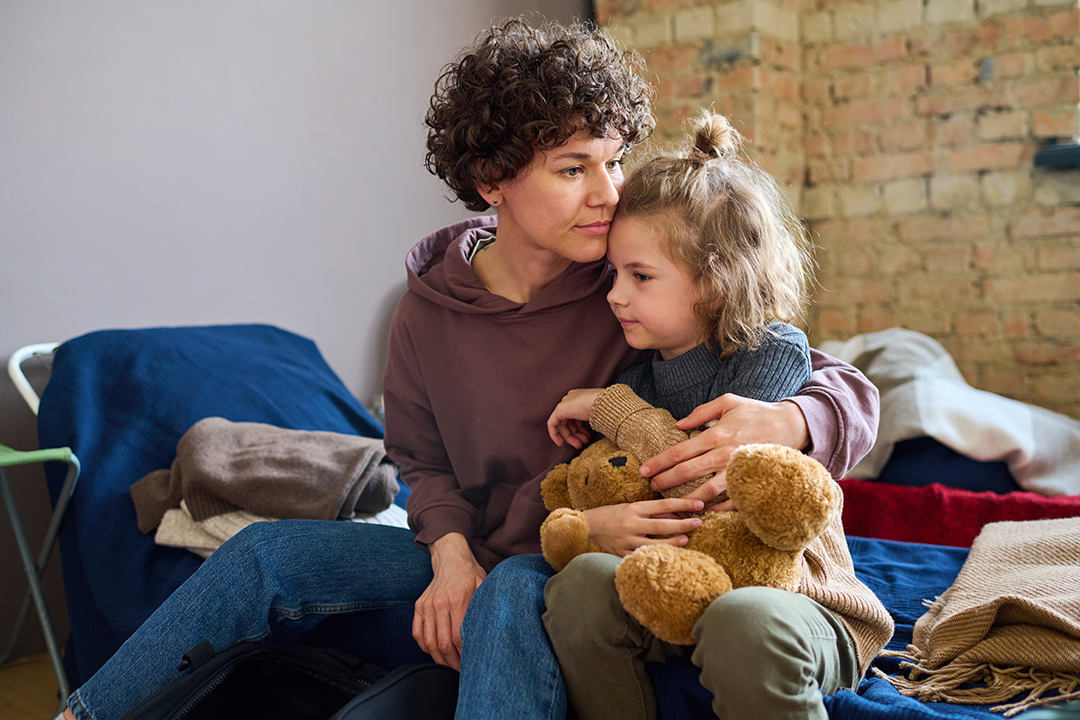
After the full-scale Russian invasion of Ukraine in 2022, around 14 million Ukrainians were displaced, with nearly 7 million becoming refugees abroad and others relocating to safer areas within the country, mostly mothers and children coping with the war in the absence of husbands and fathers serving in the military.
After three years of war, at least 2,520 children have been killed or injured (https://www.unicef.org/press-releases/one-five-children-ukraine-has-lost-relative-or-friend-escalation-war-three-years-ago?utm_source=chatgpt.com), and nearly 20,000 have been abducted to Russia or Russian-occupied territories. This large-scale deportation prompted the International Criminal Court in The Hague to issue arrest warrants for Russian officials, including President Putin, for war crimes involving children and their caregivers (https://www.icc-cpi.int/news/situation-ukraine-icc-judges-issue-arrest-warrants-against-vladimir-vladimirovich-putin-and).
Recent research shows that families of soldiers, prisoners of war, and veterans face the highest risk of war-related stress disorders compared to those without such exposure (Martsenkovskyi et al., 2023). In March 2024, we conducted a brief online survey of 415 Ukrainian families with children aged 0–12, all living in wartime Ukraine. We focused on parental burnout, systematically comparing families with husbands in active service, retired from service, or never in the military. In addition to mothers, we included grandmothers who cared for grandchildren due to parental absence.
Parental burnout, defined as exhaustion from parenting, emotional distance from one’s children and a sense of parental ineffectiveness (Mikolajczak, Gross & Roskam, 2019; Mikolajczak et al., 2023), was assessed using the Brief Parental Burnout Scale (BPBs; Aunola et al., 2021).
Key Findings
- More than half of the parents (58%) met the validated cut-off criterion for burnout (Aunola et al., 2021). Compared to parents in Canada, Poland, Hungary, Finland or Belgium without war experiences, where global burnout rates are estimated to be around 3%, the overall Ukrainian prevalence was substantially higher.
- Parental burnout among Ukrainian mothers has increased dramatically in recent years. Just before the full-scale invasion in 2022, eight years after the start of the war with Russia’s occupation of Crimea in 2014, it was 11% (Zbrodska et al., 2022), which is only one-fifth of the percentage recorded in 2024.
- Grandmothers showed the highest percentage of burnout (70%), whereas mothers in families with a civilian father showed the lowest percentage (49%).
- Burnout symptoms were strongly correlated (r = .63) with higher levels of self-reported harsh parenting, as measured with a scale developed by Mikolajczak et al. (2019).
Implications: Why It Matters
For practitioners and policymakers, it is important to realise that the extraordinarily high levels of parental burnout signal serious mental health challenges ahead, even well beyond the end of the war. Particularly worrisome is the fate of grandmothers, who suffer most from burnout, possibly aggravated by the loss of their own children, while also being responsible for increasing numbers of orphaned children and adolescents.
We suggested two interpretations for the high burnout among grandmothers with childcare responsibilities (Chemerys et al., 2025). The ‘aging health hypothesis’ proposes that older people may worry about being unable to guide their grandchildren safely into adulthood due to their greater risk of chronic diseases or death. Alternatively, or complementary, the ‘transgenerational trauma hypothesis’ suggests that grandparents may revisit or relive past traumatic experiences which, in Ukraine, part of the ‘Bloodlands’ (Snyder, 2010), are related to the cumulative horrors of famine (Holodomor), genocide (Holocaust of the Jewish population) and murderous political oppression (Stalinism).
Future Directions: Building on the Evidence
Future research, building on evidence describing the dreadful state of mental health in Ukrainian families (Martsenkovskyi et al., 2023; McElroy et al., 2024), should focus on evaluating intervention programmes to support families during and after the war. Several programmes have already been implemented, but there is little evidence of their effectiveness in a war-affected population. We need rigorous randomised controlled trials (Van IJzendoorn & Bakermans-Kranenburg, 2024) to explore the feasibility, effectiveness and scalability of existing interventions in the Ukrainian context. Over the past 25 years, more than 50 randomised trials have been conducted in regions affected by armed conflict, and these may offer valuable lessons for future efforts.
Reflection: A Focus on Families in Context of War and Social Conflict Through the Lens of Attachment
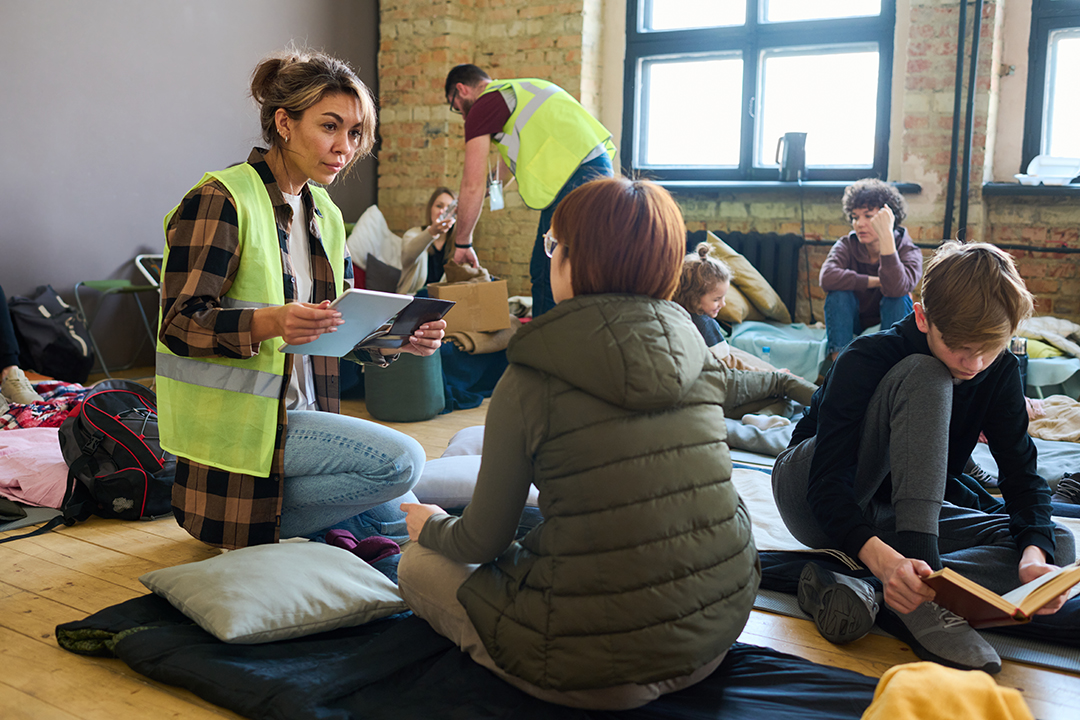
Unfortunately, Ukraine is just one of the many countries currently going through war or armed conflict. In an eleven-day seminar series for therapists, mental health professionals and humanitarian workers, we bring together speakers from various backgrounds to shed light on trauma-informed and attachment-based frameworks to understand the impact of displacement, violence and instability on family interactions and relationships. The series also explores what can be done to alleviate the mental burden of children and their families experiencing war and armed conflict.
Clinical reflection, insights from contemporary attachment theory, and rigorous empirical research are represented in this seminar, with examples from around the world and a special focus on Ukraine, India, Israel, and Palestine. Each lecture will be followed by ample time for discussion, enabling speakers and attendants to learn from one another.
Online Course on Families in Context of War and Social Conflict Through the Lens of Attachment
The online series of 11 monthly sessions will be conducted from 11:00 am to 1:00 pm (UK time), starting on October 25, 2025. The programme coordinators are Mario Marrone and Marinus van IJzendoorn, and the line-up of speakers comes from the UK, Portugal, Finland, India, Ukraine, Israel, Gaza, The Netherlands and Germany. The course is hosted by the International Attachment Nework (IAN UK, IAN India), in collaboration with IAN Spain. Ukrainian and Palestinian participants are exempt from the fee.
For details and registration, see admin@ian-attachment.org.uk
NB – This blog has been peer reviewed
References
Aunola, K., Sorkkila, M., & Roskam, I. (2021). Development and validation of the Brief Parental Burnout Scale (BPBs). Psychological Assessment, 33(4), 1125–1137.
Chemerys, N., Tsyhanyk, L., Bakermans-Kranenburg, M. J., van IJzendoorn, M. H., & Nehrych, T. (2025). Parenting burnout in wartime: Exploring burnout in Ukrainian (grand-)mothers two years after the 2022 Russian invasion. Journal of Family Trauma, Child Custody & Child Development, 22(2), 275–292. https://doi.org/10.1080/26904586.2025.2470151
Martsenkovskyi, D., Karatzias, T., Hyland, P., Shevlin, M., Ben-Ezra, M., McElroy, E., Redican, E., Vang, M. L., Cloitre, M., Ho, G. W. K., Lorberg, B., & Martsenkovsky, I. (2023, September 25). Parent-reported posttraumatic stress reactions in children and adolescents: Findings from the mental health of parents and children in Ukraine study. Psychological Trauma: Theory, Research, Practice, and Policy. Advance online publication. https://doi.org/10.1037/tra0001583
McElroy, E., Hyland, P., Shevlin, M., Karatzias, T., Vallières, F., Ben-Ezra, M., Vang, M. L., Lorberg, B., & Martsenkovskyi, D. (2024). Change in child mental health during the Ukraine war: evidence from a large sample of parents. European child & adolescent psychiatry, 33(5), 1495–1502. https://doi.org/10.1007/s00787-023-02255-z
Mikolajczak, M., Aunola, K., Sorkkila, M., & Roskam, I. (2023). 15 years of parental burnout research: Systematic review and agenda. Current Directions Psychological Science, 32(4), 276–283. https://doi.org/10.1177/09637214221142777
Mikolajczak, M., Gross, J. J., & Roskam, I. (2019). Parental burnout: What is it, and why does it matter? Clinical Psychological Science, 7(6), 1319–1329. https://doi.org/10.1177/2167702619858430
Snyder, T. (2010). Bloodlands: Europe between Hitler and Stalin. Basic Books.
Van IJzendoorn, M.H., & Bakermans-Kranenburg, M. J. (2024). Matters of Significance. Replication, Translation, and Academic Freedom in Developmental Science. London: UCL PRESS. ISBN: 9781800086500 https://www.uclpress.co.uk/collections/open-access/products/234011 (free downloadable).
Zbrodska, I., Roskam, I., Dolynska, L., & Mikolajczak, M. (2022). Validation of the Ukrainian version of the Parental Burnout Assessment. Frontiers in Psychology, 13, 1059937. https://doi.org/10.3389/fpsyg.2022.1059937