Sleep and Sleep Disorders
-
Improvements of adolescent psychopathology after insomnia treatment: Results from a randomized controlled trial over one year.
Many adolescents experience sleep problems, which can be caused by hormonal changes during puberty, and social changes with increasing complexity of daily life while growing up.
Read more -
Sleep partially mediates the link between adverse childhood experiences and delinquency
A recent study has now investigated the mechanisms underlying the apparent link between ACEs and high rates of delinquency in children in foster care, with a specific focus on sleep.
Read more -
Sleep problems in preschoolers predict depression and anxiety severity
The bidirectional links between sleep problems and psychopathology in children have been well-reviewed,1 but few investigations have been performed in young samples and those with early-onset psychopathology.
Read more -
Cortical hyperarousal in children may predict insomnia in adolescence
Read about the first developmental study to examine whether increased beta EEG activity in childhood precedes the onset of pathological insomnia symptoms in adolescence.
Read more -
Prescribing in the dark: off-label drug treatments for children with insomnia
Insomnia is a common problem in children with neurodevelopmental disabilities (NDDs), and has a profound effect on quality-of-life.
Read more -
Time spent awake during the night in infancy is a marker for cognitive trajectories
This article is a summary of the Original Article in the JCPP: Infant wake after sleep onset serves as a marker for different trajectories in cognitive development – by Pisch et al.
Read more -

How does 22q11.2 deletion syndrome impact on sleep and mental health?
Anne Lawlor, Co-Founder and Chairperson of 22q11 Ireland, guest blogs on the impact of 22q11.2 deletion syndrome on sleep and mental health.
Read more -
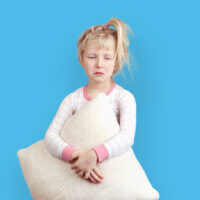
Sleep
Children and adolescents who are experiencing difficulties with their mental health also often struggle with their sleep. Indeed disrupted or altered sleep has been associated with most psychiatric disorders (Gregory & Sadeh, 2016). Although a range of sleep difficulties can co-occur with mental health problems, a common difficulty is insomnia. As such this guidance will primarily focus on difficulties with getting to sleep and staying asleep.
Read more