Anxiety disorders in children and young people are common and can have a significant impact on mental health and well-being. Anxiety disorders can affect family, school and social life, leisure activities and educational achievement and they often occur alongside other mental health problems.
Anxiety disorders
-
Anxiety Edition
This edition of The Bridge covers the topic of anxiety. Owing to anxiety being common, with all of us experiencing a state of anxiety at some time and many also having trait anxiety, it is no surprise that ACAMH’s two main academic outputs the Journal of Child Psychology and Psychiatry and Child and Adolescent Mental Health contain some good quality research on anxiety advancing our knowledge of the science and evidence based practice.
Read more -
 28
28
Self-harm Masterclass ‘Therapeutic Assessment for adolescents with self-harm’
Therapeutic Assessment is a brief intervention for young people presenting with self-harm in an emergency. The assessment consists of identifying the vicious cycle of self-harm in the form of a diagram, followed by a collaborative development of an “exit”, a way of breaking the cycle and moving forward.
-
JCPP editorial team members amongst the ‘Most Influential Scientific Minds’ of the last ten years
Highlighting, once again, its scientific standing and the quality of its editorial decision making, a number of JCPP editors and editorial advisory board members have been included in the 2018 Clarivate highly cited researchers list announced recently.
Read more -
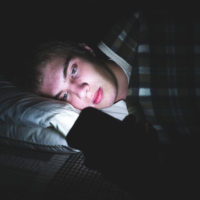
Sleepiness in adolescence is associated with criminal behaviour in adulthood
Poor sleep seems to be associated with antisocial and criminal behaviour, but the longitudinal nature of this relationship is unclear.
Read more -
Anxiety Edition – foreword by Dr Mark Lovell
This edition of The Bridge covers the topic of anxiety. Owing to anxiety being common, with all of us experiencing a state of anxiety at some time and many also having trait anxiety, it is no surprise that ACAMH’s two main academic outputs the Journal of Child Psychology and Psychiatry and Child and Adolescent Mental Health contain some good quality research on anxiety advancing our knowledge of the science and evidence based practice.
Read more -
Adult ABMT protocols need adapting for effective use in children
Attention bias modification treatment (ABMT) aims to target attention biases in threat processing in patients with anxiety1. While ABMT seems to be effective in adults with social anxiety disorder (SAD),2,3 its effect in youths with SAD and the potential treatment moderators are unclear. In 2016, Lee Pergamin-Hight and colleagues conducted a randomised controlled trial to explore the efficacy of ABMT in youths and the influence of possible moderators of treatment outcomes.
Read more -
Parent-led group CBT training can reduce anxiety in children
A brief psychological intervention in which parents and carers are supported in applying cognitive behavioural therapy (CBT) principles in their child’s day-to-day life can lead to good outcomes for child anxiety disorders, according to new research.
Read more -
FRIENDS programme reduced anxiety, but has no effect on school academic performance
Professor Paul Stallard and colleagues have analysed data from the randomised controlled trial “Preventing Anxiety in Children through Education in Schools” that involved >1,300 children aged 9-10 years from 40 primary schools across England.
Read more -
MEG confirms hyper-vigilance followed by threat avoidance in children with anxiety disorder
A key etiological factor of anxiety disorders is an altered pattern of threat processing, but its neurobiological basis is relatively unclear.
Read more -
Meta-analysis of secondary anxiety prevention
Dr Peter Lawrence summarises the paper ‘Prevention of anxiety among at-risk children and adolescents – a systematic review and meta-analysis’
Read more