
The transition from primary to secondary school is widely recognised as one of the most difficult (Zeedyk et al., 2003) and stressful (Coelho & Romão, 2016; Jindal-Snape et al., 2020) milestones in an adolescent’s life, marked by considerable individual emotional, social and physical (e.g., puberty) changes (Anderson et al., 2000). Students face fragmented teacher relationships, shifting peer hierarchies, heightened academic competition and unfamiliar institutional expectations (Anderson et al., 2000; Jindal-Snape et al., 2023). During this period, the adolescent brain simultaneously undergoes substantial changes, including in white matter organisation, cortical morphology and functional network architecture (Smolker, 2026). Adolescent neurodevelopment coincides with heightened neuroplasticity, where the brain is more sensitive and adaptive to environmental experiences (Whittle et al., 2025). Therefore, school transitions coincide with major neurodevelopmental changes, making adolescents uniquely vulnerable to environment disruption.
While some research suggests that school transitions can foster positive peer bonds and reduce both bullying and loneliness (Jindal-Snape et al., 2023; Lorijn et al., 2024), a large systematic review of 96 studies found that over 80% of students transitioning reported negative adjustment, including increased levels of anxiety and poorer wellbeing (Jindal-Snape et al., 2020). Decreased school connectedness (Lester et al., 2013), self-efficacy (Lofgran et al., 2015) and school belongingness (Vaz et al., 2014) has also been reported. Yet, a fundamental question remains: Are these dips in wellbeing caused by the physical transition itself, or are they simply a product of getting older? Wellbeing naturally drifts downward from late childhood into adulthood, a well-documented phenomenon across lifespan research (Blanchflower & Oswald, 2008). Without separating age from the transition, it is not possible to determine whether the individual is experiencing changes due to the transition or if the changes are just an inevitable rite of passage.
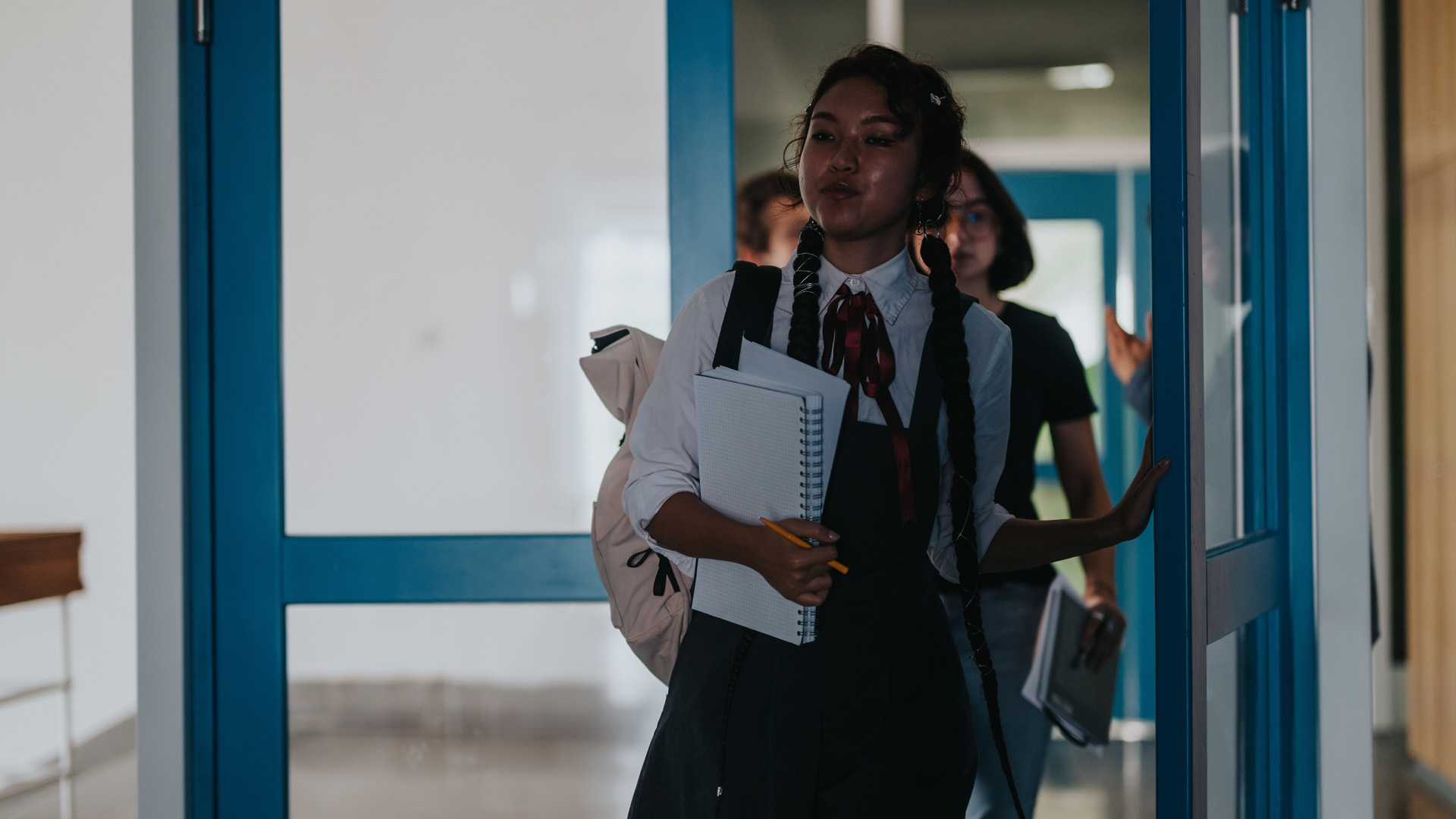
“School transitions coincide with major neurodevelopmental changes, making adolescents uniquely vulnerable to environment disruption.”
A Unique “Natural Experiment”
Disentangling normative ageing from transition stress has historically been difficult as students typically change schools at the same age. A recent study by Zhou et al., (2026) provided a unique solution. In 2022, South Australia implemented an educational reform, moving the secondary school entry age one year earlier from Year 8 (ages 13-14) to Year 7 (ages 12-13). This policy shift created a natural experiment where two distinct age cohorts transitioned at the exact same time, enabling the researchers to investigate the effects of the school transition on well-being, over and beyond age maturation (Zhou et al., 2026).
Tracking nearly 21,000 students across seven years (three years before the transition and four years after), Zhou and colleagues evaluated wellbeing across eight key domains: cognitive engagement, optimism, happiness, emotional regulation, life satisfaction, perseverance, sadness and worry. Well-being trajectories across all eight domains showed significant changes across the transition period. Before the transition, well-being remained relatively stable, but within the first year after the transition, well-being dropped across all domains with the most pronounced decline observed in cognitive engagement and perseverance. These adverse effects of the transition persisted into the second year, highlighting that the transition requires prolonged adjustment. Interestingly, both age cohorts portrayed parallel declines in well-being, suggesting transition effects on well-being do not vary by age and are unique to the transition experience. Similar findings were reported in an older study that compared same-aged students’ transition experience, where some students transitioned to a new secondary school whilst others remained in the same building until Grade 8 (also known as K-8 schools) (Blyth et al., 1978). Therefore, by comparing two different age cohorts transitioning simultaneously, the study highlighted that well-being dips are driven by the transition, not just growing up.
Interestingly, the study also found that boys and girls demonstrated diverse transition effects, where girls exhibited greater well-being declines compared to boys. These sex differences in the transition experience have been consistently reported in the literature, with girls often showing poorer mental health during this developmental period (Anderson et al., 2000) and generally experiencing a more negative transition compared to girls (Jindal-Snape et al., 2023). Boys have also been shown to have steeper reductions in teacher-student relationship quality, school liking and thinking that school rules were fair compared to girls (Coelho et al., 2020). However, there is some conflicting evidence on sex differences on the transition experience overall, with some studies reporting boys as having a more positive transition (Waters et al., 2014).
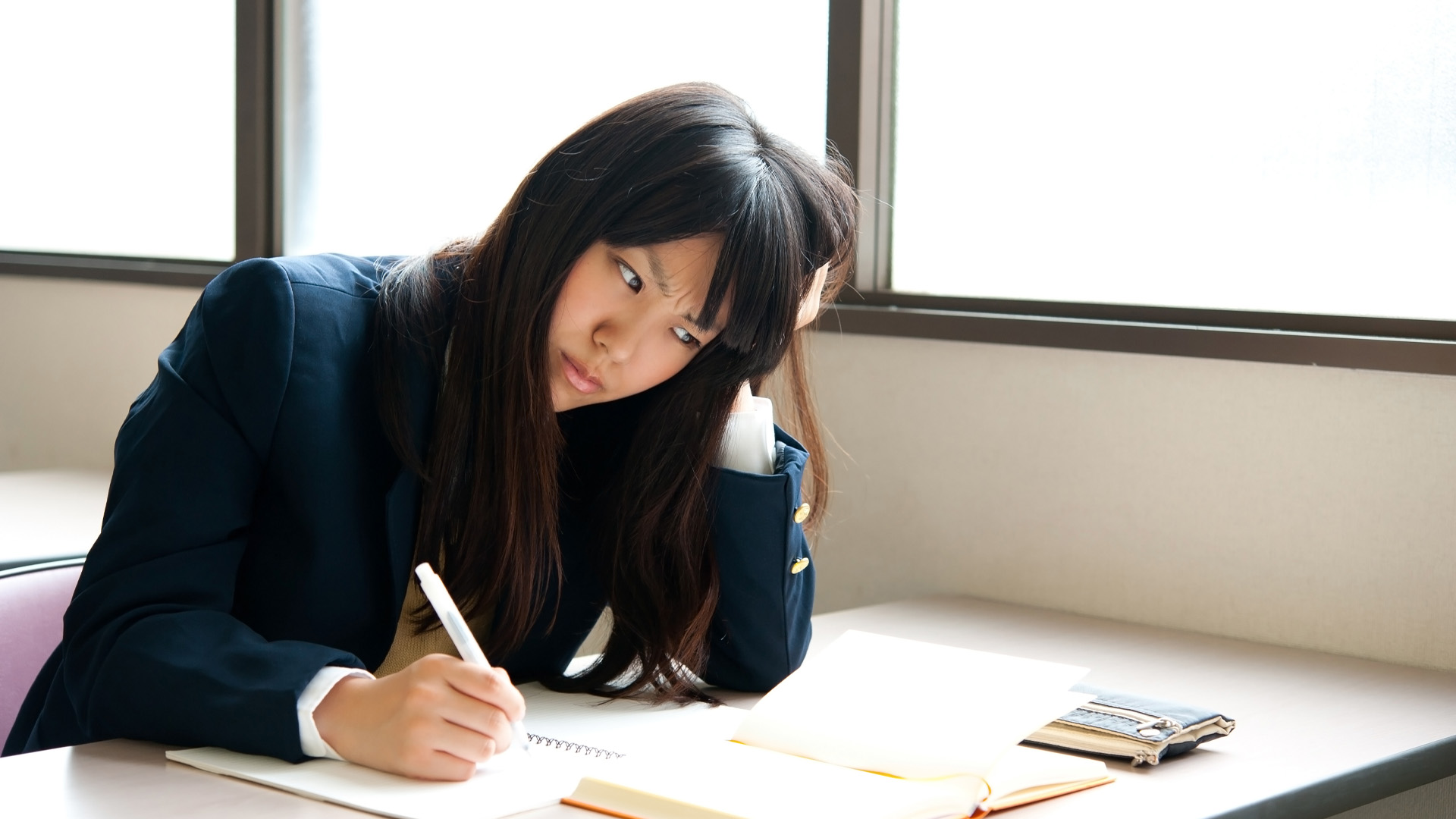
“By comparing two different age cohorts transitioning simultaneously, the study highlighted that well-being dips are driven by the transition, not just growing up”
Limitations
Despite its impressive scale, the study carries a caveat: the evaluation window overlapped with the COVID-19 pandemic. While the authors note that South Australia experienced relatively brief physical school closures of a few weeks, any overlap with remote learning introduces confounding variables. Virtual learning alters social structures, removes physical school navigation and significant impacts student engagement (Thompson et al., 2026). School closures are also significantly associated to negative mental health outcomes in children and adolescents (Wolf & Schmitz, 2024). Experiencing a school transition online, or under pandemic conditions, is very distinct to experiencing it physically.
Implication for Policy & Educational Systems
The findings also raise an important question for policy. Educational policy has largely treated transition as a single, short-term event. However, Zhou et al., (2026)’s findings demonstrate lasting well-being decline after students enter secondary school, especially pronounced in girls. Should transition policies focus only on preparing children to arrive, or should they also provide continuous support once they are there? A longer-term approach could place students’ well-being alongside academic attainment and attendance when evaluating how successfully they are adapting to secondary school. Students may benefit from longer, multi-year support embedded in the curriculum to support their transitioning and adjustment.
 “A longer-term approach could place students’ well-being alongside academic attainment and attendance when evaluating how successfully they are adapting to secondary school.”
What next?
These findings raise several questions about why well-being changes across the transition and why some students experience greater difficulties than others. The parallel trajectories observed across the two age cohorts suggest that the changes cannot simply be attributed to getting older, but they do not identify which features of the transition are responsible. Furthermore, developmental neuroscience has largely neglected the lived experiences of students moving to secondary school (Jindal‐Snape & Cantali, 2019), and has focused on group-based approaches, neglecting individual variation (Foulkes & Blakemore, 2018). Therefore, future research could conduct qualitative interviews with adolescents shortly after their secondary school transition. This would incorporate students’ voices and perspectives to investigate the specific aspects of secondary school that contribute to declining well-being.
Conclusion
Ultimately, Zhou et al., (2026)’s study emphasised the importance of longitudinal research spanning a longer developmental period, as the persistence of well-being changes can only be established with long-term follow-up. Recognising that the transition to secondary school is not a single milestone but rather it is a longer period of adjustment could help schools, policymakers and researchers identify what young people need during this important stage of development.

References
- Blanchflower, D. G., & Oswald, A. J. (2008). Is well-being U-shaped over the life cycle? Social Science & Medicine, 66(8), 1733–1749. https://doi.org/10.1016/j.socscimed.2008.01.030
- Blyth, D. A., Simmons, R. G., & Bush, D. (1978). The Transition into Early Adolescence: A Longitudinal Comparison of Youth in Two Educational Contexts. Sociology of Education, 51(3), 149–162. JSTOR. https://doi.org/10.2307/2112661
- Coelho, V. A., Romão, A. M., Brás, P., Bear, G., & Prioste, A. (2020). Trajectories of Students’ School Climate Dimensions throughout Middle School Transition: A Longitudinal Study. Child Indicators Research, 13(1), 175–192. https://doi.org/10.1007/s12187-019-09674-y
- Foulkes, L., & Blakemore, S.-J. (2018). Studying individual differences in human adolescent brain development. Nature Neuroscience, 21(3), 315–323. https://doi.org/10.1038/s41593-018-0078-4
- Jindal-Snape, D., Bradshaw, P., Gilbert, A., Smith, N., & Knudsen, L. (2023). Primary–secondary school transition experiences and factors associated with differences in these experiences: Analysis of the longitudinal Growing Up in Scotland dataset. Review of Education, 11(3), e3444. https://doi.org/10.1002/rev3.3444
- Jindal‐Snape, D., & Cantali, D. (2019). A four‐stage longitudinal study exploring pupils’ experiences, preparation and support systems during primary–secondary school transitions. British Educational Research Journal, 45(6), 1255–1278.
- Jindal-Snape, D., Hannah, E. F. S., Cantali, D., Barlow, W., & MacGillivray, S. (2020). Systematic literature review of primary‒secondary transitions: International research. Review of Education, 8(2), 526–566. https://doi.org/10.1002/rev3.3197
- Lester, L., Waters, S., & Cross, D. (2013). The Relationship Between School Connectedness and Mental Health During the Transition to Secondary School: A Path Analysis. Australian Journal of Guidance and Counselling, 23(2), 157–171. https://doi.org/10.1017/jgc.2013.20
- Lofgran, B. B., Smith, L. K., & Whiting, E. F. (2015). Science Self-Efficacy and School Transitions: Elementary School to Middle School, Middle School to High School. School Science and Mathematics, 115(7), 366–376. https://doi.org/10.1111/ssm.12139
- Lorijn, S. J., Zwier, D., Laninga-Wijnen, L., Huisman, M., & Veenstra, R. (2024). A New School, a Fresh Start? Change and Stability in Peer Relationships and Academic Performance in the Transition from Primary to Secondary School. J Youth Adolesc, 53(9), 1987–2001. https://doi.org/10.1007/s10964-024-01991-y
- Thompson, E. L., Sawi, O. M., Roy, E. A., Abad, S., Kaiver, C. M., Lehman, S. M., Tay, J., Gonzalez, M. R., Van Rinsveld, A., Dowling, G. J., Brown, S. A., Jernigan, T. L., McCandliss, B. D., & Hoffman, E. A. (2026). From school climate to brain development: What the ABCD study reveals about the educational context of adolescence. Developmental Cognitive Neuroscience, 80, 101746. https://doi.org/10.1016/j.dcn.2026.101746
- Vaz, S., Falkmer, M., Parsons, R., Passmore, A. E., Parkin, T., & Falkmer, T. (2014). School Belongingness and Mental Health Functioning across the Primary-Secondary Transition in a Mainstream Sample: Multi-Group Cross-Lagged Analyses. PLOS ONE, 9(6), e99576. https://doi.org/10.1371/journal.pone.0099576
- Waters, S. K., Lester, L., & Cross, D. (2014). Transition to secondary school: Expectation versus experience. Australian Journal of Education, 58(2), 153–166.
- Wolf, K., & Schmitz, J. (2024). Scoping review: Longitudinal effects of the COVID-19 pandemic on child and adolescent mental health. European Child & Adolescent Psychiatry, 33(5), 1257–1312. https://doi.org/10.1007/s00787-023-02206-8
- Zhou, M., Maher, C., Brinkman, S., Cools, J., & Dumuid, D. (2026). Well-being decline during adolescence: School transition as a predominant driver beyond age progression. Journal of Child Psychology and Psychiatry, 67(9), 1513–1524. https://doi.org/10.1111/jcpp.70154