
On 24 March 2026, ACAMH will host a webinar Practical Updates in ADHD Diagnosis and Management.
We caught up with the presenter – Professor Samuele Cortese, Professor of Child and Adolescent Psychiatry at the University of Southampton and one of the world’s most influential researchers in ADHD – about the topic itself, his career, and his hopes for the event.
What first got you interested in ADHD, and how did you come to specialise in it
I’ve been doing research on ADHD for more than 20 years now. I got interested quite early in my career, when I saw that there are ADHD treatments that can really support and, in some cases, quite spectacularly transform the lives of young people and their families. That’s not the case for all psychiatric conditions, and I was attracted to being part of that, and making even more advances.
There’s significant public awareness and discussion around ADHD today – is that help or a hindrance?
Many people know what ADHD means, or they think they know what it means, and this was not the case 20 years ago. But there’s a difference between awareness and proper understanding.
In clinical practice, we might find someone who thinks that they have ADHD, but when we discuss this with them, their idea of it does not match with what the condition really is. There is definitely a need to educate people on what ADHD really means. There’s also a lot of focus in mainstream discussions on the positive aspects of ADHD. That’s important, but it’s also important to remember currently ADHD is defined as a disorder that brings an impairment in life.
Another thing is the increasing use of the term ‘neurodiversity’ referring to this condition, but neurodiversity is not a clinical term. The other day, a colleague told me, “I saw a neurodiverse child”. This doesn’t make sense. Everybody’s neurodiverse. Some people use the term to refer to mild autism, others to other things. We need to use the terms properly. Neurodiversity is not a clinical category.
What are the barriers to effective diagnosis of ADHD?
Capacity. We need to have more people trained to do it and importantly, they need to be able to do a differential diagnosis. The three core symptoms of ADHD are inattention, hyperactivity, and impulsivity. But these characteristics are not specific to ADHD, they can appear in other conditions, so clinicians need to be able to separate ADHD from other conditions that look like it.
A straightforward case of ADHD can still be diagnosed quite quickly, and even a more challenging case might only need three or four sessions of an hour or two hours each. What we need to avoid is a situation of very quick diagnoses being given, or the other extreme where clinicians take a really long time, because they are uncertain or they are not properly trained. There are times when diagnosis can take months – that should not be the rule.
Thinking about treatment, what are the areas which need more development or innovation?
While ADHD treatments are arguably very effective treatments for many individuals, there are two principal difficulties.
First, we are not yet really able to tailor treatments. So, for individuals who do not respond to specific treatments, or who have ADHD and other characteristics, there is not the kind of personalised medicine which exists in other areas outside of psychiatry.
The second issue is the long-standing discussion about the long-term effects of treatment. Most of the evidence we have is kind of short-term evidence – we know form clinical trials that ADHD medications work well for months, or a year, but it’s very difficult to do clinical trials that last longer than one year. Some critics would point to this as a weakness in the field, but in fact there are other types of studies different form randomised trials, which support that these treatments are effective in the longer term.
You’ve launched a new online resource for ADHD – what is the goal of this?
Together with colleagues, I coordinate a new, free platform; the EBI-ADHD database. It is designed to help clinicians and families make evidence-based decisions about ADHD treatment.
The platform allows you to input specific characteristics of a patient – their age, their symptoms, any co-occurring conditions – and it provides evidence-based recommendations for treatment options. It’s designed to support shared decision-making between clinicians and families, showing what the evidence says about different interventions for that specific profile. The big ambition is to move towards that personalised medicine approach I mentioned earlier.
Who do you hope will attend this session?
This session is designed for mental health professionals working with children, adolescents, and families – psychologists, psychiatrists, nurses, allied professionals. It’s particularly relevant for clinicians who want to enhance their practical skills and confidence in ADHD assessment and management.
I’ll be making sure the session is valuable both for those who are relatively new to working with ADHD, and for experienced clinicians who want to ensure they’re up to date with the latest evidence.
My hope is that attendees will feel more confident in their ability to make evidence-based decisions in their practice. It’s always my mission to make scientifically driven concepts digestible and practically useful for professionals working on the ground with these families.
You can also hear more from Prof. Cortese in two pieces of content on ACAMH Learn, our completely free CPD resource:
- Evidence on the pharmacological treatment of ADHD
- Evidence on the non-pharmacological treatment of ADHD
Where next?
Join Professor Samuele Cortese, one of the world’s most influential researchers of the past decade, for a comprehensive 4-hour clinical expert session on ‘Practical Updates in ADHD Diagnosis and Management‘, designed specifically for mental health professionals working with children, adolescents, and families.
About the speaker
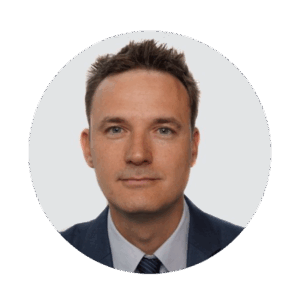
Professor Samuele Cortese, MD, PhD is currently a National Institute for Health and Care Research (NIHR) Research Professor; Professor of Child and Adolescent Psychiatry at the University of Southampton; and Honorary Consultant for the Hampshire and Isle of Wight Healthcare National Health Service (NHS) Foundation Trust, United Kingdom. Prof. Cortese’s main research interests focus on neurodevelopmental disorders. He has published more than 450 peer-reviewed papers and has secured more than £23 million in funding as a principal or co-applicant.
Since 2022, he has been included in the top 1% of scientists in the field of psychiatry and psychology (Clarivate- Web of Science) and has been ranked #1 worldwide for expertise in Attention-Deficit/Hyperactivity Disorder (ADHD) and neurodevelopmental disorders (Expertscape). Prof. Cortese sat on the Attention-Deficit/Hyperactivity Disorder NHS Taskforce and has been a member of the National Institute for Health and Care Excellence (NICE) committee on Digital Technologies for Assessing Attention-Deficit/Hyperactivity Disorder.