
This online session led by Florencia Salvarezza will explore early identification and differential diagnosis of neurodevelopmental disorders, using language as a common thread across different presentations. With a practical focus, the session will consider what professionals should look for when children present with language, learning or developmental concerns, how similar presenting difficulties may point towards different underlying conditions, and how to determine appropriate next steps for assessment, support or referral.
Register for the event & pricing
Sign up at this link or on the Book Now buttons, and complete the form that follows. You’ll then receive an email confirmation and a link to the webinar, plus we’ll send you a calendar reminder nearer the time.
Delegates will have exclusive access to recordings for 90 days after the event, together with slides. Plus you will get a personalised CPD/CME certificate via email. Recordings from the session will be available to delegates from 5 working days after the event.
- ACAMH Members MUST login to book onto the webinar in order to access this webinar and get a CPD/CME certificate.
- Non-members: this is a great time to join ACAMH, take a look at what we have to offer, and make the saving on these sessions.
| Ticket Type | Price |
|---|---|
| ACAMH paying Members (Online, Concession) | EARLY BIRD £49 (until 22/03/27 then £69)(Join now and save) |
| ACAMH Learn Account Holders | EARLY BIRD £69 (until 22/03/27 then £89) |
| Non Members | EARLY BIRD £69 (until 22/03/27 then £89) |
| ACAMH Undergraduate/ Postgraduate Members | £5 |
| LMIC Members | Free |
About the session
Dyslexia is a lifelong difficulty, and it rarely travels alone. In more than 40 years of clinical work, two questions from families have come up again and again: “Will my child ever read?” and “Will this language disorder lead to other problems at school?” Children who struggle to learn to read often show difficulties that overlap with Developmental Language Disorder (DLD), ADHD, or other neurodevelopmental disorders. These overlapping profiles can delay identification, offer only a partial picture of a child’s needs, and lead to ineffective interventions. Yet the earliest signs of reading difficulty often appear well before formal literacy instruction begins, in oral language, phonological awareness, and rapid naming.
In this talk, I will share findings on early markers of dyslexia and how they intersect with those of DLD and other neurodevelopmental disorders. Rather than treating each diagnosis as a separate box, I will propose a dimensional view: shared risk factors, distinct core deficits, and the many children who fall somewhere in between.
The session will address three questions. First, which early signs best predict later reading difficulties, and at what age can they be reliably observed? Second, where do dyslexia and DLD overlap, and what distinguishes them? Third, what does co-occurrence with other neurodevelopmental conditions mean for assessment and referral? Attendees will leave with practical warning signs to watch for and a clearer way to answer families’ most pressing questions.
Learning objectives:
By the end of this session, participants will be able to:
- Identify early markers that predict later reading difficulties.
- Distinguish dyslexia from DLD and recognize where they overlap.
- Explain how co-occurring neurodevelopmental disorders affect assessment and referral.
- Apply a dimensional view when answering families’ questions about prognosis.
Who should attend
Child and adolescent mental health professionals working with children and families, including psychologists, psychiatrists, paediatricians, speech and language therapists, educational psychologists, and other professionals involved in identifying and supporting children with developmental concerns. The session will be particularly relevant for practitioners who encounter concerns related to language, learning and neurodevelopment but do not necessarily specialise in these areas.
About the Speakers
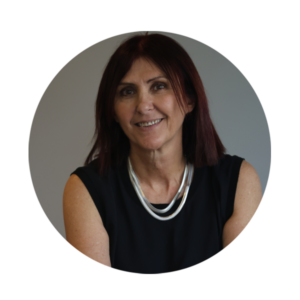
Professor Florencia Salvarezza is a linguist and specialist in literacy, neuroeducation, language development and dyslexia. She is Director of the Institute of Neurosciences and Education (INE) at the INECO Foundation and of the Diploma in Learning Disorders at Favaloro University. Professor at the University of the City of Buenos Aires and Research Associate at Yale University’s Haskins Laboratories, she leads projects across Latin America on evidence-based reading instruction with the World Bank, OEI, and various Ministries of Education. Her work focuses on translating neuroscience into educational practice to improve literacy and teacher training.