You searched for: self harm
Search results
-

Peer Review; Importance, Impact, Integrity
In celebration of Peer Review Week 2022, we asked Andrés Estradé, Research Assistant at Kings College London, about Peer Reviewing.
Read more -

How to spot and support students who have experienced trauma
Blog from Amy Sayer. “The need to spot and support students who have experienced trauma has become increasingly urgent and necessary within educational settings.”
Read more -

A digest of the published work of Michael Rutter
A digest of the published work of Michael Rutter by Jim Stevenson, Emeritus Professor of Developmental Psychopathology, University of Southampton. Revised December 2021
Read more -

Complex PTSD in young people in care
Aishat Hamzat, Rachel M Hiller and Helen Minnis discuss what research tells us about the mechanisms underlying complex PTSD symptoms experienced by young people in care. They consider implications for treatment and broader support provided for these young people
Read more -

Are ACE scores useful for identifying individuals at risk of health problems?
Clinics are increasingly screening for ACEs, but ACE scores may not tell us who will go on to develop poor health, explain Jessie R Baldwin (pic) and Andrea Danese.
Read more -

Mental Health in schools: learning lessons from the past
Whilst the pandemic may be a contributory factor, the increase in mental health problems from one in eight to one in six between 2017 and today is alarming and needs addressing urgently. Unfortunately, it seems that recent changes in education have impacted negatively YP emotional wellbeing.
Read more -
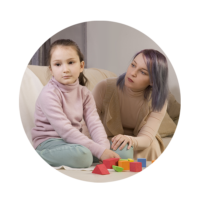
Mood Disorders and ASD: What not to miss
The autism community identified mental health as their top research priority in 2016.¹ Autistic children and adolescents are more likely than their general population counterparts to have psychiatric disorders.² For bipolar disorder, rates of 7% are seen in autistic children and adolescents versus 1% in their general population peers.
Read more -

The importance of acknowledging difference in psychoanalytic psychotherapy
Single case studies are often used in psychoanalytic psychotherapy research to identify potential mechanisms of change. Sean Junor-Sheppard undertook such a study, which was published in the Journal of Child Psychotherapy in 2019.
Read more -
How can we model the brain when it goes awry? How Reinforcement Learning Models can shed light on Psychiatric Disorders that emerge during Development.
It is well-established that many psychiatric disorders initially emerge during the formative time periods of childhood and adolescence (Kessler et al., 2005; Paus, Keshavan, & Giedd, 2008), when the brain is consistently subject to growth and experience-related changes. This applies not only to classic neurodevelopmental disorders like attention deficit hyperactivity disorder (ADHD) but also to psychiatric disorders like depression or obsessive-compulsive disorder (OCD), which are often attributed to adulthood (Hauser, Will, Dubois, & Dolan, 2019).
Read more -

COVID19 Resources on Child & Adolescent Mental Health
Take a look at this growing page of evidence-based resources, research and advice in relation to COVID19’s affect on child and adolescent mental health.
Read more