Autism Spectrum Disorders
-

Trauma and Autism: How It Affects Children and Young People
Autistic children and young people are more likely to experience adversity and traumatic events than their non-autistic peers. Yet, trauma is often missed in autism. Why? Professor Francisco Musich explains.
Read more -

Experience-Sensitive Approach to Neurodivergence
Clinical environments are often organised around neurotypical/general population expectations of communication, attention, pacing, and sensory tolerance. For neurodivergent people, including autistic individuals, people with ADHD, these expectations can increase distress, reduce engagement, and shape how behaviour is interpreted by clinicians.
Read more -
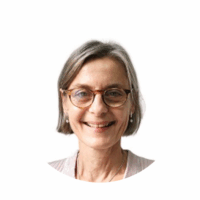
Meet the Expert – ARFID in Autistic Young People, with Dr. Rachel Bryant-Waugh
On 22 June 2026, ACAMH will host ARFID in Autistic Young People: Assessment, Overlap and Practical Clinical Management. We caught up with one of the presenters – Dr. Rachel Bryant-Waugh, an eating disorders clinician and researcher based at the Maudsley Hospital and King’s College London – about the topic itself, her career, and her hopes for the event.
Read more -

What Is Autism Now?
Autism was first described as a clinical condition in the mid-twentieth century and was long considered of low prevalence. Since the 1990s, autism prevalence has increased substantially, particularly in high-income countries. This rise has prompted public and professional debate, including concerns of over-diagnosis and suggestions of an “autism epidemic.” Current research and conceptual analysis suggest that these interpretations are not supported by the available evidence. Instead, changes in diagnostic practices, alongside shifts in social, educational, and economic environments, have reshaped how autism is recognised and understood.
Read more -

Validation of a Mobile App for Remote Autism Screening in Toddlers
A 2025 multi-site study led by Dawson and colleagues evaluated a mobile app called “SenseToKnow,” designed for accessible, early autism screening in toddlers. The results suggest digital approaches as a promising way to make early identification more accessible, objective, and equitable for all families.
Read more -

Operationalizing the ICF Core Sets for Autism and ADHD: From Framework to Feasible Tool
Alehagen, Bölte, and colleagues conducted a feasibility study to develop and user-test an online platform for the ICF Core Sets for autism and ADHD. The study found that the platform was easy to use, acceptable to participants, and capable of capturing the diversity of functioning profiles, with iterative revisions addressing user feedback. The tool is now ready for psychometric validation.
Read more -

Breaking Down Barriers and Improving Understanding – Autism Acceptance Week 2024
This World Autism Acceptance Week (2 April to 8 April 2024), we encourage you to explore the FREE learning opportunities available on our website, and to share with your networks.
Together we can work towards ‘sharing best evidence, improving practice’ to help create a society that works for autistic children and young people.
Read more -

Championing research about, by and for neurodivergent people
How neurodiversity-inspired thinking is casting a new light on brain development research, with neurodivergent young people at its core.
Read more -

Autism Resources Update
This World Autism Acceptance Week (27 March to 2 April 2023), we have collated a number of FREE learning resources from leading academics, clinicians, and researchers to build upon our previous catalogue of resources for World Autism Acceptance Week 2022.
We encourage you to explore the learning opportunities available on our website, sign up for our fantastic upcoming events below, and do share with your networks.
Read more -
World Autism Acceptance Week 2022
This World Autism Acceptance Week (28 March – 3 April), we encourage you to explore the learning opportunities available on our website, and to share with your networks. Together we can help change attitudes and work towards creating a society that works for autistic children and young people.
Read more