
Autistic children and young people are more likely to experience adversity and traumatic events than their non-autistic peers. Yet, trauma is often missed in autism. Why?
Autistic young people may show traumatic stress in ways that do not match standard post-traumatic stress disorder (PTSD) criteria, making identification more difficult.
Research shows higher rates of adversity in autistic youth, and some experiences they find traumatic may fall outside of the traditional DSM-5 definitions.1 This can lead to trauma being under-identified, under-diagnosed and under-treated. In some cases, trauma-related responses may also be wrongly attributed to autism itself.2,3
Improving understanding of trauma and autism is therefore essential for accurate identification and support. In this article, we explore:
- How autism and childhood trauma are linked in youth
- Why trauma is often missed in autistic populations
- How trauma presents in autistic people
- The implications for autism and trauma treatment in practice
Adverse childhood experiences in autistic children
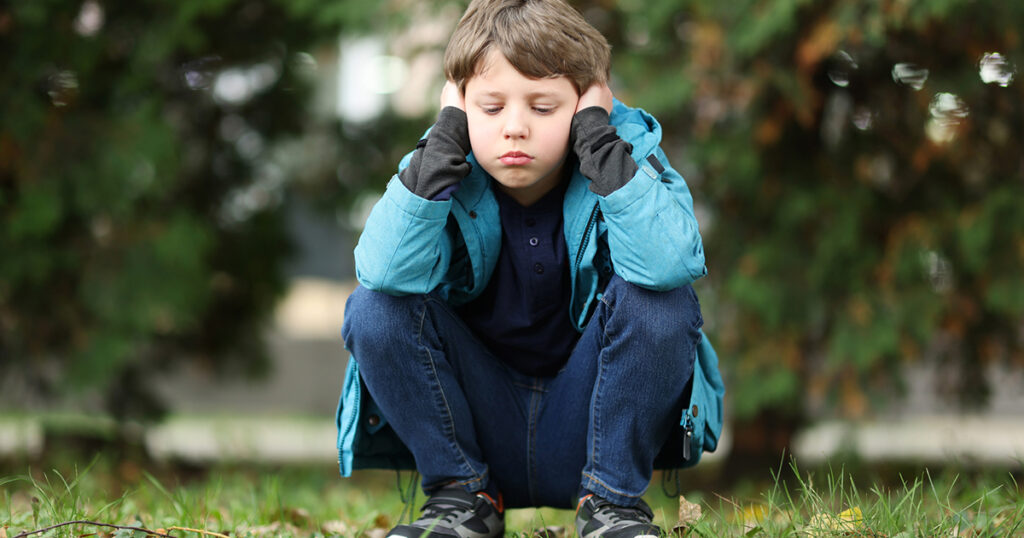
Autistic children are more likely to experience childhood adversity than their non-autistic peers. Research shows they are at increased risk of multiple adverse childhood experiences (ACEs), including exposure to ongoing or repeated stressors.3
Studies also highlight higher rates of bullying, maltreatment, family stress and social exclusion among autistic children and young people.1-3 These experiences can build up over time and significantly affect wellbeing.
There are several reasons why autistic children may be more vulnerable. Autistic children may:2,3
- Have difficulty communicating distress
- Be more reliant on caregivers or systems for protection
- Be perceived as socially atypical in ways that increase their vulnerability and victimisation
- Experience co-occurring intellectual disability, communication differences and socioeconomic disadvantage
It is also important to recognise that not all distressing experiences fit traditional definitions of trauma. Autistic young people often describe ongoing difficulties such as sensory overload, social misunderstanding, loss of autonomy, bullying, restraint or seclusion and repeated exclusion or invalidation.4,5
Even when these experiences fall outside formal trauma definitions, they can still have a significant emotional and functional impact on autistic children and young people.
How autism influences traumatic experiences
Standard PTSD assessments are based on DSM-5 Criterion A, which focuses on exposure to events such as serious injury, sexual violence or threats to life. While this is important, it may not fully capture the kinds of experiences autistic individuals describe as traumatic.
Studies suggest that trauma and autism can show up in both “traditional” ways (such as abuse, accidents or witnessing violence) and in less commonly recognised ways.4 These can include:
- Bullying and social exclusion
- Use of restraint or seclusion
- Ongoing sensory overload without support
- Repeated misunderstandings or communication breakdowns
- Environments that feel overwhelming or unsafe over time
Autistic individuals and caregivers also describe how these ongoing social, sensory and relational stressors can build up and lead to significant distress.5
This does not mean current PTSD definitions are incorrect, but that they may not be broad enough on their own. A child may still experience traumatic stress even if their experiences do not fit formal Criterion A events.
As clinicians, it’s important that we look beyond checklists to help ensure that trauma-related distress in autistic children and young people is recognised, rather than missed or mislabelled.
How symptoms differ when trauma and autism coincide
Trauma in autistic children and young people may not always look like “typical” PTSD. Classic PTSD symptoms include:
- Flashbacks
- Avoidance
- Heightened alertness
- Changes in mood and thinking
However, these patterns assume a way of expressing distress that may not fully match how autistic individuals communicate or behave. Research suggests that autistic young people may show trauma in different ways, including:6
- Increased reliance on routines or repetitive behaviours
- Regression in communication or daily living skills
- Intensification of restricted interests
- Changes in sleep patterns
- Heightened sensory sensitivity
These tend to occur alongside more familiar signs such as anxiety or withdrawal.
A key challenge is that many of these signs overlap with traits of autism itself. This can lead to “diagnostic overshadowing,” where trauma-related changes are mistakenly attributed to autism alone, rather than recognised as possible indicators of a trauma response.

Autism and PTSD: Discrepancies in reporting
There is also evidence that autistic adults report high rates of PTSD symptoms following both clearly traumatic events and other distressing life experiences,7 reinforcing the need to take a broad view of what may contribute to traumatic stress.
Overall, this highlights the importance of careful clinical understanding. Changes in behaviour, communication or sensory needs in autistic children and young people should be considered in context, rather than automatically assumed to be part of autism alone.
Trauma assessments: why standard tools may miss trauma
Although autistic children and young people are at higher risk of adversity and traumatic stress, trauma is still often overlooked in routine practice. Research suggests there are significant gaps in both trauma screening and trauma-informed support for autistic children.8
One reason for this is that many standard trauma assessments were not designed specifically for autistic children and young people. Traditional trauma tools often:
- Rely heavily on verbal self-report
- Focus mainly on DSM-defined traumatic events
- Assume “typical” PTSD symptoms and communication styles
However, these approaches may not work well for all autistic young people. Some autistic children may struggle to identify or describe internal emotions and experiences. Others may show distress through behavioural change, sensory difficulties, increased rigidity, shutdowns or changes in routines rather than through more recognised PTSD symptoms (e.g., flashbacks).
Without assessment measures that account for these differences, trauma in autistic youth may be detected inconsistently or missed altogether.
The importance of autism-tailored assessment
Because standard trauma assessments may miss important experiences in autistic children and young people, researchers have started developing assessments designed specifically for autism.
One example is the Childhood Adversity and Social Stress Questionnaire (CASSQ), which was created to better understand stressful experiences and trauma symptoms in autistic youth and young adults.9
Unlike traditional trauma assessments, the CASSQ identifies autism trauma responses – both commonly recognised traumatic experiences and autism-related stressors identified by autistic individuals and caregivers. These include:
- Bullying and stigma
- Sensory overload
- Stress linked to change or uncertainty
- Social interaction difficulties
- Restraint or loss of autonomy
The assessment also looks at a broader range of trauma responses, including behavioural, sensory and emotional changes that may be more common in autistic young people.6,9 Early research suggests that these autism-specific stressors are strongly linked to mental health outcomes.9
The emergence of the CASSQ-PR, alongside developing self-report work, signals an important shift toward assessment approaches that take the experiences and presentations specific to autistic people seriously.
Changing autism and trauma treatment in youth
Research into trauma treatment for autistic children and young people is still developing. However, existing evidence suggests that trauma-focused approaches can be helpful when they are adapted to meet autistic needs.
One commonly used treatment is trauma-focused cognitive behavioural therapy (TF-CBT). This approach helps children understand trauma, manage emotions, develop coping skills and process difficult experiences
For autistic young people, clinicians may need to make adjustments to how TF-CBT is delivered, for example:
- Using more visual supports
- Spending extra time helping young people identify emotions
- Using clear, concrete language
- Considering sensory sensitivities during therapy
- Supporting communication and executive functioning needs
Caregiver involvement is also especially important, as familiar adults often play a key role in helping autistic children regulate their emotions and feel safe.10
The research remains preliminary, and the evidence base for trauma and autism treatment requires further development. However, this provides a practical framework if you already use evidence-based trauma treatments and need to adapt them thoughtfully for autistic young people.

Final thoughts on autism-tailored trauma treatment
Trauma in autistic children and young people is not always easy to identify. Distress may not fit neatly within standard trauma definitions, yet it can still have a significant impact on emotional wellbeing, behaviour and daily functioning.
A key clinical consideration is interpretation. Changes in behaviour, communication, routines, sleep or sensory processing may be visible, but they are not always recognised as possible indicators of traumatic stress. There is a risk that these changes are understood only through the lens of autism, rather than considered in context.
As such, careful formation and a broader clinical perspective are vital. Assessment and intervention tools can be helpful, but they were not always developed with autistic experiences in mind, and may need to be used flexibly.
Ultimately, effective support depends on holding a dual understanding: autism shapes how distress is expressed, and traumatic experiences may also be part of what is driving that distress. Recognising both is essential for accurate understanding and appropriate care.
Learn more at our upcoming event – Trauma: Evidence, Interventions and Challenges, which focuses on current evidence and clinical approaches to trauma in children and young people. Book now.
References
- Hoover, D. W., & Kaufman, J. (2018). Adverse childhood experiences in children with autism spectrum disorder. Current Opinion in Psychiatry, 31(2), 128–132. https://doi.org/10.1097/YCO.0000000000000390
- Kerns, C. M., Newschaffer, C. J., & Berkowitz, S. J. (2015). Traumatic childhood events and autism spectrum disorder. Journal of Autism and Developmental Disorders, 45(11), 3475–3486. https://doi.org/10.1007/s10803-015-2392-y
- Kerns, C. M., Newschaffer, C. J., Berkowitz, S. J., & Lee, B. K. (2017). Brief report: Examining the association of autism and adverse childhood experiences in the National Survey of Children’s Health: The important role of income and co-occurring mental health conditions. Journal of Autism and Developmental Disorders, 47(7), 2275–2281. https://doi.org/10.1007/s10803-017-3111-7
- Kerns, C. M., Lankenau, S., Shattuck, P. T., Robins, D. L., Newschaffer, C. J., & Berkowitz, S. J. (2022). Exploring potential sources of childhood trauma: A qualitative study with autistic adults and caregivers. Autism, 26(8), 1987–1998. https://doi.org/10.1177/13623613211070637
- Ng-Cordell, E., Rai, A., Peracha, H., Garfield, T., Lankenau, S. E., Robins, D. L., Berkowitz, S. J., Newschaffer, C., & Kerns, C. M. (2022). A qualitative study of self and caregiver perspectives on how autistic individuals cope with trauma. Frontiers in Psychiatry, 13, Article 825008. https://doi.org/10.3389/fpsyt.2022.825008
- Kerns, C. M., Robins, D. L., Shattuck, P. T., Newschaffer, C. J., & Berkowitz, S. J. (2023). Expert consensus regarding indicators of a traumatic reaction in autistic youth: A Delphi survey. Journal of Child Psychology and Psychiatry, 64(1), 50–58. https://doi.org/10.1111/jcpp.13666
- Rumball, F., Happé, F., & Grey, N. (2020). Experience of trauma and PTSD symptoms in autistic adults: Risk of PTSD development following DSM-5 and non-DSM-5 traumatic life events. Autism Research, 13(12), 2122–2132. https://doi.org/10.1002/aur.2306
- Kerns, C. M., Berkowitz, S. J., Moskowitz, L. J., Drahota, A., Lerner, M. D., the Usual Care for Autism Study (UCAS) Consortium, & Newschaffer, C. J. (2020). Screening and treatment of trauma-related symptoms in youth with autism spectrum disorder among community providers in the United States. Autism, 24(2), 515–525. https://doi.org/10.1177/1362361319847908
- Kerns, C. M., Zaidman-Zait, A., Robins, D. L., Shattuck, P. T., Mazefsky, C. A., Newschaffer, C. J., & Berkowitz, S. J. (2025). Psychometric properties of the Childhood Adversity and Social Stress Questionnaire, Parent Report (CASSQ-PR), a measure tailored to assess stressful experiences and traumatic stress symptoms in autistic youth. Psychological Trauma: Theory, Research, Practice, and Policy. Advance online publication. https://doi.org/10.1037/tra0002007
- Peterson, J. L., Earl, R. K., Fox, E. A., Ma, R., Haidar, G., Pepper, M., Berliner, L., Wallace, A. S., & Bernier, R. A. (2019). Trauma and autism spectrum disorder: Review, proposed treatment adaptations and future directions. Journal of Child & Adolescent Trauma, 12(4), 529–547. https://doi.org/10.1007/s40653-019-00253-5 Peterson et al. (2019)