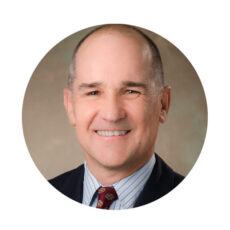
On 29 October 2026, ACAMH will host ‘Family-Based Treatment for Adolescent Anorexia Nervosa’. We caught up with the presenter – Professor Daniel Le Grange, a Visiting Scientist at Charité-Universitätsmedizin Berlin, Germany and Emeritus Professor at the University of California, San Francisco, and Emeritus Professor of Psychiatry and Behavioral Neuroscience at The University of Chicago – about the topic itself, his career, and his hopes for the event.
ACAMH – You co-developed Family-Based Treatment (FBT) nearly four decades ago — how did you come to specialise in this area?
DLG – I arrived from South Africa at the Institute of Psychiatry and the Maudsley Hospital in London in the mid-1980s, just as the adolescent treatment team was embarking on a clinical research programme of family therapy for young people with AN. As we now know, that endeavour brought about a sea change in how we care for young people with an eating disorder — placing families at the centre of recovery. It is, in many ways, a story of being in the right place at the right time
ACAMH – What made family involvement the right foundation for treating adolescent anorexia nervosa, when the instinct in many treatments is to work with the young person alone?
DLG – AN is an ego-syntonic illness, and while it is true that, given sufficient time, we could work with the young person over the course of many months or even years to support gradual weight restoration, we simply do not have that luxury. This illness carries the highest mortality rate of any psychiatric condition, and in addition to significant morbidity, physiological recovery must be prioritised as a matter of urgency. That is not to say psychological recovery is neglected — far from it — but full psychological recovery cannot occur without physiological recovery first.
ACAMH – What’s a common misconception clinicians or families have about how FBT actually works?
DLG – Unfortunately, many clinicians — and families — adhere too rigidly to the FBT manual, leaving little room to respond to the unique challenges each family presents. When FBT is reduced to the behavioural mechanics of weight gain, with the therapeutic relationship treated as secondary, something important is lost. FBT is, at its heart, family therapy. Clinicians should develop a rich formulation of the family in front of them and apply the manual accordingly, in a way that gives that particular family the best possible chance of benefiting from the intervention. One size does not fit all.
ACAMH – You’ve drawn on clinical research collaborations across five continents — can you bring the model to life with an example of how it’s played out in practice?
DLG – Regardless of continent, language, culture, or family make-up, parents in Toronto, Oslo, Cape Town, Singapore, or Melbourne share one thing in common: a deep commitment to the wellbeing of their children. That is, of course, no surprise — and it is precisely this commitment that the FBT clinician draws upon to support the family on their road to recovery. I have been enormously fortunate to spend so much of my career training and guiding FBT practice across these many corners of the world. While meaningful cultural and language differences inevitably enter the treatment space, I have learned that the core FBT principles, when implemented thoughtfully and respectfully, apply as much in Norway as they do in Canada or Australia.
ACAMH – Clinical presentations are becoming more complex — what kinds of adaptations to the foundation FBT model have you found most necessary, and why?
DLG – A number of adaptations have been systematically developed through careful research. Adaptive FBT, for instance, was designed for families in which parents do not feel effective in their capacity to address the eating disorder, while Parent-Focused Therapy (PFT) has shown particular value when parents score high on criticism towards the young person (in terms of Expressed Emotion). That said, even within the foundation model, FBT should always be implemented in a way that allows the clinician to respond thoughtfully and purposefully to the clinical realities of each individual family.
ACAMH – How and for whom does FBT work best — and are there cases where it isn’t the right fit?
DLG – Our understanding of mediators (how FBT works) and moderators (for whom it works best) remains limited, though we have learned that parental efficacy — often described as parental empowerment — in the domain of weight recovery appears to be a key mechanism. In other words, the clinician’s primary task is to help parents develop a deeper understanding of the eating disorder and greater confidence in managing it. As for who benefits most, evidence drawn from comparisons with individual psychotherapy suggests quite clearly that the more severe the eating disorder psychopathology, the more critical it becomes to engage parents actively in supporting the young person. That said, FBT is not a panacea — it does not lead all families to full remission, and it remains frustratingly difficult to predict at the outset which families will respond well and which will not.
ACAMH – Who do you hope will attend, and what’s the one thing you want them to take back into their own clinical practice?
DLG – I hope to welcome mental health professionals — child and adolescent psychiatrists, psychologists, social workers, family therapists, and psychiatric nurses — who work in eating disorder services for young people and their families, and who have trained in FBT, FT-AN, or family therapy more broadly. The single most important message I would want attendees to carry back into their practice is this: the FBT manual is a guide, not a prescription. One size does not fit all, and a family-focused intervention is at its most effective when clinicians apply it in a flexible and clinically responsive way, while remaining adherent to the core principles of the approach.
Where next?
Join our webinar ‘Family-Based Treatment for Adolescent Anorexia Nervosa’. Explore Family-Based Treatment (FBT) for eating disorders with its co-developer and internationally recognised expert, Professor Daniel Le Grange. This session will be emphasising adaptation in response to increasing clinical complexity. For nearly four decades, Professor Le Grange has been at the forefront of developing family-based treatments for adolescent anorexia nervosa and bulimia nervosa.
In this session, he will draw on extensive clinical research collaborations to revisit the foundations of the FBT model, examine how and for whom it works, and consider thoughtful adaptations where these may be warranted in response to increasing clinical complexity.