
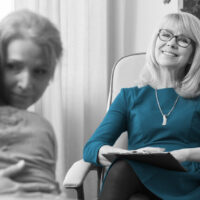
Following the huge success of our inaugural ‘International Expert Conference’ last year we are delight to bring you the second in the series which will focus on brief interventions for children and young people, designed for clinicians and practitioners working in time-limited and high-pressure contexts.
Across five focused sessions, leading experts will explore practical and scalable approaches to supporting young people and families: from single-session intervention models and intensive one-session CBT for phobias, to compassionate approaches to suicide risk and crisis care in overstretched services, as well as experience-sensitive clinical work with autistic young people.
Each talk will include live Q&A, offering clear insights and practical ideas that can be taken directly into everyday clinical practice.
Booking
Sign up at this link or on the Book Now button at the top of the screen, and complete the form that follows. You’ll then receive an email confirmation and a link to the webinar, plus we’ll send you a calendar reminder nearer the time. Delegates will have exclusive access to recordings for 90 days after the event, together with slides. Plus you will get a personalised CPD/CME certificate via email.
- ACAMH Members MUST login to book onto the webinar in order to access this webinar and get a CPD/CME certificate
- Non-members this is a great time to join ACAMH, take a look at what we have to offer, and make the saving on these sessions
EARLY BIRD £109 (until 14/04/26, then £139) for ACAMH Members (Print, Online, Concession) Join now and save
EARLY BIRD £139 (until 14/04/26, then £169) ACAMH Learn Account holders
EARLY BIRD £139 (until 14/04/26, then £169) Non Members
£15 ACAMH Undergraduate/Postgraduate Members
LIC Members free
Don’t forget as a charity any surplus made is reinvested back as we work to our vision of ‘Sharing best evidence, improving practice’, and our mission to ‘Improve the mental health and wellbeing of young people aged 0-25’.
About the sessions
Dr. Georgia Pavlopoulou – An Experience-Sensitive Approach to neurodivergence in clinical environments
Clinical environments are typically organised around neurotypical expectations of communication, attention, and sensory tolerance. For neurodivergent individuals-including autistic people, those with ADHD, and individuals with co-occurring autism and ADHD (AuDHD)-these environments can increase distress, reduce engagement, and lead to misinterpretation of behaviour.
Building on the framework proposed by McGreevy et al. (2024), this talk outlines an experience-sensitive approach to clinical practice that centres neurodivergent perspectives and interprets behaviour in relation to environmental, sensory, and cognitive demands. Rather than framing differences primarily through deficit models, the approach emphasises understanding patient responses as meaningful adaptations to clinical and every day life contexts.
While the framework draws on autism-informed practice, its application to ADHD and AuDHD will also be explored, particularly in relation to executive functioning demands, attentional variability, and emotional regulation.
The presentation also addresses producing reports that remain clinically accurate while avoiding dehumanising or overly pathologising descriptions. Attention is given to how rigour and clarity can be maintained alongside language that reflects context, strengths, and lived experience.
By foregrounding neurodivergent experience, clinicians can improve engagement, reduce distress, and create more responsive clinical environments.
Learning outcomes
- Understand how neurotypical expectations in clinical environments can affect engagement and distress in neurodivergent individuals, including autistic people and those with ADHD or AuDHD.
- Apply an experience-sensitive framework to interpret behaviour and produce clinical reports that remain rigorous while avoiding overly pathologising language.
Professor Pooja Saini – Crisis Close‑Up: Caring for Families on the Edge – While Staff Are at Breaking Point
This session explores what crisis care truly looks and feels like for families, young people, and the professionals supporting them. My research focuses on suicide and self-harm prevention, with particular attention to young people, families, and communities experiencing inequality and struggling to access timely support. Through collaborations with charities, NHS partners, and public health teams, I work to understand how overstretched systems shape real world crisis responses—and how people on all sides navigate them.
Drawing on interviews with frontline workers, caregivers, young people, and service users, this talk shares close up insights into what happens when families reach breaking point while staff themselves are overwhelmed. These conversations reveal a system where compassion is abundant but capacity limited; where professionals work to hold risk, distress, and complexity, even as they face burnout, moral distress, and organisational pressure.
The session will highlight co produced solutions developed through lived experience and frontline expertise, such as:
- Co produced materials—practical, accessible resources created with young people and families to support communication, safety, and shared understanding across services.
- Peer led support pathways, developed in partnership with community organisations, that reduce pressure on crisis teams while giving families timely, relatable help.
- Brief relational practices co designed with staff—simple, evidence informed actions that promote connection and calm during high pressure encounters.
- Collaborative postvention approaches co developed with bereaved families and charities to better support communities after a crisis.
Participants can expect a grounded, honest conversation about crisis care: its realities, its constraints, and the hopeful, human practices that still make a difference.
Learning outcomes
- To understand the experiences of families, young people, and frontline staff during mental health crises, informed by suicide and self‑harm prevention research.
- To recognise how staff pressure and burnout affect crisis responses and decision‑making, drawing on collaborative work with NHS and community partners.
- To use co‑produced approaches to enhance crisis support across different settings.
Professor David A. Jobes – The Cutting-Edge of Clinical Suicidology
This presentation will review the most recent developments within contemporary mental health related to the clinical care of patients who are suicidal. There will be a brief overview of suicide as a significant public and mental health challenge. Major models and theories are helping to shape suicide focused care in terms of the effective assessment and treatment of suicide risk. The presentation will discuss screening/assessment approaches for suicidality, acute stabilization strategies, and then clinical treatments of what causes someone to be suicidal. There will also be an overview of the “Collaborative Assessment and Management of Suicidality” (CAMS), which has been developed by the presenter. CAMS is a patient-centered, evidence-based, suicide-focused treatment for suicidal risk across a range of patient populations and clinical settings. CAMS is now supported be 35+ years of clinical trial research in the United States and abroad. Specifically, CAMS is supported by 14 published open clinical trials, 7 randomized controlled trials, and 2 meta-analyses. Innovative adaptations for youth and a single session version of CAMS will be discussed (CAMS Brief Intervention). There will be a brief consideration of health care policy related to suicidal risk as well as ethical considerations. This presentation will ultimately provide participants key information about the cutting-edge of evidence-based, suicide-focused, clinical care to decrease suicidal suffering and help save lives from suicide.
Learning outcomes
- To understand how to screen and assess suicide risk
- To provide interventions to stabilize patients who are acutely suicidal
- To understand evidence-based, suicide-focused, treatments for suicidality
Programme
12:00pm Dr. Georgia Pavlopoulou – An Experience-Sensitive Approach to neurodivergence in clinical environments
12:40pm Q&A
12:50pm Professor Pooja Saini – Crisis Close‑Up: Caring for Families on the Edge – While Staff Are at Breaking Point
1:30pm Q&A
1:40pm Break
2:15pm Talk (Lina Gega)
2:55pm Q&A
3:05pm Talk (Jessica Schleider)
3:50pm Q&A
4:00pm Professor David A. Jobes – The Cutting-Edge of Clinical Suicidology
4:45pm Q&A
4:55 pm Close
About the speaker

Dr. Jessica Schleider is a clinical psychologist, intervention scientist, and Associate Professor of Medical Social Sciences at Northwestern University. She is the Founding Director of the Lab for Scalable Mental Health and an internationally-recognized leader in research on single-session interventions for youth mental health. Her professional mission is to build and disseminate scalable, evidence-based mental health solutions that bridge gaps in mental health care ecosystems worldwide.
In support of her research on single-session mental health interventions, Dr. Schleider has secured >$12.6 million in federal (NIH, NSF, HRSA), foundation, and industry grant funding as PI or Project Lead. Dr. Schleider been recognized via numerous awards, including the NIH Director’s Early Independence Award; the ABCT President’s New Researcher Award; and the Society for a Science of Clinical Psychology’s Susan Nolen-Hoeksema Early Career Research Award. Her work has been featured in media outlets including The Wall Street Journal, The Washington Post, and The Atlantic, and in 2020 she was chosen as one of Forbes‘ 30 Under 30 in Healthcare.
Dr. Schleider has published >160 articles and book chapters. She has created or co-created seven open-access, single-session mental health programs, which have reached >100,000 teens and adults to date. Based on these programs, Dr. Schleider and her colleagues wrote a self-help workbook, The Growth Mindset Workbook for Teens. She also co-edited the Oxford Guide to Brief and Low-Intensity Interventions for Children and Young People and wrote a nonfiction book, LITTLE TREATMENTS, BIG EFFECTS on how single-session interventions can transform mental health.
To support individuals and institutions in scaling evidence-based SSIs, Dr. Schleider regularly consults for national health care organizations, digital health and social media companies, and providers across the globe. Dr. Schleider completed her PhD in Clinical Psychology at Harvard University in 2018, along with her Doctoral Internship in Clinical and Community Psychology at Yale School of Medicine.

I’m Professor Pooja Saini, a UK academic specialising in suicide and self-harm prevention. My work at Liverpool John Moores University focuses on understanding how young people, families, and communities can be better supported during mental health crises, and how we can reduce the health inequalities that place some groups at greater risk. I collaborate widely with mental health charities, public health teams, and the NHS to ensure research leads to real and meaningful change in services. Much of my work is grounded in co‑production, making sure that people with lived experience sit at the centre of shaping solutions and interventions.
Over the years, I’ve been involved in building and supporting community initiatives, crisis support services, and national suicide prevention partnerships. These collaborations have strengthened my belief that compassionate, practical approaches are not only possible but essential, especially in overstretched systems where staff and services are under intense pressure. I’m committed to bridging the gap between research evidence and the everyday realities faced by frontline teams and the individuals who rely on them.
I also host Let’s Talk Hope, a podcast where I share conversations about resilience, compassion, and what it means to create safer, more hopeful communities – one honest conversation at a time.

Dr. Georgia Pavlopoulou is an Associate Professor in Mental Health, Neurodiversity, and Implementation Science at UCL’s Division of Education, Health and Clinical Psychology Research Dept at Faculty of Brain Sciences. She is the founder of the Group for Research in Relationships And NeuroDiversity (GRRAND). Georgia’s work integrates behavioural, phenomenological, and participatory methodologies within a developmental framework to examine the social determinants of mental health in autistic and ADHD populations. She is deeply committed to creative, participatory health and educational research, co-producing knowledge with community members across the lifespan, with a particular focus on adolescents. She has led national and international co-produced training programmes for mental health practitioners working with neurodivergent young people across educational settings and the NHS. Georgia currently serves as Chair of the NHS-funded England’s National Autism Peer Education Programme. Georgia is the lead editor of a best seller book fully co-produced with autistic people Improving Mental Health Therapies for Autistic Children and Young People.
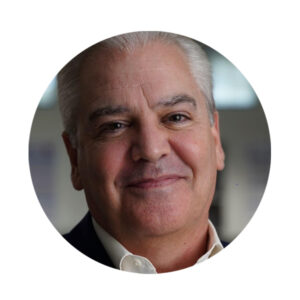
David A. Jobes, Ph.D., ABPP, is a Professor of Psychology, Director of the Suicide Prevention Laboratory, and Associate Director of Clinical Training at The Catholic University of America in Washington DC. He has authored seven books and hundreds of published articles and book chapters. He is the creator of the “Collaborative Assessment and Management of Suicidality” (CAMS) which is an evidence-based, suicide-focused, treatment approach for suicide risk. He is a Fellow of the American Psychological Association and is a board certified clinical psychologist (American Board of Professional Psychology). Dr. Jobes maintains a private clinical and consulting practice in Washington DC.
Booking
Sign up at this link or on the Book Now button at the top of the screen, and complete the form that follows. You’ll then receive an email confirmation and a link to the webinar, plus we’ll send you a calendar reminder nearer the time. Delegates will have exclusive access to recordings for 90 days after the event, together with slides. Plus you will get a personalised CPD/CME certificate via email.
- ACAMH Members MUST login to book onto the webinar in order to access this webinar and get a CPD/CME certificate
- Non-members this is a great time to join ACAMH, take a look at what we have to offer, and make the saving on these sessions
PRICE IS FOR BOTH SESSIONS – Session 1 on 04/11/26, Session 2 on 11/11/26
EARLY BIRD £109 (until 14/04/26, then £139) for ACAMH Members (Print, Online, Concession) Join now and save
EARLY BIRD £139 (until 14/04/26, then £169) ACAMH Learn Account holders
EARLY BIRD £139 (until 14/04/26, then £169) Non Members
£15 ACAMH Undergraduate/Postgraduate Members
LIC Members free
Don’t forget as a charity any surplus made is reinvested back as we work to our vision of ‘Sharing best evidence, improving practice’, and our mission to ‘Improve the mental health and wellbeing of young people aged 0-25’.