Psychotherapies are commonly used therapies for children and young people. They can help children and families understand and resolve problems, change their behaviour and change the way they think and feel about their experiences.
Psychotherapies
-
Barriers to improving access to therapy treatment for tics in the UK
The European clinical guidelines for Tourette Syndrome suggest that behavioural therapies (BT) are ‘first line treatments for tics for both children and adults’. However, according to Dr Tara Murphy and Dr Seonaid Anderson and colleagues, a barrier to delivering this in the UK is a lack of access to specialised psychologists and therapists.
Read more -
Access to evidence-based behavioural interventions needs improving for children affected by Tics
In 2016, Chris Hollis and colleagues compiled a Practitioner Review for the Journal of Child Psychology and Psychiatry evaluating the most effective and well-supported interventions for children and young people affected by Tourette syndrome and chronic tic disorder. Here, they discuss the key findings from their systematic review, and highlight that children and young people affected by tics require improved access to evidence-based behavioural interventions.
Read more -
Can physical exercise improve tics and associated mental health difficulties in Tourette syndrome? The jury is out
Physical exercise is increasingly being recommended as part of management for children and young people with mental health problems. There is a growing evidence base that shows physical exercise is associated with improvements in functioning for conditions such as attention deficit hyperactivity disorder (ADHD), although studies are small, they are signifcant.
Read more -
 28
28
Self-harm Masterclass ‘Therapeutic Assessment for adolescents with self-harm’
Therapeutic Assessment is a brief intervention for young people presenting with self-harm in an emergency. The assessment consists of identifying the vicious cycle of self-harm in the form of a diagram, followed by a collaborative development of an “exit”, a way of breaking the cycle and moving forward.
-
Sleep problems in preschoolers predict depression and anxiety severity
The bidirectional links between sleep problems and psychopathology in children have been well-reviewed,1 but few investigations have been performed in young samples and those with early-onset psychopathology.
Read more -
Cortical hyperarousal in children may predict insomnia in adolescence
Read about the first developmental study to examine whether increased beta EEG activity in childhood precedes the onset of pathological insomnia symptoms in adolescence.
Read more -
Prescribing in the dark: off-label drug treatments for children with insomnia
Insomnia is a common problem in children with neurodevelopmental disabilities (NDDs), and has a profound effect on quality-of-life.
Read more -
24
ADHD Masterclass
Neuroscience provides a rational basis for the discovery of new and/or more effective treatments for ADHD. Over the last twenty years our view of ADHD neurobiology has changed considerably, with modern views emphasising its complexity and heterogeneity.
-
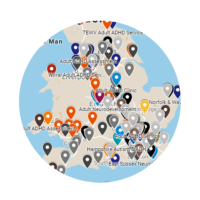
Online ADHD service map aims to stop young people slipping through net
Researchers at the University of Exeter have released a map put together from the results of a national survey. The new map aims to help identify existing services and gaps in provision for young adults with Attention Hyperactivity Deficit Disorder (ADHD).
Read more -
Anxiety Edition – foreword by Dr Mark Lovell
This edition of The Bridge covers the topic of anxiety. Owing to anxiety being common, with all of us experiencing a state of anxiety at some time and many also having trait anxiety, it is no surprise that ACAMH’s two main academic outputs the Journal of Child Psychology and Psychiatry and Child and Adolescent Mental Health contain some good quality research on anxiety advancing our knowledge of the science and evidence based practice.
Read more