
Each year, International Women’s Day offers an opportunity to reflect on how women contribute to, shape, and sustain the systems around them. The theme for 2026, #GiveToGain, centers on the idea that when people, organizations, and communities give generously, opportunities and support for women increase.
In child and adolescent mental health (CAMH), this theme resonates strongly. Across services, care is sustained by women working in a wide range of roles — psychologists, mental health nurses, social workers, counsellors, occupational therapists, and community practitioners — whose work depends on sustained relational and emotional engagement. Exploring how this “giving” operates — and how it is supported by systems — provides a useful lens for thinking about the sustainability of CAMH services.
Women sustain the workforce
Globally, women make up the majority of the health and social care workforce, particularly in roles involving direct and ongoing care (Boniol et al., 2019). Within psychology, women represent a substantial proportion of practicing professionals, especially at early- and mid-career stages (American Psychological Association, 2022). Although workforce composition varies by country and profession, available data consistently show that women constitute a large proportion of professionals working in direct mental health care roles. Given that child and adolescent mental health services rely heavily on these professions, women are likely to represent a substantial proportion of the CAMH workforce in many contexts.
Work in CAMH is often longitudinal and relational. It relies on developmental understanding, continuity over time, and close collaboration with families and wider systems around the child. Much of what enables this care to function effectively extends beyond formal job descriptions. Alongside clinical expertise, everyday practice frequently involves emotional steadiness, coordination, mentoring, and sustained relational presence. These elements are central to how care is experienced, even if they are not always the most visible aspects of professional work.
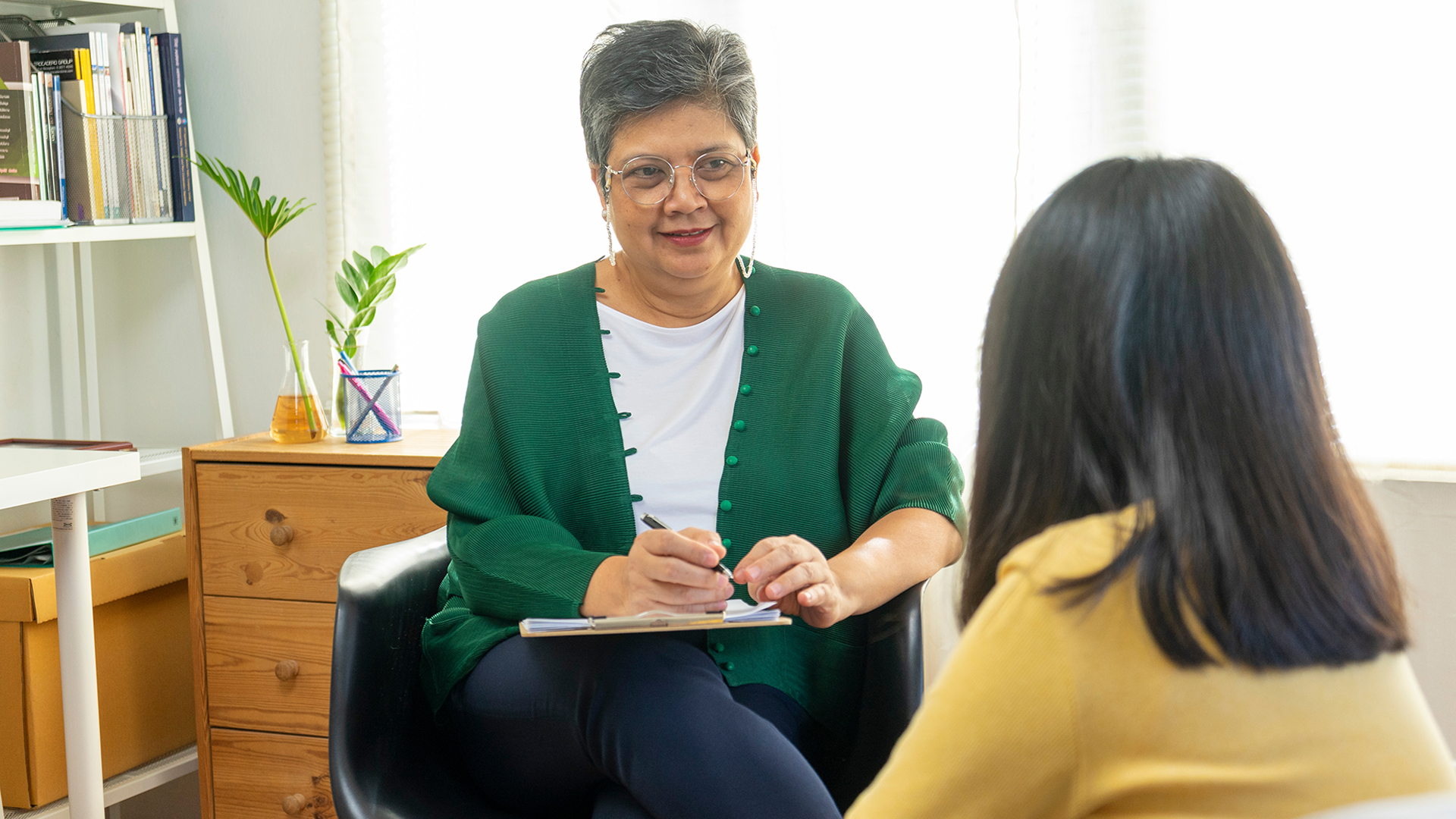
Reciprocity: when giving needs support
If much of CAMH depends on sustained relational labour — the ongoing emotional and developmental engagement that therapeutic work requires — an important question follows: how is that labour supported and recognised within organisations?
Reciprocity in healthcare is shaped not only by interpersonal dynamics but also by workplace conditions: how workloads are structured, how flexibility is enabled, how relational work is valued, and how opportunities for influence and progression are distributed. When high levels of emotional and developmental care are consistently required but not matched with structural support, pressures can accumulate.
Burnout is widely documented among mental health professionals and provides one indication of how such pressures manifest. A systematic review and meta-analysis synthesising research from multiple countries and settings found consistently high levels of burnout among mental health workers, identifying work-related factors such as workload and workplace relationships as key determinants, while role clarity, professional autonomy, a sense of being fairly treated, and access to supervision appeared protective (O’Connor et al., 2018). These findings underscore that burnout is not simply an individual vulnerability, but is closely shaped by organisational structures and working conditions.
Because women comprise a substantial proportion of the healthcare and mental health workforce, these organisational dynamics have gendered implications. Although women make up a large proportion of healthcare professionals, leadership roles globally are more often occupied by men (Boniol et al., 2019). While this pattern varies across contexts, it invites reflection on how authority and decision-making tend to be distributed, and how those distributions may influence recognition, autonomy, and working conditions.
Looking specifically at well-being, research suggests that these dynamics matter. Linzer et al. (2015), in a study of primary care clinicians, found that burnout was associated with increased intention to leave roles, with this association particularly evident among women. Similarly, Karakcheyeva et al. (2024), reviewing 71 studies across 26 countries, found that women in healthcare tend to report higher levels of stress and burnout than male colleagues. These patterns are discussed in the literature in relation to workplace inequities, challenges in work-life integration, limited professional autonomy, and caregiving responsibilities.
Together, this evidence points toward the importance of organisational context. When sustained professional and emotional investment is not fully supported, the effects can extend beyond individuals to teams and services.

Give to Gain: what systems gain when care is supported
In many regions, child and adolescent mental health services are also operating under rising referral rates and extended waiting times, further intensifying pressures on an already stretched workforce.
While many initiatives continue to focus on strengthening individual resilience, the literature increasingly points toward the importance of organisational responsibility in shaping sustainable working conditions. A large meta-analysis focusing on physicians found that organisational interventions — such as improvements to working conditions and structural supports — tend to be more effective in reducing burnout than approaches focused solely on individual coping strategies (Panagioti et al., 2017). This suggests that meaningful change is closely linked to how workplaces are designed and led.
Organisational approaches may include examining workload distribution, strengthening team-based support, increasing professional autonomy, and ensuring that recognition and progression pathways are transparent and equitable (Cohen et al., 2023). These structural conditions are closely linked to professional well-being and may have implications for service quality. For instance, burnout among healthcare professionals has been associated with poorer patient safety outcomes and increased medical errors (Hall et al., 2016). Together, this body of research indicates that workplace conditions and service quality are interconnected.
In CAMH, where care unfolds over time and relationships are central to therapeutic progress, the way work is structured and supported becomes closely intertwined with the stability and quality of care itself.
Conclusion
On International Women’s Day, recognising women’s contributions to CAMH involves more than celebrating dedication. It also means considering how organisational structures, leadership, and shared responsibility shape professional wellbeing.
#GivetoGain can be understood not as a call for individuals to give more, but as a reminder that sustainable care depends on systems that give back. When workplaces support those who sustain them, the gains are shared — strengthening professionals, teams, and ultimately the children and families they serve.
References
- American Psychological Association. (2022). Demographics of U.S. Psychology Workforce [Interactive data tool]. Retrieved from https://www.apa.org/workforce/data-tools/demographics
- Boniol, M., McIsaac, M., Xu, L., Wuliji, T., Diallo, K., & Campbell, J. (2019). Gender equity in the health workforce: Analysis of 104 countries. World Health Organization. WHO/HIS/HWF/Gender/WP1/2019.1
- Cohen, C., Pignata, S., Bezak, E., Tie, M., & Childs, J. (2023). Workplace interventions to improve well-being and reduce burnout for nurses, physicians and allied healthcare professionals: a systematic review. BMJ Open, 13(6), e071203. https://doi.org/10.1136/bmjopen-2022-071203
- Hall, L. H., Johnson, J., Watt, I., Tsipa, A., & O’Connor, D. B. (2016). Healthcare Staff Wellbeing, Burnout, and Patient Safety: A Systematic Review. PLOS ONE, 11(7), e0159015. https://doi.org/10.1371/journal.pone.0159015
- Karakcheyeva, V., Willis-Johnson, H., Corr, P. G., & Frame, L. A. (2024). The Well-Being of Women in Healthcare Professions: A Comprehensive Review. Global Advances in Integrative Medicine and Health, 13, 27536130241232929. https://doi.org/10.1177/27536130241232929
- Linzer, M., Poplau, S., Grossman, E., Varkey, A., Yale, S., Williams, E., Hicks, L., Brown, R. L., Wallock, J., Kohnhorst, D., & Barbouche, M. (2015). A Cluster Randomized Trial of Interventions to Improve Work Conditions and Clinician Burnout in Primary Care: Results from the Healthy Work Place (HWP) Study. Journal of General Internal Medicine, 30(8), 1105–1111. https://doi.org/10.1007/s11606-015-3235-4
- O’Connor, K., Muller Neff, D., & Pitman, S. (2018). Burnout in mental health professionals: A systematic review and meta-analysis of prevalence and determinants. European Psychiatry, 53, 74–99. https://doi.org/10.1016/j.eurpsy.2018.06.003
- Panagioti, M., Panagopoulou, E., Bower, P., Lewith, G., Kontopantelis, E., Chew-Graham, C., Dawson, S., van Marwijk, H., Geraghty, K., & Esmail, A. (2017). Controlled Interventions to Reduce Burnout in Physicians: A Systematic Review and Meta-analysis. JAMA Internal Medicine, 177(2), 195–205. https://doi.org/10.1001/jamainternmed.2016.7674
Look back at previous International Women’s Days
‘Trailblazers in Child and Adolescent Mental Health: Celebrating Women Pioneers‘, blog by Malaika Okundi, 2025
‘International Women’s Day #AccelerateAction: Accelerating gender equality in psychological research and psychiatry‘, blog by Pauline Thibaut, 2025
‘Let’s Talk About the Need to Invest in Women Researchers and Leaders‘, blog by Dr. Emma Francis, 2024
‘#InspireInclusion: Addressing the Undue Service Burden Placed on Women Faculty in Psychology‘, blog by Dr. Rosanna Breaux, 2024
‘Inclusion and Advocacy for Women with ADHD: Addressing Inequities and Challenging Diagnostic Bias on International Women’s Day‘, blog by Dr. Zoe Smith, 2024