On 13 May 2026, ACAMH will host a webinar Working with families affected by relational trauma: building safety, connection and resilience, with a particular focus on the Dyadic Developmental Psychotherapy, Parenting and Practice (DDP) intervention.
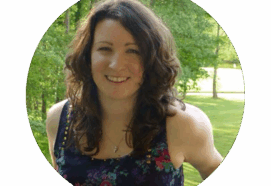
We caught up with the presenter – Dr. Kim Golding CBE, a clinical psychologist and consultant and trainer in DDP – about the topic itself, her career, and her hopes for the event.
Looking back at your career, what first got you interested in relational trauma – the trauma that exists in family relationships – and attachment difficulties?
I trained as a clinical psychologist, and then working in the learning disability field and then with children on the edge of care got me interested in parenting and in relational trauma.
My next move was to join a multi-agency project working with children who were in care or adopted from care, and crucially, supporting the foster carers of those children. It became clear quite quickly that the cognitive behavioural therapy (CBT) models, which I was trained in, were not enough. We needed something additional. I met Dan Hughes, who had developed DDP, and could immediately see it had huge potential.
What is Dyadic Developmental Psychotherapy and Practice (DDP), and what are its strengths?
DDP was developed specifically to work with children and families where there’s been relational trauma, particularly in foster care, adoption, residential care or kinship care – although it is now also being used with birth parents too.
It’s a highly relational model, a combination of directive and non-directive, based on a foundation of attachment theory and intersubjectivity theory. It’s also a very complex model, because the therapy has to be supported by the parenting, and it’s about bringing the DDP principles into the world around the children via their contact with teachers, the social care support, everything. It needs to be a whole bespoke programme of care and support informed by those same principles. Another important thing about DDP is you can embrace this model and bring other models in, like cognitive behavioural, theraplay, and sensory approaches, for example .
What I love about DDP – and this is quite controversial in some ways – is that it allows the therapist or the parent to bring their whole self into the relationship. We’re trained as therapists to be quite boundaried and neutral, to not let our emotions show too much. But in DDP, we’re encouraged to be authentic and to use our own experiences to connect.
Why is it important that DDP takes that very different approach?
In some therapeutic models we are trained to sit there quite neutrally and not show too much of ourselves, in order to create a space that the client can use to explore their experience.
I’m not saying those models are bad, but for children who’ve experienced relational trauma, that approach can actually be quite frightening. These children need to see you, understand you, know you are real and invested in them, and that their experience genuinely matters to you.
For people from other backgrounds training in DDP, it can feel like a challenge to be safely redefining your professional boundaries, but it is so important in the relational trauma context.
What are the PACE principles – and how central are they to DDP?
PACE stands for Playfulness, Acceptance, Curiosity and Empathy. These are the attitudes that we try to hold when we’re connecting with children who’ve experienced relational trauma – and you can see a graphic on the webinar page that explains a bit more about them.
PACE was developed in DDP, and it’s absolutely central to it, but now those principles are sometimes used more widely in different contexts, outside of DDP. While it’s great that those ideas are out there, sometimes the meaning gets diluted: you hear ‘we’re trauma-informed’ or ‘we’re an attachment-friendly school’, but without that deep relational foundation that DDP provides, it can become just a label rather than a genuine way of being with these children.
In the webinar, you’ll be talking about cultural awareness and adapting DDP interventions within the context of the culture – why is that important?
DDP is a Western model based on Western psychological understanding, and we need to be honest about that. But that doesn’t mean it can’t be adapted.
When you’re working with DDP, you need to be attuned to the diverse needs of different people based on their culture, experiences and identities. It’s about being responsive to people’s values and needs. You can’t apply a one-size-fits-all approach, you need to really understand the family’s cultural and identity context, and understand the experiences they have been through. With this understanding you can adapt how you work for the unique family in front of you, whilst still holding on to those core DDP principles about relationship and connection.
What are the ways in which DDP, and how we respond to relational trauma more generally, could develop in the future?
The biggest influence on healing relational trauma is our growing understanding of neuroscience and what’s happening in the brain. Colleagues like Jon Baylin, Stephen Porges with his polyvagal theory, Dan Siegel, Allan Schore are helping us understand how trauma really impacts us.
DDP takes this understanding and really drills down into the fears that children hold of relationships, particularly being parented, and the impact that has on the parents. Understanding polyvagal theory helps parents understand not just their child’s reactions but their own reactions, and have compassion for themselves so they can stay open and present to the child.
Going back to our earlier point, I hope we can bring in more non-Western ideas, things like indigenous healing practices, into models like DDP. I hope that’s going to be an amazing partnership when West meets non-West, because there’s an awful lot we can learn that would fit really nicely alongside our more Western scientific psychological models.
The future is bright – we’re really developing this field, and we’re just getting started in many respects.
Who do you hope will attend this webinar, and what do you hope they’ll take out of it?
This is aimed at a multidisciplinary audience – psychologists, psychotherapists, social workers, mental health nurses, local authority staff – anyone who’s working with children and families who’ve experienced relational trauma. I want it to be accessible to people who might be quite new to these ideas, but also to offer something for people who’ve been working in this field for a while.
My hope is that people will come away with a thoughtful and accessible understanding of how safety, connection and resilience can be fostered in everyday practice with families impacted by relational trauma. And perhaps some people will be inspired to learn more about DDP specifically and what it can offer.
Interested in more? ACAMH Learn has a wealth of free content on trauma, attachment and a range of other topics