Meet the expert: a nervous system approach to selective mutism, with Anna Biavati
On 28 April, ACAMH will host a webinar Creating Safety Before Speech: A Nervous System Approach to Selective Mutism.
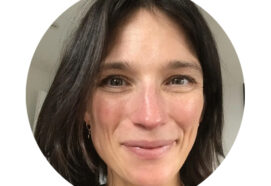
We caught up with the presenter – Anna Biavati, a Speech and Language Therapist and founder of Steps to Brave Talking Therapy and Support – about the topic itself, her career, and her hopes for the event.
What first drew you to selective mutism (SM) – and how did you come to specialise in it?
I’ve been a speech therapist for more than 25 years, but I never set out to specialise in this area. Like many colleagues, I wasn’t even trained on it. Then, a few years into my career, I came across my first child with SM – a bilingual boy who was really chatty at home but completely frozen outside it. What I remember about him wasn’t just the silence, it was how he looked – he didn’t move, he didn’t say anything to mum, just held onto his bag. I just couldn’t make sense of it.
Since then I’ve done a lot more research and developed new approaches, understanding that selective mutism is a nervous system response – rather than a choice, or a speech problem.
Selective mutism has often been described as a child ‘choosing’ not to speak – but what does it really mean?
The word ‘selective’ is important. Historically, it was actually called ‘elective mutism’ – implying a choice. But it’s not a choice, it’s about an anxious brain protecting itself. The DSM-5 has since reclassified SM as an anxiety-based condition, explicitly stating that it is not a wilful refusal to speak. But still, even in 2026, I hear people say things like, “Oh, that child who doesn’t want to speak?” That perception is out there still.
On top of that, the word “mutism” doesn’t help. It implies no words at all, but children might produce one-word responses or short sentences at school when they’re capable of full sentences at home. The gap between what a child does in a safe setting versus an anxiety-provoking one is the key, and easy to underestimate. Just because you can hear a child’s voice doesn’t mean they’re not experiencing real anxiety.
This is still an emerging field. The research base is growing, but it’s not yet where it needs to be. That said, much of what informs good practice draws on well-established work around anxiety, the nervous system, and child development more broadly.
What is happening in the brain and body when a child with selective mutism goes silent?
The brain is doing exactly what it’s designed to do; protecting us from threat. From the moment we’re born, the brain is scanning for danger. For someone with SM, that threat-detection system is hypersensitive. The amygdala is constantly sending alarm signals, so even something as simple as being asked a question can register as unsafe.
Looking through the lens of polyvagal theory, thisis what’s called a dorsal vagal shutdown – the nervous system prioritising survival over social engagement. Social engagement goes offline. The child isn’t being defiant or awkward. They are, quite literally, in a freeze state.
Children with SM often present with a closed posture – head down or to the side, shoulders in, tension around the neck. The body is reflecting the nervous system’s state, and this physically restricts the airflow and muscles needed for speech. Working with movement, balance, and what’s called primitive reflex integration can shift that posture and, with it, the nervous system’s readiness to engage.
Silence is the result, not the cause, of SM. And that’s why any approach that focuses primarily on getting the child to speak is starting from the wrong place. Traditional approaches have often focused heavily on graded exposure and behavioural reinforcement – breaking speech down into smaller steps, offering praise at each stage. Exposure does have a role, but if we focus entirely on vocal output, we risk missing everything underneath it. I’ll be talking about more effective approaches in the webinar.
At what age can selective mutism impact children, and how important is it to recognise it early?
I work with children from 3 to 20, but SM can also occur in adults. Catching it early is crucial – I’d love to see better screening in schools and early years settings. The earlier we recognise this, the better the outcomes.
There’s a pivotal shift in brain development around the age of eight, and the longer a child goes without support, with adults around them saying “they’ll grow out of it” or “it’s just shyness”, the harder it becomes to unpick. A child spending entire school days unable to communicate is not “just a phase” and the longer it goes unaddressed, the greater the impact on socialisation, confidence, and long-term development.
There definitely needs to be more awareness among practitioners of SM, because families can spend years navigating services that don’t quite fit, or just being told their child is shy or being “difficult”. There’s also the confusion in relation to autism – SM and autism can co-exist, but you very often see SM in a child who is not autistic, but might get misdiagnosed with autism.
Who do you hope will attend this webinar?
The session is designed for absolutely anyone working with children in a professional capacity, whether in health settings, schools and nurseries, or elsewhere.
I’d like people to walk away looking at silence differently – understanding that it’s a protection, not a problem, and that the more you focus on forcing a child to speak, the more unsafe they will feel. They will also leave with practical things they can try straight away: thinking about their own body position when they’re with a child, the language they use, how many questions they’re asking. So much starts with us.
Visit ACAMH Learn, ACAMH’s free CPD platform for more content and resources around childhood anxiety disorders.