
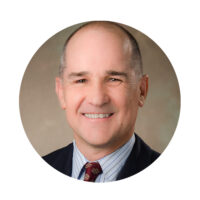
Explore Family-Based Treatment (FBT) for eating disorders with its co-developer and internationally recognised expert, Professor Daniel Le Grange. This session will be emphasising adaptation in response to increasing clinical complexity. For nearly four decades, Professor Le Grange has been at the forefront of developing family-based treatments for adolescent anorexia nervosa and bulimia nervosa.
In this session, he will draw on extensive clinical research collaborations to revisit the foundations of the FBT model, examine how and for whom it works, and consider thoughtful adaptations where these may be warranted in response to increasing clinical complexity.
Register for the event & pricing
Sign up at this link or on the Book Now buttons, and complete the form that follows. You’ll then receive an email confirmation and a link to the webinar, plus we’ll send you a calendar reminder nearer the time.
Delegates will have exclusive access to recordings for 90 days after the event, together with slides. Plus you will get a personalised CPD/CME certificate via email. Recordings from the session will be available to delegates from 5 working days after the event.
- ACAMH Members MUST login to book onto the webinar in order to access this webinar and get a CPD/CME certificate.
- Non-members: this is a great time to join ACAMH, take a look at what we have to offer, and make the saving on these sessions.
| Ticket Type | Price |
|---|---|
| ACAMH paying Members (Online, Concession) | EARLY BIRD £99 (Join now and save) |
| ACAMH Learn Account Holders | EARLY BIRD £129 |
| Non Members | EARLY BIRD £129 |
| ACAMH Undergraduate/ Postgraduate Members | £15 |
| LMIC Members | Free |
Who should attend
The primary audience for this session would be; clinicians (clinical psychologists, CAMHS psychiatrists, eating disorder clinicians, CBT therapists), allied health professionals, dietitians, Medical (non-psychiatry, like Paediatricians).
This may also be of interest to those in social care and family support (Early help practitioners), and education professionals (School-based mental health leads).
About the session
Talk title – Family-based Treatment for Adolescent Anorexia Nervosa: Emphasizing Adaptation in Response to Increasing Clinical Complexity.
In this presentation, Prof. Daniel Le Grange will draw upon clinical research collaborations spanning five continents to deliver a focused, historical, and practical perspective on addressing these complex mental health challenges.
Learning objectives:
- To reconsider a refresher of the foundation model of FBT and appreciate this treatment’s strengths and challenges.
- To understand how and for whom FBT works.
- To thoughtfully plan adaptations to the foundation model of FBT and appreciate why/when to implement such adaptations.
Meet the speaker
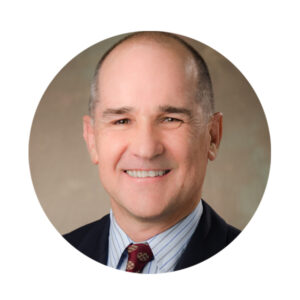
Prof. Daniel Le Grange is a Visiting Scientist at Charité-Universitätsmedizin Berlin, Germany and Emeritus Professor at the University of California, San Francisco, where he was a Benioff UCSF Professor in Children’s Health and Director of the Eating Disorders Program in the Department of Psychiatry and Behavioral Sciences until his retirement at the end of 2025. He also is Emeritus Professor of Psychiatry and Behavioral Neuroscience at The University of Chicago.
Dr. Le Grange received his doctoral education at the Institute of Psychiatry, Psychology and Neurology in London, and completed a postdoctoral fellowship at Stanford University in California. Dr. Le Grange’s research interest focuses primarily on treatment development through randomized controlled trials for adolescents with eating disorders. He has authored or co-authored more than 725 manuscripts, books, book chapters, and abstracts. His focused scholarship has been translated into more than 11 languages.
In recognition of his achievements, Dr. Le Grange was elected Fellow of the Academy for Eating Disorders in 2002 and Lifetime Member of the academy in 2025. He also is a Member of the Eating Disorders Research Society, and past Associate Editor for the European Eating Disorders Review and the Journal of Eating Disorders. He is a well-known figure on the international lecture circuit and has on numerous occasions presented his work across North America, Europe, Australasia, Asia, and Africa.
Over the past 25 years, Dr. Le Grange has been Principal Investigator on numerous randomized clinical trials funded by the National Institute of Mental Health (United States), the National Health and Medical Research Council (Australia), as well as private foundations in the United States and Australia. Dr. Le Grange is the recipient of the 2013 UCSF Presidential Chair Award, the 2014 Academy for Eating Disorders Leadership in Research Award, and the 2022 Hilde Bruch Lecture Award, University of Tübingen, Germany.
FAQs on the Topic
1. What is family-based treatment (FBT) for adolescent anorexia nervosa?
Family-based treatment (FBT) is an evidence-based outpatient approach for adolescent anorexia nervosa in which parents take a central role in supporting their child’s recovery. It is non-blaming, treats the eating disorder as separate from the young person, and empowers families to restore regular eating. Current guidance recommends it as a first-line treatment for this age group.
2. How does family-based treatment for anorexia work?
FBT works by placing parents in charge of re-establishing consistent eating, then gradually returning age-appropriate control to the young person as recovery progresses. Evidence-based practice suggests early weight gain is a strong signal of likely response. It tends to suit families able to commit time and consistency, though it does not lead to full recovery for everyone.
3. What is the difference between FBT and CBT-E for adolescent eating disorders?
FBT and enhanced cognitive behavioural therapy (CBT-E) differ in approach. FBT mobilises parents as the main resource for recovery, while CBT-E works individually with the young person on the thoughts and behaviours maintaining the disorder. Current guidance positions CBT-E as an alternative when FBT is unsuitable, declined, or has not proved effective.
4. When does family-based treatment for anorexia not work?
FBT does not suit every family. It may be less effective where parents cannot take on the demands of treatment, where there is significant clinical complexity or co-occurring difficulty, or where early progress does not emerge. Recognising limited response early allows clinicians to adjust the approach rather than continue unchanged.
5. How is family-based treatment for anorexia adapted for more complex cases?
When standard FBT stalls or needs are more involved, evidence-based practice suggests several adaptations. These include separated sessions where the therapist works mainly with parents, additional parental coaching, multifamily formats, or stepping up to a more intensive level of care. The aim is to match support to the young person and family rather than abandon a family-led approach.
Infographic
Download a pdf of this infographic