
This set of talks explores updated best practice in suicide prevention within CAMHS, highlighting a shift toward personalised, collaborative safety assessment, formulation, and management following new 2025 national guidance. It also examines suicidality in autism, multiagency learning from recent cases, and broader safeguarding approaches including child exploitation and forensic CAMHS perspectives.
It is organised by the ACAMH Southern Branch.
Programme Schedule
| 09:00 | Welcome and opening remarks by the Chair |
| 09:10 | Richard Webb and Jennie Eeles – Staying Safe from Suicide, Furthering Practice in CAMHS |
| 10:10 | Dr. Chrissy Boardman – Suicidality in autism, learning from recent incidents and from deaths by suicide in Dorset and Somerset over the last 5 years |
| 11:10 | Neil Connolly – Protecting Childhood – Child Exploitation and Contextual Planning |
| 12:10 | Refreshment & Reflection break |
| 12:30 | Dr. Jonathan Bigg – Some things to consider when that uncomfortable feeling arises of potential risk to the public from a child being seen in a clinic |
| 13:30 | Panel Discussion – Where Safeguarding Systems Break Down: MDT approach |
| 12:45 | Closing remarks |
| 13:50 | Close |
Programme is subject to change
Richard Webb and Jennie Eeles – Staying Safe from Suicide, Furthering Practice in CAMHS
April 2025 saw the launch of updated national guidance (Staying Safe from Suicide, Best Practice Guidance for safety assessment, formulation and management) replacing the Department of Health guidance on Best Practice in Managing Risk (2009). This talk will go through the key principles and steps outlined in the guidance, focusing practice on a personalised and collaborative approach in safety assessment, formulation and planning.
Learning outcomes:
- To understand the need for change in risk assessment practice and stratification of risk.
- To understand the key principles from Staying Safe from Suicide guidance.
- To recognise and understand the three parts to Safety Assessment, Formulation and Management.
Dr. Chrissy Boardman – Suicidality in autism, learning from recent incidents and from deaths by suicide in Dorset and Somerset over the last 5 years
Learning from deaths by suicides in Dorset and Somerset over the last 5 years. The talk will discuss the themes and the live multiagency plans to reduce these events. It will also discuss the assessment of suicide risk in children and young adults with autism in the light of recent incidents in Dorset Healthcare where autism may have contributed to death of adults.
Learning outcomes:
- Understanding more about managing suicide in the multiagency arena.
- Understanding more about the themes in the young people dying by suicide in Dorset and Somerset.
- Increasing curiosity around the drivers towards suicide in our population with autism and with mental health, when does these overlap and when are they separate.
Neil Connolly – Protecting Childhood – Child Exploitation and Contextual Planning
The Willow Team enters its eleventh year remaining committed to understanding child exploitation in all its forms. Originally focused on sexual exploitation, the team has increasingly expanded its focus to include group-based harms, criminal exploitation, and both local and county lines drug activity.
The team maintains a strong emphasis on multi-agency working, intelligence sharing, mapping, and understanding community impact and local context.
This update will support professionals in understanding the current risks faced by children and adults, the impact of those risks, and how we apply the Contextual Safeguarding Model while building and sustaining trusted relationships.
Learning outcomes
- To consider the current risk for children and young people from exploitation
- To understand the processes used within Hampshire to safeguard exploited children
- To better understand ‘Contextual Risks’ and how we work together to improve multi agency practice
- To reflect on ‘What Works’
Dr. Jonathan Bigg – Some things to consider when that uncomfortable feeling arises of potential risk to the public from a child being seen in a clinic
My perspectives arise from working in the forensic CAMHS field alongside multiagency partners for a number of years now. I will have to offer apologies that I have no original research to present beyond telling of things I’ve observed and opinions I’ve come to form.
I will hope to present a broad approach to the topic and speak of issues I consider relevant and of interest to me. There will be some case material peppered here and there and in truth nearly all I will say will be rooted in matters I’ve seen playing out in case work and bits of reading I’ve pursued in relation to children’s varied presentations.
I hope to provoke some discussion and maybe some thinking that continues beyond what is aired directly on the day.
Learning outcomes:
- To open up to the broader view I’ve developed of what “mental disorder” can usefully mean for a mental health practitioner. Perhaps in particular highlighting people who may not fit within the usually commissioned CAMHS services, but who nevertheless deserve sophisticated and experienced mental health assessment to guide care planning.
- To get a sense of what the Prevent and Channel Panel structures are about.
- To absorb something of the feel of forensic CAMHS case work in some of the more extreme presentations, given the requirements of patient confidentiality for us to respect the need for minimum divulging of specific case detail.
Meet the Speakers
Dr Jennie Eeles – Lead clinician – Urgent assessment and home treatment, DBT and Emotional regulation pathway – Hampshire CAMHS. Jennie has been working in CAMHS since 2001, specialising in working with young people who present with primary emotional dysregulation, who are suicidal and engage in self-harm. As such these young people are often considered as presenting with emerging personality disorder. Jennie’s work with this cohort of young people includes – DBT, Trauma focused DBT, EMDR and ACT. In 2021 Jennie completed a doctoral research project which focussed on the Adolescent and Practitioner experience of mindfulness as taught in DBT. Since 2021 Jennie has been developing and implementing an adaptation of DBT for young people in crisis and is currently applying for NIHR funding to establish the transferability of this intervention to other services.
Richard Webb has over 30 years clinical experience as a Registered Mental Health Nurse within a variety of settings both in the NHS and Private sector and currently Deputy Director of Clinical Governance. In the last decade, he has been in role at senior leadership level within organisations providing operational, quality and professional focus for clinical services. Richard has had the privilege and been pleased to work as lead writer on the Staying Safe from Suicide: Best Practice Guidance for Safety Assessment, Formulation and Management, alongside colleagues from NHS England and Philip Pirie.
Dr. Chrissy Boardman, Having worked for years in camhs in Dorset as an associate specialist, I developed an interest in safeguarding and being part of the multiagency system. My heart is with those young people who are hard to engage, but also with how to practically work in the multiagency arena from a camhs perspective. I have an interest in young people with risky behaviours either towards themselves or others and am keen that camhs can communicate well their perspectives of a patient’s risks within the multiagency system. I have been the named doctor for safeguarding for 7 years for Dorset Healthcare and this role has enabled me to sit on the Child Death Overview Panel for Dorset and Somerset. We have recently carried out a themed review for young people dying by suicide or suspected suicide over the last 15 years. I am also the Designated Person for Safeguarding for a church and Safeguarding Trustee for an international charity working in some parts of the world with very different cultures.
Neil Connolly – Neil joined Hampshire County Council in 2008 and qualified as a social worker in 2011. Having gained experience in different teams took up the position of Willow Team Manager in 2015. T
Neil has gone on to build on many aspects of the operational development of child exploitation across Hampshire, from staff training to developing best practice process across the four local authorities within Hampshire. The team is multi agency and has formed strong links with partners to help support the children of Hampshire being safer.
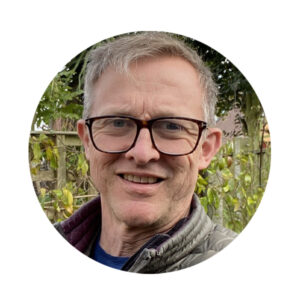
Dr. Jonathan Bigg – Jonathan has been a community-based consultant forensic CAMHS practitioner since the start of the millennium. He has maintained ongoing consultant roles in CAMHS and FCAMHS teams throughout that period. He worked as a CAMHS Named Doctor for Safeguarding Children over an extended period.
Now partially retired, with reduced capacity for direct therapy delivery he has recently ceased EMDR work with occasional children presenting serious risks of causing significant harm.
He has long advocated for the needs of severely deprived, neglected and abused children. His main ongoing clinical interest has probably always been this general group. In more recent years he has developed a fascination for working with extremely troubled children displaying aspects of structural dissociation (operating as if made up of disparate parts). Such presentations are over-represented in FCAMHS casework, though very uncommon even here.
In more recent years, Jonathan has been a Channel Panel core group member. Therefore he has developed some familiarity with issues relevant to vulnerability to terrorism and radicalization. He has observed something of the rapidly changing context facing UK society from threats of serious planned violence. So too has he observed efforts made within Channel and Prevent processes to reduce public risks of atrocities. It is with this focus in mind that he will be guiding what he presents at the conference.