
Current mental health systems struggle to meet the growing demand for care, and many young people experience mental health difficulties and conditions which often remain unrecognised and untreated.1
Provider shortages, high treatment costs and stigma mean that even those seeking help frequently cannot access timely evidence‑based support. These challenges have motivated researchers to develop brief, scalable interventions that can widen access while maintaining efficacy.
Promising models, such as single‑session interventions (SSIs) for common mental health problems and one‑session treatments (OSTs) for specific phobias, aim to reduce treatment time.
But what are brief interventions, why do they exist, and what are the benefits of short-term child therapy? Below, we discuss the ins and outs of brief mental health interventions for youth.

What is a brief mental health intervention?
One of the first questions people ask about brief mental health interventions is: what is a brief intervention in mental health?
A brief intervention is a short-term, evidence-based therapy approach. Brief mental health interventions are designed to help young people manage mild to moderate mental health difficulties in a timely way, on a short-term basis.
The aim of brief interventions—such as, for example, single-session interventions (SSIs) or one-session treatments (OSTs)—is to offer a complete therapeutic experience within one (or a small number of) contacts.
Why are brief psychological interventions important?
Long waiting lists are common across many mental health systems. Digital therapies have improved reach, yet many families struggle to engage in multi‑session child therapy because of time constraints, cost or fear of stigma.
SSIs and OSTs reframe care delivery by offering a single, targeted encounter that provides coping strategies or exposure experiences. Many SSIs are self‑guided or delivered by non‑professionals and can be completed in under an hour,2 reducing reliance on specialist clinicians.
OST compresses the core components of exposure therapy into a single intensive appointment, often lasting around three hours.3
Because these interventions are brief and can, in some cases, be adapted to digital formats, they have the potential to be integrated into daily life and disseminated widely without overburdening health services. Importantly, both models are grounded in cognitive‑behavioural theories and have been evaluated in rigorous trials.4

Benefits of single-session therapy interventions
In some therapeutic cases, a single session may not be enough. However, there are several key instances where the single-session intervention format can have benefits. For example:
1. Improves access to care
Most SSIs involve web‑based modules that combine psychoeducation, interactive exercises and personalised reflections. Their digital format circumvents geographical and socioeconomic barriers, allowing young people to access support from home or school.
2. Offers rapid relief
Recent research has shown that most randomised trials found SSIs to be beneficial, though effects were modest and methodological quality varied.5 SSIs are designed to complement rather than replace ongoing therapy in youth; they can offer rapid relief, motivate further help‑seeking and prevent deterioration when traditional services are inaccessible.
3. Serves as an alternative to in-person therapy
During the COVID‑19 pandemic, a large trial compared two self‑guided SSIs, behavioural activation and growth mindset modules, with a minimal‑contact control.6 Both active interventions produced significant reductions in depressive symptoms at three‑month follow‑up. Participants, on average, rated the programmes as helpful and easy to use.
Although the effect sizes were smaller than those achieved by multi‑session therapy, the improvements were clinically meaningful and achieved in under an hour. These findings suggest that self‑guided SSIs can provide immediate benefits and serve as a gateway to further treatment.
4. Teaches vital coping strategies for children
SSIs draw on several therapeutic mechanisms. Cognitive reframing challenges negative beliefs and promotes a growth mindset; behavioural activation encourages engagement in valued activities; and psychoeducation normalises mental health struggles and teaches coping strategies.
While evidence indicates that adolescents across diverse backgrounds respond similarly to core SSI components, future research is exploring whether matching interventions to individual needs enhances outcomes.

Short-term psychological interventions for child phobias
Standard cognitive‑behavioural therapy uses graded exposure, often requiring between 8–16 sessions over several months, and many families struggle to complete the full course.
One‑session treatment condenses exposure therapy into a single intensive appointment. In this session, the therapist works with a young person and caregiver to develop a fear hierarchy and model exposure tasks. They’ll also guide the child through a series of progressively challenging situations.
Aim of short-term therapy interventions for phobias
The aim is to build momentum and mastery within the session, reducing avoidance and increasing confidence. Because exposures are carefully planned and delivered continuously, young people experience repeated disconfirmations of catastrophic expectations and learn that they can cope.
Evidence of brief interventions for child phobias
Previous research compared a single three‑hour OST session with an eight‑week course of multi‑session cognitive‑behavioural therapy in young people.3 Follow‑up assessments indicated non-inferior outcomes relative to multisession CBT.
OST achieved these outcomes at a lower cost to services and required only one visit. These findings underscore the potential of intensive exposure therapy to produce rapid, meaningful change.
Although not all phobias may be amenable to a single session and young people with multiple or complex fears, severe avoidance or co‑occurring conditions may still require longer treatment.
OST requires therapists who are trained to deliver intensive exposures and have access to resources such as animals or medical equipment. Nevertheless, the trial demonstrates that with careful planning and supervision, OST can be implemented in diverse services.
Full details: Brief Interventions That Make a Difference: – An International Expert Conference
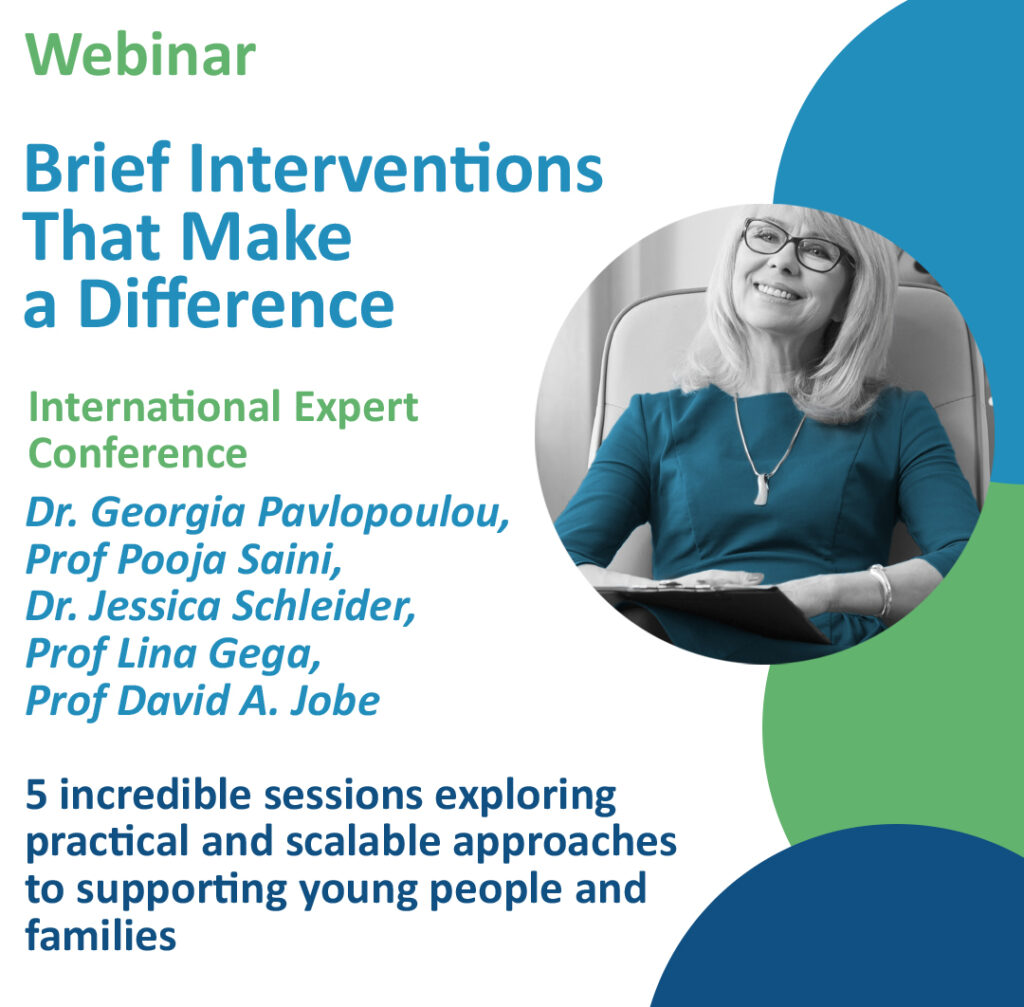
Considerations before applying brief interventions
Healthcare professionals and policy makers interested in SSIs or OSTs should consider who is most likely to benefit.
SSIs may be appropriate for youth with mild symptoms who are willing to engage with self‑help, and they can be delivered in waiting rooms, schools or community centres while families await further care.
OST may also be suitable when a young person’s functioning is significantly impaired by a specific phobia and families can commit to a single intensive session.
Clinicians must ensure that exposures are conducted safely, particularly when animals or medical procedures are involved, and should provide clear communication with caregivers about what to expect. Follow‑up support should be available if needed.
Gaps in evidence and future directions
Research continues to evolve and more studies are needed to track sustained effects and factors that predict relapse. Comparative trials are necessary to determine when brief interventions suffice and when multi‑session therapy is necessary.
Implementation research should explore strategies to scale SSIs and OSTs across diverse cultural contexts, addressing digital equity and cultural adaptation.
Finally, a greater understanding of mechanisms of change will enable refinement and personalisation—identifying which components drive outcomes for specific individuals.

Using brief mental health interventions in practice
The youth mental health crisis demands innovative solutions. Brief therapy interventions such as single‑session interventions and one‑session treatments demonstrate that brief, targeted approaches can offer immediate relief and encourage further help-seeking, while OST demonstrates that a single, intensive session can significantly reduce the impact of specific phobias.
Together, these interventions expand our therapeutic toolkit and encourage a paradigm shift: effective mental health support can be timely, engaging and accessible without compromising evidence-based practice.
While ongoing research will continue to refine their effectiveness and implementation, current findings suggest they play a valuable role in reducing service gaps and improving outcomes for young people.
For healthcare professionals and service providers, integrating brief interventions into existing care pathways may offer a practical way to expand access and support early intervention. Exploring how SSIs and OSTs can complement your current services could help more young people receive the timely support they need.
To learn how to apply these in practice, check out ACAMH’s Brief Interventions event.
References
-
World Health Organization. (2025, September 1). Mental health of adolescents.
-
Schleider, J. L., Mullarkey, M. C., Fox, K. R., Dobias, M. L., Shroff, A., Hart, E. A., & Roulston, C. A. (2022). A randomized trial of online single-session interventions for adolescent depression during COVID-19. Nature Human Behaviour, 6(2), 258–268.
-
Wright, B., Tindall, L., Scott, A. J., Lee, E., Biggs, K., Cooper, C., Bee, P., Wang, H.-I., Gega, L., et al. (2022). One-session treatment compared with multisession CBT in children aged 7–16 years with specific phobias: The ASPECT non-inferiority RCT. Health Technology Assessment, 26(42).
-
Schleider, J. L., & Weisz, J. R. (2017). Little treatments, promising effects? Meta-analysis of single-session interventions for youth psychiatric problems. Journal of the American Academy of Child & Adolescent Psychiatry, 56(2), 107–115.
-
Schleider, J. L., Zapata, J. P., Rapoport, A., Wescott, A., Ghosh, A., Kaveladze, B., Szkody, E., & Ahuvia, I. (2025). Single-session interventions for mental health problems and service engagement: Umbrella review of systematic reviews and meta-analyses. Annual Review of Clinical Psychology, 21, 279–303.
-
Schleider, J. L., Dobias, M. L., Sung, J. Y., & Mullarkey, M. C. (2020). Future directions in single-session youth mental health interventions. Journal of Clinical Child & Adolescent Psychology, 49(2), 264–278.