
You searched for: self harm
Search results
-

The Catalogue of Mental Health Measures: Discovering the depths of mental health data in UK longitudinal studies
SOLD OUT!
- Event type
- Training Day
-

Help for teachers handling of disclosures of abuse and trauma
In this five minute film David Trickey, consultant clinical psychologist at the Anna Freud Centre, offers techniques and advice for teachers who find themselves faced with a child disclosing experiences of a traumatic nature.
Read more -

Young people’s ‘neural fingerprints’ might permit a precision-medicine approach to depression
Precision medicine has been discussed in medical research since the late 1990’s. Only recently, however, has this concept aroused interest and inspired relevant research in psychiatry, particularly in adolescents.
Read more -

A history of abuse increases the risk of suicide attempts in youth
Researchers in Belgium and the USA have conducted one of the first investigations into whether a history of various forms of abuse and the presence of mood disorders and psychotic symptoms can predict suicide attempts in psychiatrically hospitalized children.
Read more -
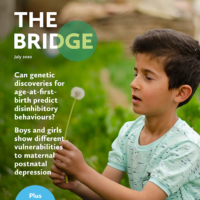
July 2020
In this issue, we summarise recent studies on a wide range of topics – including sleep, sensory symptoms, emotional symptoms, disinhibition, alcohol misuse, complex PTSD symptoms, and self-harm – which reveal new insights helping us to better understand and address psychopathology in young people.
Read more -

Is neurocognitive functioning linked to a family history of a suicide attempt?
Jones et al. matched 501 participants (aged 8-21 years) who had a family history of a suicide attempt with ~3,000 participants with no such family history.
Read more -

Suicidal ideation in children: is it written all over their face?
A study recently published in the JCPP, has investigated how suicidal thoughts might develop in childhood, focusing on the parent–child relationship.
Read more -

JCPP Annual Research Review 2020
Free access to the articles included in the JCPP Annual Research Review: “Something new: What’s next for child psychology and psychiatry?”, until the end of February 2020.
Read more -
Most cited CAMH paper #1 of 25: Systematic Review of Evidence and Treatment Approaches: Psychosocial and Mental Health Care for Children in War
Mark J.D. Jordans, Wietse A. Tol, Ivan H. Komproe, Joop V.T.M. De Jong.
Read more
Key Practitioner Message includes; Most descriptive papers lack a comprehensive presentation of treatment modalities and either report single interventions or are limited to position statements. -
Most cited CAMH paper joint #20 of 25: Children’s Voices: A Review of the Literature Pertinent to Looked‐After Children’s Views of Mental Health Services
Julie Davies, John Wright.
Read more
Key Practitioner Message (Relating to looked‐after children and service user involvement) includes; Vulnerable children should be given equal choice and involvement in their treatment decisions and not miss out on the wider NHS drive for service user involvement.