You searched for: sleep
Search results
-
 Recommended
Sleep
Children and adolescents who are experiencing difficulties with their mental health also often struggle with their sleep. Indeed disrupted or altered sleep has been associated with most psychiatric disorders (Gregory & Sadeh, 2016). Although a range of sleep difficulties can co-occur with mental health problems, a common difficulty is insomnia. As such this guidance will primarily focus on difficulties with getting to sleep and staying asleep.
Read more -

Understanding and Responding to Self-Harm: Latest Evidence and Clinical Practice. Judy Dunn International Online Conference 2026
Explore the latest evidence on self-harm in children and adolescents. Learn about neurobiology, emotion regulation, assessment, family support, and clinical practice from leading international experts.
- Event type
- Judy Dunn International Conference
- Location
- LIVE STREAM
-

Using Assessment to Build Better Case Conceptualisations
Case conceptualisation is central to psychological practice. It helps clinicians organise information, understand how a person’s difficulties may have developed and been maintained, and decide what treatment would be adequate. However, conceptualisations can become overly intuitive, static, or disconnected from both assessment evidence and treatment research. Christon, McLeod, and Jensen-Doss (2015) propose a science-informed approach designed to connect evidence-based assessment with evidence-based treatment.
Read more -

Irritability and Later Depression and Self-Harm in Adolescence
Irritability is common in early childhood and for many children, it reduces over time as they develop better frustration tolerance, language, emotional regulation, and social understanding. However, when irritability remains high across early childhood, it may signal increased vulnerability to later mental health difficulties.
Read more -
 15
How to integrate AI and other digital tools into everyday clinical practice
This practical workshop from Professor Helen Pote (pic), Gemma Rides and Lisa Summerhill, helps clinicians and allied professionals safely and effectively integrate AI and digital tools into everyday practice with children, young people and families.
- Event type
- Workshop
- Location
- LIVE STREAM
-
15
ADHD and Depression
Includes talks from Professor Sinead Rhodes, Dr. Olga Eyre, and Dr. Ramya Srinivasan.
- Event type
- Expert knowledge session
-

Assessing and Treating PTSD in Young Children
Learn how PTSD appears in young children, why it’s often missed, and how PTSD-YC criteria and CBT-3M improve early identification and treatment. Blog by Professor Francisco Musich.
Read more -

How to Support Distressed Pupils: School-Based Resilience Training
This training introduces school staff to an evidence-informed approach for supporting children and young people experiencing distress. Led by Dr. Arnon Bentovim, this session is run collaboration with Child and Family Training.
- Event type
- Introductory and Update Session
- Location
- Online
-
24
Debate – Regulating Social Media Use in Children and Young People – Are bans justified?
This 1.5-hour online debate brings together leading experts to examine whether age-based social media bans are an appropriate policy response to concerns about children and young people’s mental health.
- Event type
- Debate
-

Meet the expert on the Adolescent Brain – Professor Sarah-Jayne Blakemore
Join ACAMH on 8 July 2026 for a workshop on adolescent brain development with Professor Sarah-Jayne Blakemore. Explore neuroscience insights and real-world applications.
Read more -
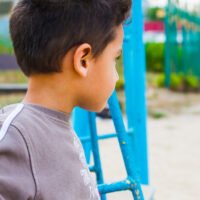
Trauma in Care Experienced Children: Improving Access to Trauma-Informed Care
Care experienced children and young people are much more likely to experience trauma and trauma-related mental health difficulties than their peers. Yet many do not receive timely support or access to treatments that are backed by evidence. Recent research highlights that the challenge is not simply identifying distress but ensuring that care-experienced children can access effective interventions, particularly trauma-focused cognitive behavioural therapies (TF-CBTs). In this blog, we explore these barriers, as well as what effective trauma-informed care could look like. Blog by Professor Francisco Musich.
Read more